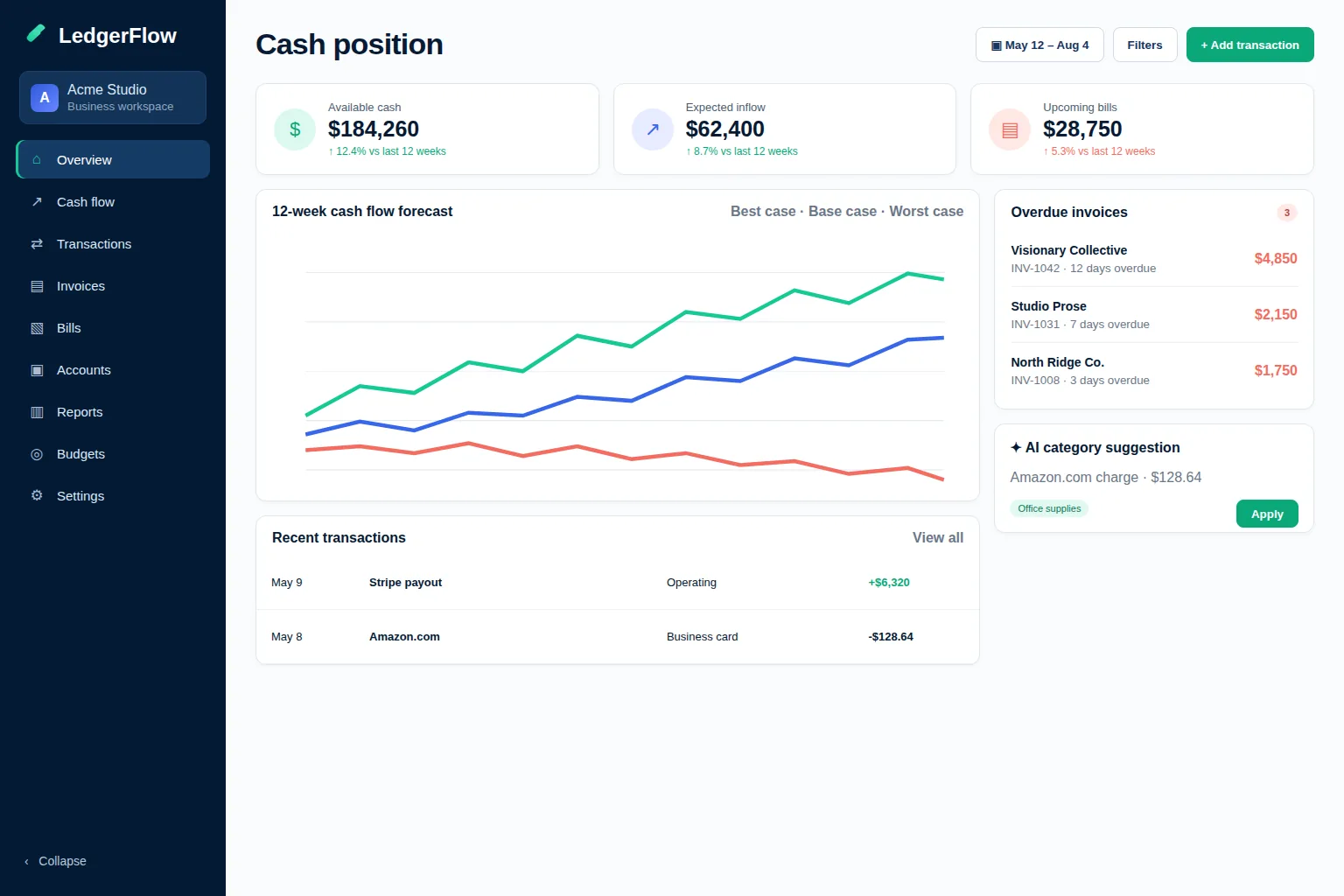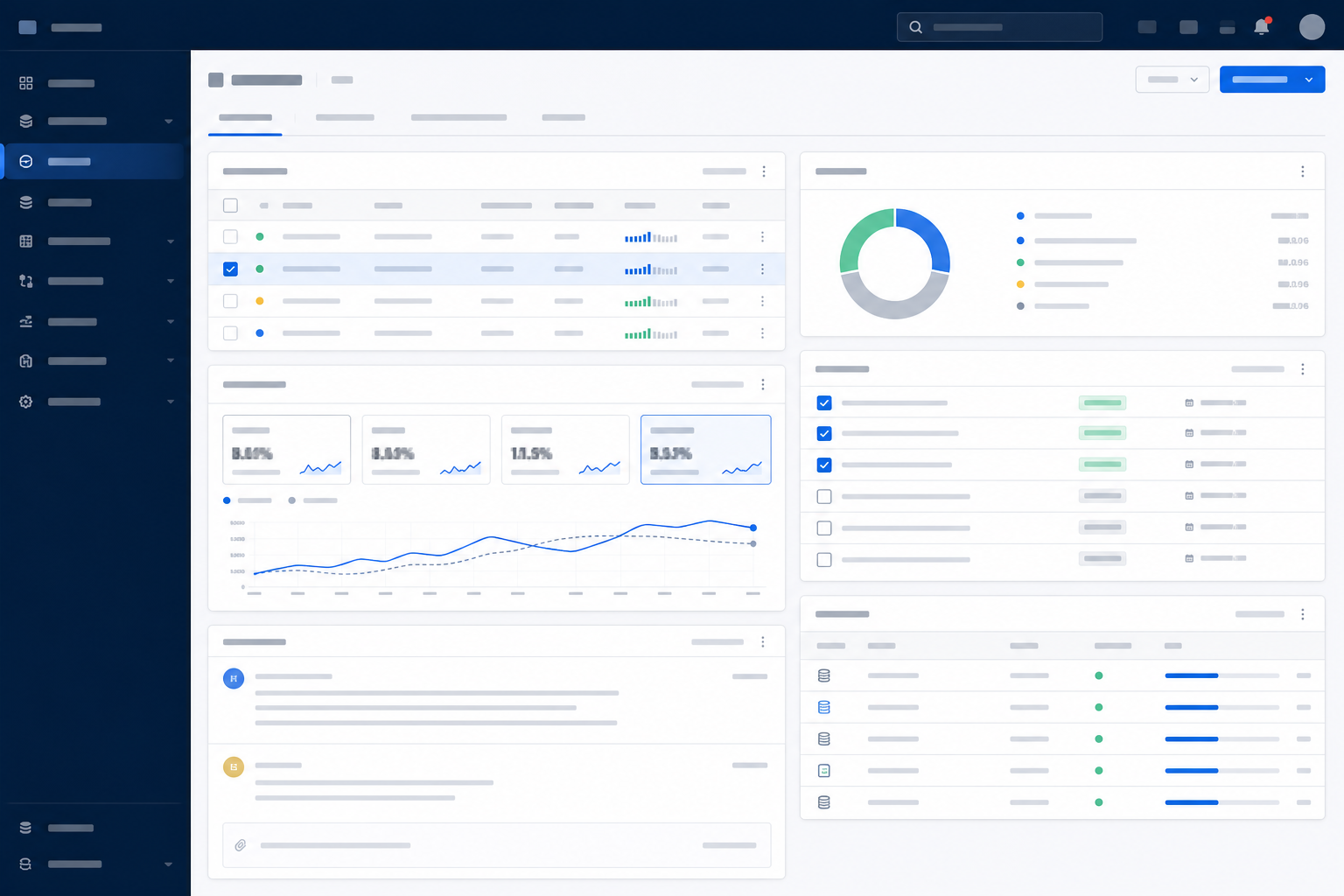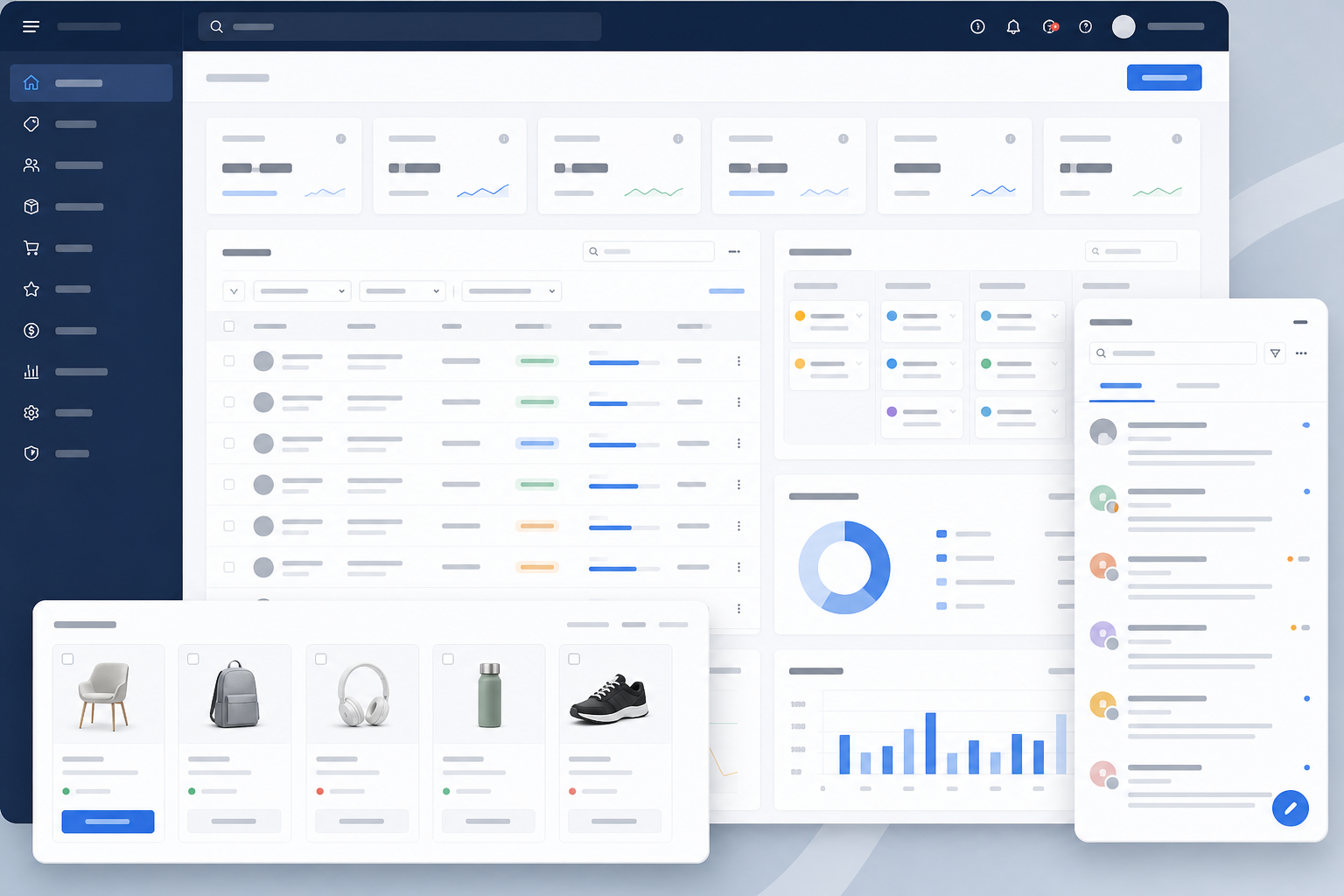
Ecommerce Marketplace Software is a Codeblix concept for operating a multi-seller store with seller accounts, product moderation, customer orders and settlement records. It targets ecommerce marketplace software. This is a proposed software scope, not a claim of active sellers, orders, gross merchandise value or marketplace income.
Give the marketplace operator control of the retail workflow
A multi-seller store combines the customer experience of ecommerce with the operational responsibility of managing independent sellers. The operator needs to approve products, resolve catalogue conflicts, monitor order progress and answer customers when an individual seller is unavailable. This concept is built around those control points rather than only the storefront.
Seller application to customer resolution
A seller applies, submits business details and adds products for review. Once approved, the products become visible to buyers. An order is connected to its seller items, delivery status and support owner. If a customer reports a missing or incorrect item, the operator can identify the responsible seller, record the resolution and retain the history for later reconciliation.
Test the difficult order cases first
The first release should be tested with two sellers in one order, a product awaiting approval, a cancelled item and a customer complaint. Each state should show the correct owner and next action. A successful demo is not enough if an operator cannot explain what happens when the ordinary fulfilment path breaks.
Controls for sellers and products
- Require seller approval before product publication.
- Keep seller-owned product data distinct from operator-managed catalogue fields.
- Record order splits and seller fulfilment status without exposing internal notes to customers.
- Provide pause and retirement states for sellers, products and delivery routes.
Possible business models
The software could support transaction commissions, seller plans, listing charges or managed marketplace operations. The operator should choose a model only after checking support, refund, payment and seller-onboarding costs. No current seller base or financial result is claimed by this listing.
Build, configure and hand over
Customisation may cover seller roles, catalogue fields, checkout rules, settlement exports, tax information and notifications. Installation should document payment, mail, storage, backups, hosting and account ownership. Handover should include test sellers, test orders and a reconciliation runbook for the operator.
Questions for a commerce software review
Ask how seller disputes are handled, where customer data is stored, which payment flows are supported and how refunds affect seller balances. Request a non-production order walkthrough before connecting real sellers or payment credentials.
Included in Ecommerce Marketplace Software
Two-Sided Supply And Demand product brief
A scoped brief for ecommerce marketplace software, centred on seller onboarding, listings, requests, offers and moderation.
Multi-Party Marketplaces workflow map
Roles, states and exceptions for a partner referral through the proposed product.
Transfer and configuration notes
Practical questions for adapting this ecommerce foundation to a buyer-controlled environment.
Feature map for Ecommerce Marketplace Software
Two-Sided Supply And Demand
Makes seller onboarding, listings, requests, offers and moderation visible as owned actions rather than a static dashboard.
Ecommerce records
Captures the fields needed to operate ecommerce marketplace software with consistent status and responsibility.
Review states
Keeps incomplete, rejected, paused and completed cases distinct.
A Completed Handover Checklist
Provides a concrete acceptance target for multi-party marketplaces.
Integration boundary
Identifies where approved mail, payment, storage or reporting services can connect later.
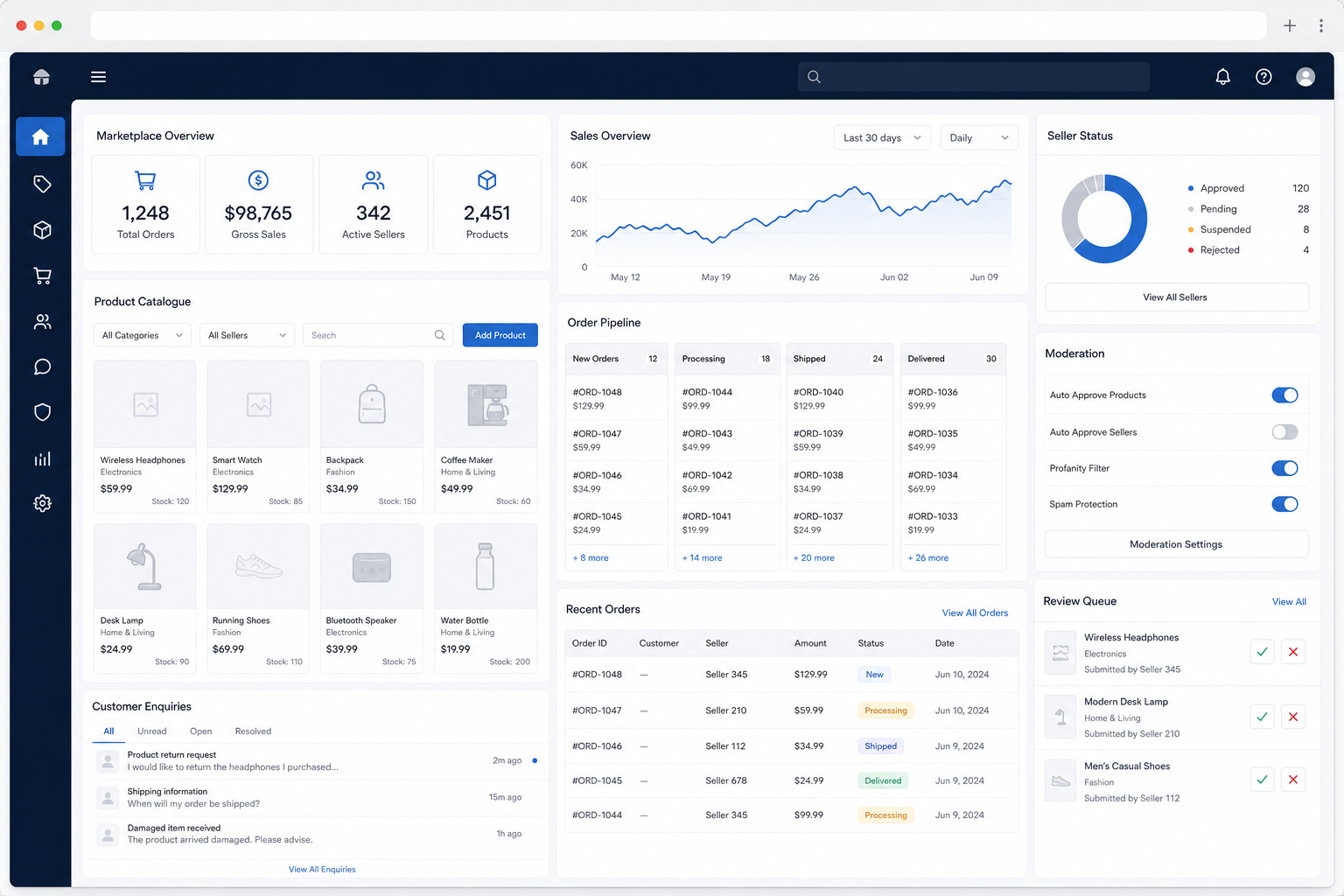
Product gallery
These screens show the intended product direction and core workflows.
Technology selected for Ecommerce Marketplace Software
- Laravel 12
- PHP 8.3+
- React or Blade UI
- TypeScript-ready frontend
- MySQL or PostgreSQL
- REST API-ready architecture
Best fit for Ecommerce Marketplace Software
- Founders testing ecommerce marketplace software as a focused offer
- Operators needing two-sided supply and demand in a ecommerce workflow
- Agencies preparing a tailored multi-party marketplaces product
- Buyers wanting documented scope before commissioning custom development
Commercial paths for Ecommerce Marketplace Software
These are product models a buyer could implement. They are not claims about existing Codeblix revenue.
- Service Retainers around multi-party marketplaces
- Tiered access based on roles, records or usage
- Paid onboarding and implementation for ecommerce teams
- Managed support or partner delivery
Customization and installation for Ecommerce Marketplace Software
Customization route
- Adapt fields and statuses for seller onboarding, listings, requests, offers and moderation
- Rewrite labels around the buyer's ecommerce terminology
- Connect approved third-party services after discovery
- Replace concept copy with verified brand content
Installation route
- Deploy to buyer-controlled hosting
- Configure domain, mail, storage and approved integrations
- Run role-based acceptance checks
- Document backups, access and maintenance ownership
Handover plan for Ecommerce Marketplace Software
- Confirm acceptance criteria for two-sided supply and demand
- Walk through seller onboarding, listings, requests, offers and moderation with the product owner
- Transfer approved files and environment notes
- Record third-party ownership and post-handover responsibilities
Risks to review for Ecommerce Marketplace Software
- The keyword ecommerce marketplace software reflects search intent, not proof of an operating business.
- Seller onboarding, listings, requests, offers and moderation require decisions about access, retention and exception handling.
- Plan specifically for permission drift before launch.
- Hosting, legal terms, security review, integrations and maintenance are separate concerns.
Questions about Ecommerce Marketplace Software
Is this an operating ecommerce marketplace software business?
No. It is a Codeblix source-code concept focused on two-sided supply and demand. It makes no claim about customers, traffic, revenue, profit or valuation.
What does the ecommerce marketplace software workflow cover?
The proposed scope covers seller onboarding, listings, requests, offers and moderation. The exact deliverable is confirmed after requirements and technical review.
Can Codeblix customize it?
Yes. Branding, roles, terminology, integrations and deployment can be discussed around the buyer's ecommerce requirements.
What should be checked before proceeding?
Request the included-file list, a walkthrough, technology versions, deployment requirements, licence position and support boundaries.