Peer-to-Peer Marketplace Software is a Codeblix concept for letting individuals offer items, skills or services directly to other participants while the platform owner manages profiles, requests, trust controls and disputes. It targets peer to peer marketplace software. This listing describes a platform foundation and does not claim members, transactions, safety outcomes or marketplace revenue.
Make participant responsibility clear
Peer-to-peer services depend on trust between people who may not know one another. The platform needs to show what each participant offers, what was agreed and which rules apply when a request goes wrong. This concept focuses on those records and controls rather than implying that a community is safe simply because profiles exist.
Member offer to completed exchange
A member creates a profile and submits an offer with availability, location or delivery terms. Another member sends a request, asks a question and confirms the arrangement. The platform records the agreed scope, status and communication route. The owner can intervene when a participant reports a problem or breaks a marketplace rule.
Peer exchange acceptance test
Test profile verification, a new offer, a request that needs clarification and a reported dispute. Confirm that participants see only permitted information and that the operator can pause an offer without destroying the case history. Use fictional identities and exchanges while trust and privacy policies are being reviewed.
Identity and exchange controls
- Separate public profile claims from verification evidence.
- Record offer, request, acceptance and cancellation status distinctly.
- Keep participant contact details restricted until the agreed exchange stage.
- Provide report, pause, dispute and appeal states for operator review.
Possible marketplace models
A buyer could adapt the concept for equipment sharing, local services, peer lessons or specialist exchanges. Verification, insurance, moderation and support requirements depend on the category. No members, completed exchanges or income are claimed.
Peer exchange implementation and handover
Customisation may cover profile fields, offer types, matching, messaging, reports, verification and notifications. Deployment must define the host, message delivery, file store, backup policy and accountable administrator. Handover should include fictional profiles, exchanges and a dispute response checklist.
Questions for the peer-to-peer exchange
Ask how identity is checked, how prohibited activity is handled, who can access dispute evidence and how personal data is deleted. Request an offer-to-dispute walkthrough before accepting the live platform scope.
Included in Peer-to-Peer Marketplace Software
Two-Sided Supply And Demand product brief
A scoped brief for peer to peer marketplace software, centred on seller onboarding, listings, requests, offers and moderation.
Multi-Party Marketplaces workflow map
Roles, states and exceptions for a catalogue record through the proposed product.
Transfer and configuration notes
Practical questions for adapting this ecommerce foundation to a buyer-controlled environment.
Feature map for Peer-to-Peer Marketplace Software
Two-Sided Supply And Demand
Makes seller onboarding, listings, requests, offers and moderation visible as owned actions rather than a static dashboard.
Ecommerce records
Captures the fields needed to operate peer to peer marketplace software with consistent status and responsibility.
Review states
Keeps incomplete, rejected, paused and completed cases distinct.
A Documented Review Decision
Provides a concrete acceptance target for multi-party marketplaces.
Integration boundary
Identifies where approved mail, payment, storage or reporting services can connect later.
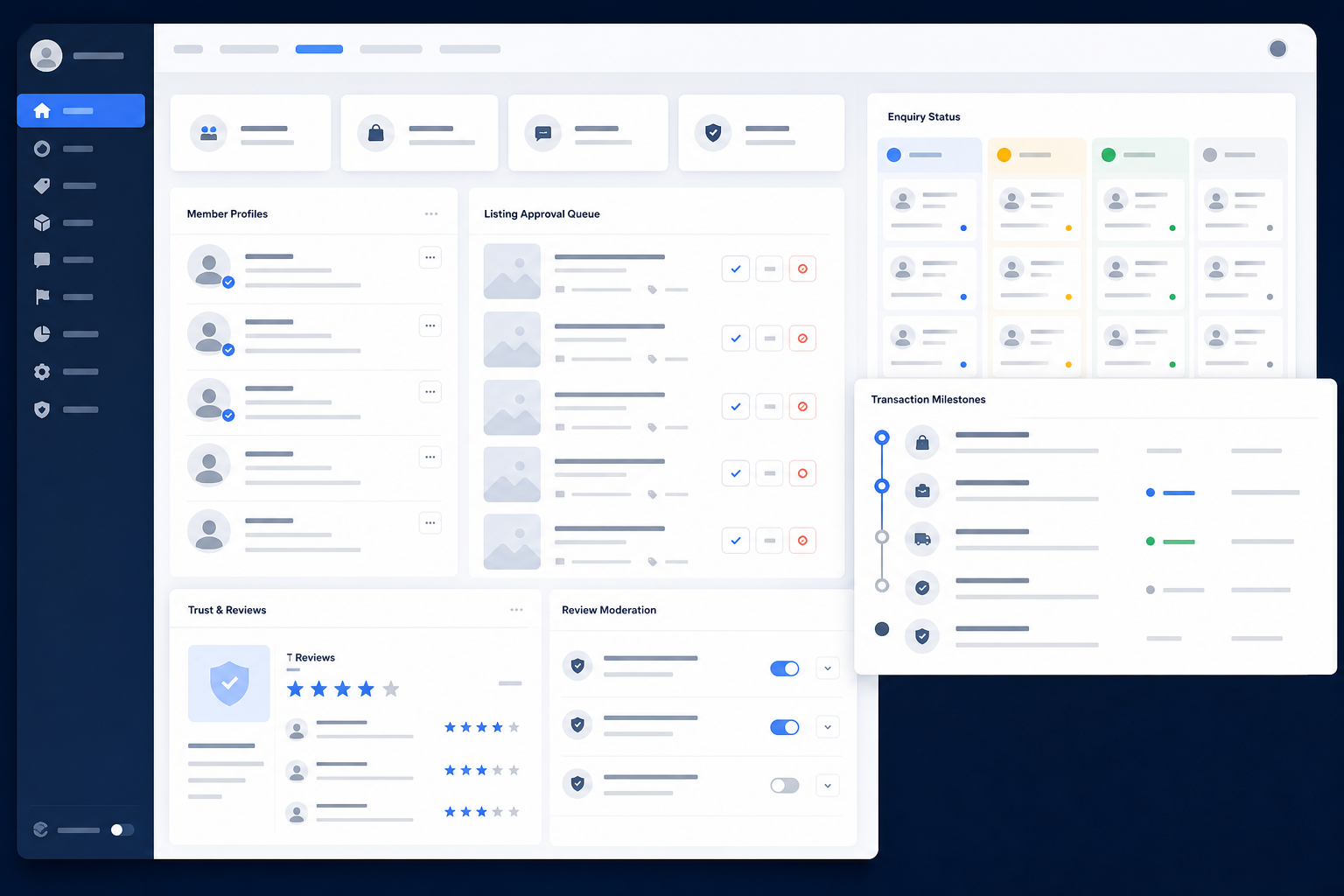
Product gallery
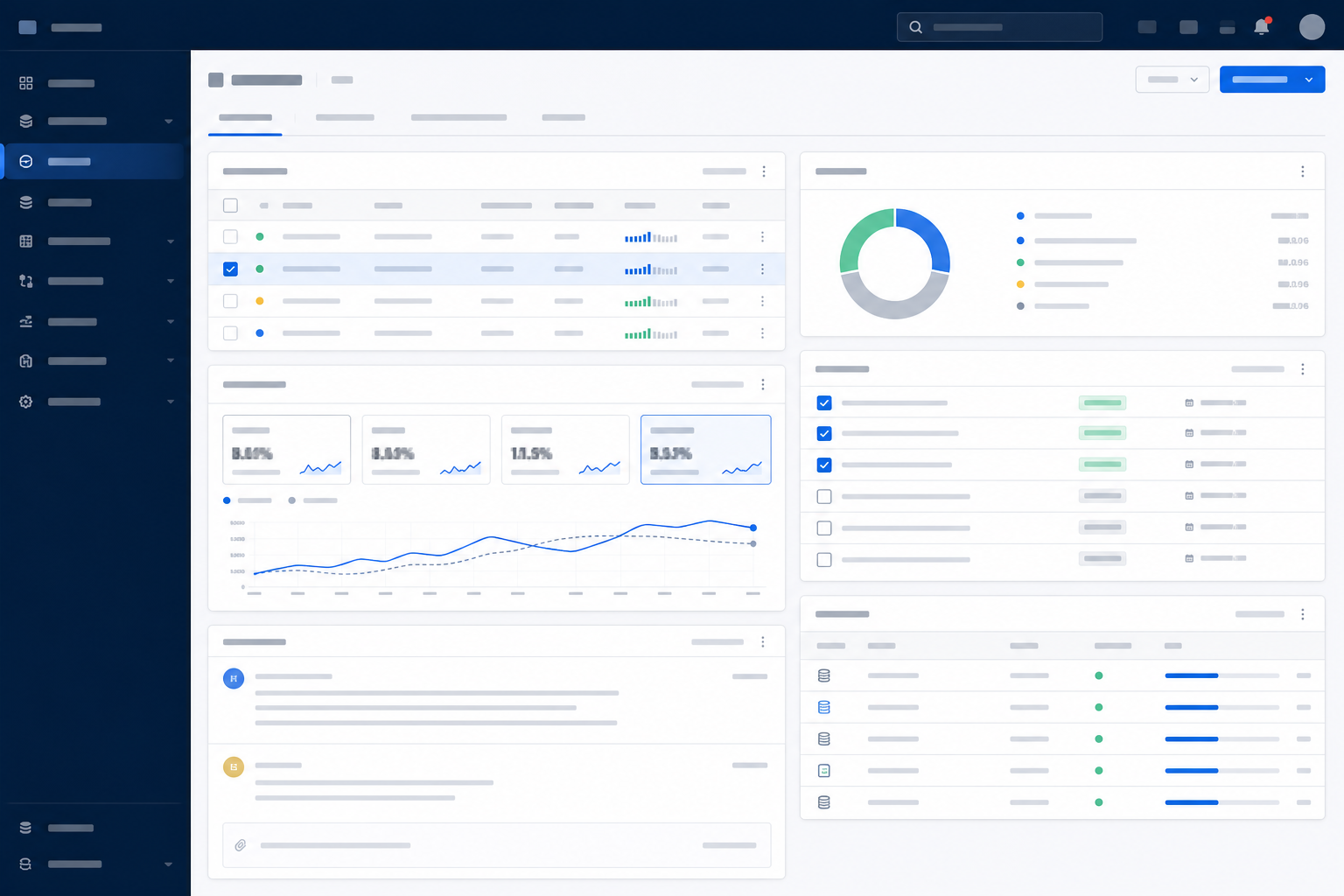
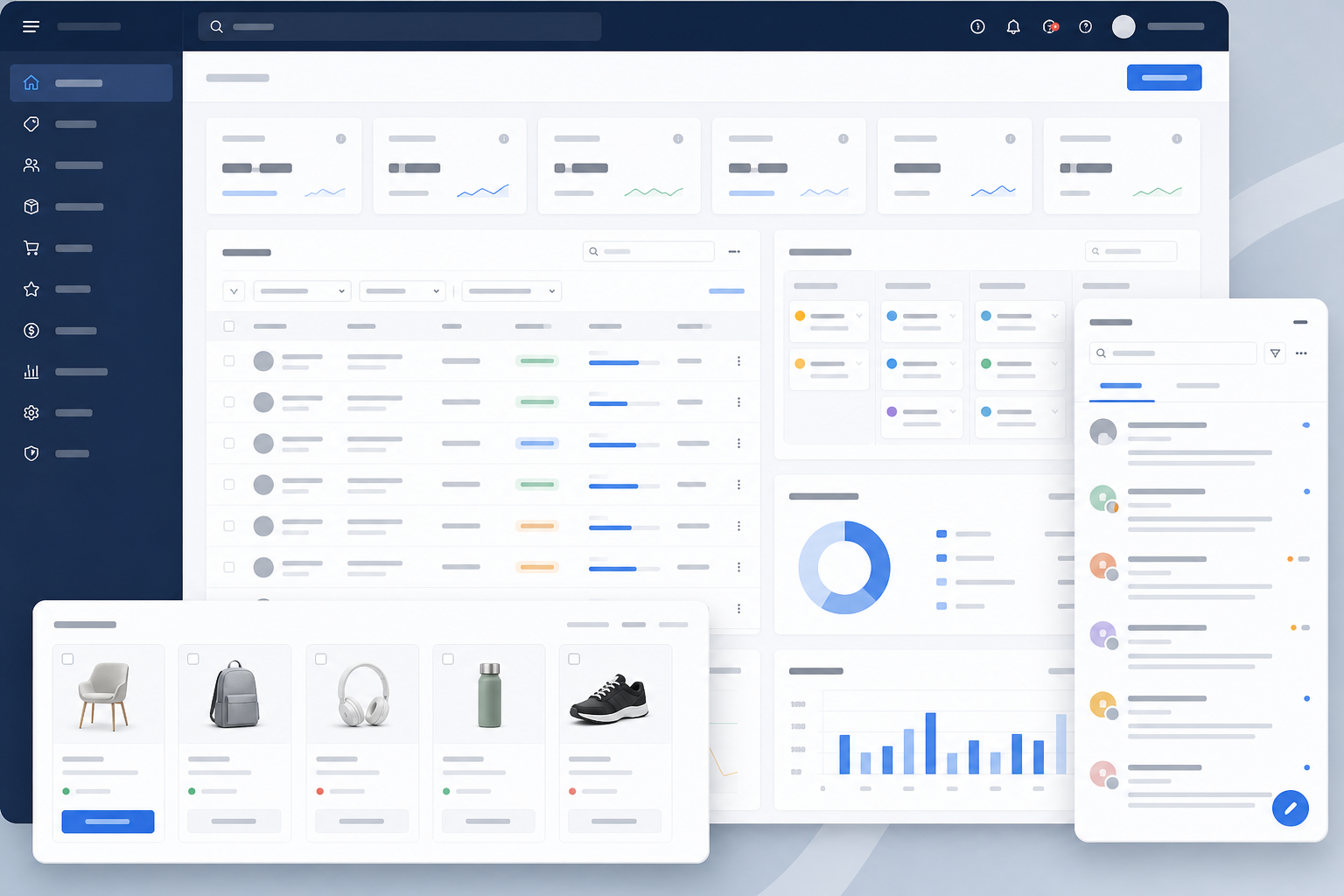
These screens show the intended product direction and core workflows.
Technology selected for Peer-to-Peer Marketplace Software
- Laravel 12
- PHP 8.3+
- React or Blade UI
- TypeScript-ready frontend
- MySQL or PostgreSQL
- REST API-ready architecture
Best fit for Peer-to-Peer Marketplace Software
- Founders testing peer to peer marketplace software as a focused offer
- Operators needing two-sided supply and demand in a ecommerce workflow
- Agencies preparing a tailored multi-party marketplaces product
- Buyers wanting documented scope before commissioning custom development
Commercial paths for Peer-to-Peer Marketplace Software
These are product models a buyer could implement. They are not claims about existing Codeblix revenue.
- Licensing By Organisation around multi-party marketplaces
- Tiered access based on roles, records or usage
- Paid onboarding and implementation for ecommerce teams
- Managed support or partner delivery
Customization and installation for Peer-to-Peer Marketplace Software
Customization route
- Adapt fields and statuses for seller onboarding, listings, requests, offers and moderation
- Rewrite labels around the buyer's ecommerce terminology
- Connect approved third-party services after discovery
- Replace concept copy with verified brand content
Installation route
- Deploy to buyer-controlled hosting
- Configure domain, mail, storage and approved integrations
- Run role-based acceptance checks
- Document backups, access and maintenance ownership
Handover plan for Peer-to-Peer Marketplace Software
- Confirm acceptance criteria for two-sided supply and demand
- Walk through seller onboarding, listings, requests, offers and moderation with the product owner
- Transfer approved files and environment notes
- Record third-party ownership and post-handover responsibilities
Risks to review for Peer-to-Peer Marketplace Software
- The keyword peer to peer marketplace software reflects search intent, not proof of an operating business.
- Seller onboarding, listings, requests, offers and moderation require decisions about access, retention and exception handling.
- Plan specifically for weak catalogue taxonomy before launch.
- Hosting, legal terms, security review, integrations and maintenance are separate concerns.
Questions about Peer-to-Peer Marketplace Software
Is this an operating peer to peer marketplace software business?
No. It is a Codeblix source-code concept focused on two-sided supply and demand. It makes no claim about customers, traffic, revenue, profit or valuation.
What does the peer to peer marketplace software workflow cover?
The proposed scope covers seller onboarding, listings, requests, offers and moderation. The exact deliverable is confirmed after requirements and technical review.
Can Codeblix customize it?
Yes. Branding, roles, terminology, integrations and deployment can be discussed around the buyer's ecommerce requirements.
What should be checked before proceeding?
Request the included-file list, a walkthrough, technology versions, deployment requirements, licence position and support boundaries.