
Calibration management software for instrument records and release decisions
Calibration management software connects each measuring instrument to its schedule, calibration results, certificate and authorization for use. Codeblix offers custom software development for manufacturers, workshops and equipment teams that need to coordinate laboratory handoffs, review exceptions and follow the earlier measurements affected by an instrument problem.
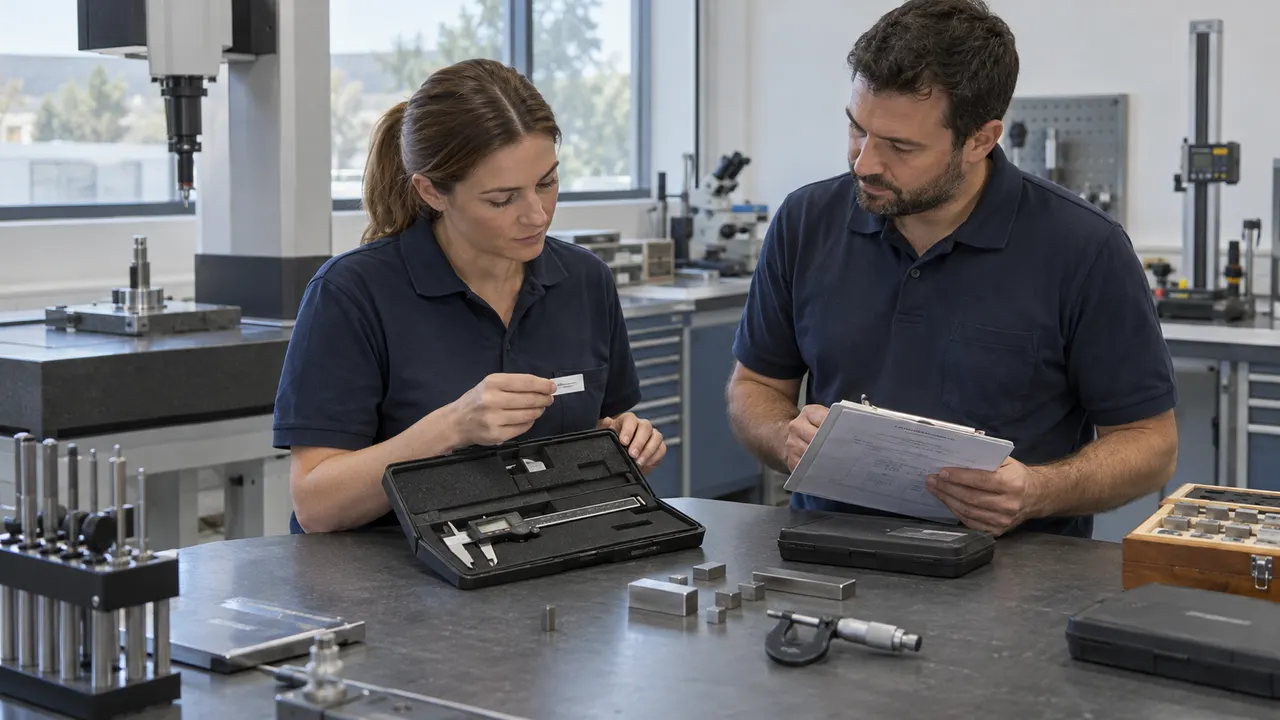
Choose around identity, authorization and unresolved work.
A useful calibration system lets your team explain which instrument was checked, what use was authorized and which earlier records still need a decision.
Know which instrument a record belongs to
Connect the asset tag, serial, location and intended measuring task. Keep replacements, transfers and label changes traceable so the correct certificate follows the correct instrument.
Make release authority visible
Keep the calibration result, certificate review and permission to use the instrument as separate decisions. A received document starts a review; the responsible technical owner records its outcome and any restrictions.
Account for earlier measurements
When a reported result raises a concern, identify the relevant use records and assign their assessment. Keep unresolved evidence, rechecks and disposition decisions visible after the instrument itself returns to service.
Follow the instrument through each handoff.
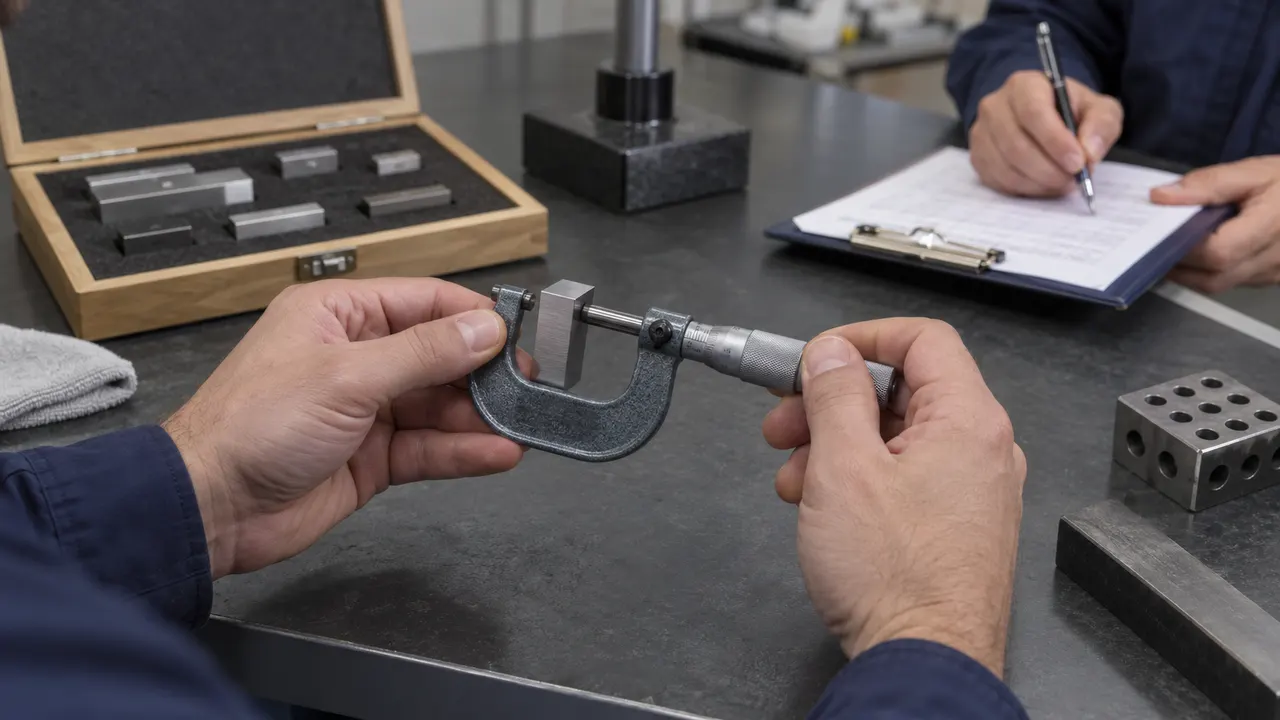
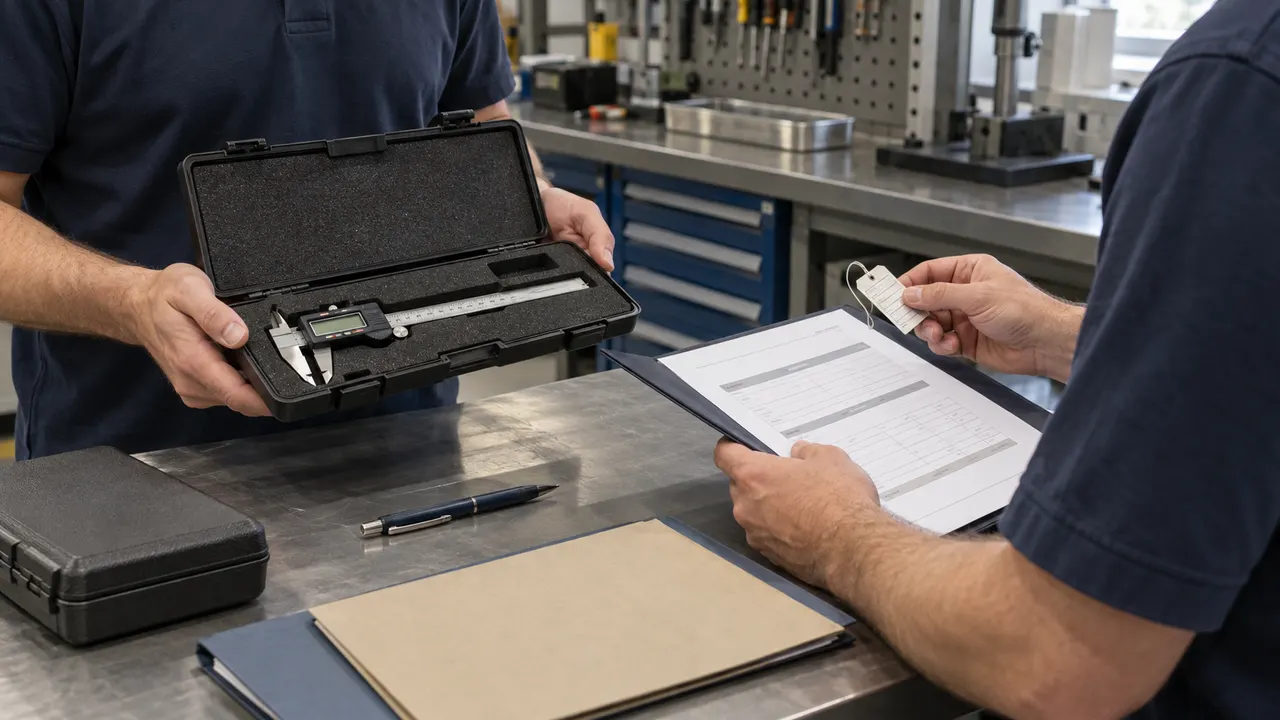
Match the equipment before work starts, capture the measurement evidence, and check the returned instrument against its accompanying record.
Separate a weighing transaction from equipment review
Truck-scale software records the vehicle, readings and transaction. Calibration management follows the measuring instrument, its evidence and permission for a defined application. Connect the instrument identifier and applicable status to the operating system, with responsibility for deciding how restrictions affect work.
Compare truck-scale transaction requirementsKeep warranty recovery on its own decision path
A damaged or adjusted instrument may also have a supplier repair or warranty case. Link that case for coordination while preserving the separate calibration evidence, authorization and assessment of earlier use. An accepted reimbursement does not determine whether equipment suits a measuring task.
Explore warranty claims and supplier recoveryPrepare a Mauritius calibration handoff
The Mauritius Standards Bureau describes calibration services for industrial measuring equipment, including mass, pressure, dimensions and temperature. Identify the actual laboratory, instrument scope, document requirements and responsibilities for your operation before defining the software exchange.
Read the MSB calibration service scopePut the interval basis into the project brief
MAURITAS lists guidance on calibration intervals and measurement systems. Ask your responsible technical team to provide its approved interval rationale and review process, then record the effective editions and decisions in the application rather than assuming one fixed interval for all equipment.
Open MAURITAS laboratory guidance referencesCarry permitted use through the tool counter
A released instrument may still move between borrowers, jobs and storage bins. Connect its identifier and permitted application to the tool-store issue, then reconcile the physical return and kit contents without changing the technical authorization.
Explore tool crib issue and return softwareFrom instrument registration to controlled return to service
Walk through these six stages when comparing calibration tracking software or preparing a custom development brief. Each handoff should explain who acts next and which evidence they receive.
Register the instrument and its intended use
Capture the equipment identifier, manufacturer and serial where available, measuring range, unit, location, custodian and permitted application. Link its accessories and references without treating every component as the same asset. Resolve an unreadable tag or duplicate serial before attaching results.
Approve the calibration basis and schedule
Record the responsible person's approved method, interval basis, required measurement points, acceptance criteria and decision-rule reference. Keep the edition used for each job. A changed interval or method needs an effective date and reason, with already overdue work still visible.
Arrange the job and physical handoff
Create the calibration request, identify the internal team or external laboratory, and record dispatch, receipt, accessories and expected return. Confirm access to a suitable replacement instrument where the operation needs one. Keep an in-transit, lost or damaged item separate from an overdue schedule.
Receive results and review the certificate
Match the instrument, job, measurement dates, method and certificate edition. Retain the reported results before adjustment and after adjustment separately, with units, uncertainty information and the reference evidence supplied. Route missing pages, wrong identifiers and corrected certificates to a reviewer rather than overwriting the first attachment.
Investigate earlier use when findings require it
Open an assessment with a technically justified time window and the affected instrument applications. Link the relevant inspection or production records, assign rechecks and document missing evidence. Let the authorized quality owner decide each disposition; a later satisfactory result should leave the earlier investigation available.
Authorize use and maintain the next obligation
Record the reviewer, accepted certificate edition, permitted application, restrictions and authorization time. Update the next due obligation using the approved schedule basis. Keep a restricted or quarantined instrument unavailable for incompatible work, and retain separate owners for outstanding historical-use tasks.
Roles that separate measurement from authorization
- Operators identify the equipment and record its use. Calibration coordinators plan jobs and track custody. Technicians or external laboratories supply observations and documents. Technical reviewers assess the evidence; quality owners determine the actions on earlier work.
- Define who can change the schedule basis, replace an instrument identifier, approve a corrected certificate and authorize restricted use. An administrator's ability to upload a file should not confer technical approval authority. Preserve the author, reason and earlier value for important changes.
- Limit external laboratories to the requests and documents assigned to them. Separate sites, customer-owned equipment and commercial terms where required. Provide read access for an audit without permitting alteration of measurements or release history.
Exceptions to put into the selection demonstration
- Test an unreadable tag, a certificate for the wrong serial, a missing uncertainty statement and a result in a different unit. Keep the issue open with a named owner until the approved evidence requirements are met.
- Bring a damaged instrument, a missed due date, a laboratory delay and an instrument transferred to another site during review. Show its current custody, permitted use and next action independently; a reminder email is not proof that the equipment was checked.
- Include a result reported outside the agreed criteria before adjustment and acceptable afterwards. Demonstrate how the instrument can complete its own review while an assessment of prior measurements remains open, with missing use records explicitly counted.
Migration and interfaces built around source ownership
- Prepare an instrument register, method and schedule editions, open jobs, certificates, restrictions and historical use references. Reconcile identifiers and document counts before import. Preserve the difference between a historical attachment and a technically reviewed release.
- Identify the system that owns the asset identity, inspection results, work orders and laboratory documents. Bring supported exports or current API documentation to scope each connection, including direction, timing, authentication, acknowledgements and rejected-record handling.
- Agree duplicate keys for jobs, certificates and use events. A repeated receipt must not create another release or shift the next due date again. A later certificate edition should retain its predecessor and reopen the relevant review when the correction changes the decision.
Development quote, deployment and ongoing responsibility
- Share instrument counts, sites, application types, calibration frequency, laboratory arrangements, approval roles and anonymized certificate samples. Document parsing, offline capture, source interfaces and historical cleanup each affect the development scope and quotation.
- Agree hosting and data ownership, access administration, document retention, backups and a demonstrated restore procedure. Specify who supports failed imports, delayed notifications, replacement equipment and urgent restrictions when a source service is unavailable.
- Start with one instrument family and its actual difficult case. Accept the rollout against identity matching, certificate editions, authorized use, overdue handling and prior-use reconciliation. Technical methods, decision rules and equipment suitability belong to the responsible qualified team.
Six records that keep instrument status explainable
Use this original data model to compare a packaged calibration system with a custom application. Equipment custody, reported results, authorization for use and the assessment of earlier work each need a clear record.
| Record | Example inputs | Required output and control |
|---|---|---|
| Instrument and application | Caliper I-17; asset tag; serial; site A; custodian; measuring range and unit; permitted inspection task; accessory references. | Resolve identity before a result is attached. Retain transfers, replacements and the application to which an authorization applies. |
| Method and schedule edition | Method M-4; approved interval basis; measurement points; criteria; decision rule DR-2; responsible technical owner; effective date. | Preserve the approved basis used for the job. Record the reason for an interval change without concealing existing overdue obligations. |
| Calibration job and custody | Job J-38; I-17; M-4; laboratory request; dispatch and receipt references; accessories; target return; loss or damage report. | Reconcile instrument identity and physical handoffs. Prevent a repeated dispatch or receipt message from creating a second job. |
| Result and certificate edition | Certificate C-12 revision 1; dates; reported reference and indication; units; as-found and as-left results; uncertainty; supplied traceability evidence. | Keep original observations and later corrections. Review identity and completeness before accepting the document for a release decision. |
| Authorization for use | Release R-6; I-17; reviewed C-12 revision 1; approver; application; restrictions; effective time; next due obligation. | Grant only the approved scope of use. A new attachment or acceptable as-left result does not silently issue authorization. |
| Prior-use assessment | Assessment A-9; justified time window; 12 use references; eight rechecks accepted; two awaiting disposition; two lacking required evidence; decision owners. | Reconcile every identified reference to its assessment state. Preserve unresolved work independently of the instrument's current release. |
Illustrative records, not a universal calibration method: job J-38 returns caliper I-17 with an as-found indication of 25.08 mm against a reported 25.00 mm reference, a difference of +0.08 mm. The provider reports the as-found result outside the job's agreed criteria and the as-left result acceptable after adjustment. The technical reviewer must assess the complete report, uncertainty and approved decision rule before authorizing the instrument's specified use. Quality opens assessment A-9 for 12 earlier use records within a justified investigation window. Eight have accepted recheck evidence, two await a disposition decision, and two lack the required records: 8 + 2 + 2 = 12. Ten of twelve have enough evidence for review, or 83.3%; only eight of twelve have an accepted outcome, or 66.7%. Four remain unresolved. A release for the adjusted instrument must not close those four tasks. If a corrected certificate changes the reported date or result, retain both editions and reassess the investigation window; acknowledge a repeated import of the same correction once. The example's percentages describe record coverage and assessment progress, never product conformity or a software performance result.
Compare calibration systems with the same unresolved case
These primary product pages describe different calibration-management approaches. Ask each provider to demonstrate identity matching, a corrected certificate and the four open prior-use tasks using your own operating rules.
| Option | Published focus | Ask in your demo |
|---|---|---|
| Beamex | LOGiCAL and CMX calibration-management options, instrument information and connections to calibration work. | Show which certificate and method edition support the release, then keep the earlier-use assessment open after adjustment. |
| GageList | Browser and mobile gauge records, calibration events, label scanning and upcoming or past-due notifications. | Demonstrate a transferred instrument, a repeated certificate import and permissions that separate uploading from release approval. |
| QT9 QMS | Calibration scheduling, equipment history, certificate attachments and out-of-tolerance review within its QMS. | Trace the twelve earlier use records and explain the difference between ten evidenced records and eight accepted outcomes. |
Compare licensing, instrument and site limits, document storage, technical configuration, migration and interface costs with a custom build. Ask which party owns method changes and supports certificate corrections. Use the same instrument history and unresolved case in every demonstration so a reminder feature cannot substitute for the handoff your team needs.
Category reference: QT9: calibration scheduling, history and certificate records. Use the record model, progress calculation and downloadable checks to prepare a practical software-selection or development brief.
Truck-scale transactions have their own operating records
Vehicle identity, weight readings and completed tickets follow the transaction workflow. Connect the measuring equipment's approved status through a clearly defined handoff.
Open the related solutionConnect measuring equipment to the manufacturing operation.
Use the work-order and inspection references from your operation to define which instrument uses need traceable evidence and technical decisions.
Explore manufacturing software requirementsQuestions for your calibration software shortlist
Bring an instrument history, a corrected certificate and an example of earlier work that needs follow-up.
What should calibration management software keep connected?
Connect the instrument and intended application to the approved schedule, calibration job, result and certificate edition, authorization for use and any assessment of earlier measurements. Each record should identify its responsible person and preserve the evidence behind a decision.
Can Codeblix develop a system around our calibration workflow?
Yes. Codeblix can scope custom software around your equipment register, laboratory handoffs, document review, approval permissions and exception follow-up. Share anonymized records and the source systems involved so the consultation can establish acceptance cases, interfaces and a development quote.
How does calibration tracking differ from an asset register?
An asset register identifies equipment, ownership, location and related costs. Calibration tracking adds the approved measuring application, schedule basis, calibration evidence, certificate editions and technical review. Link the records through the instrument identifier while assigning the calibration decisions to their proper owner.
Does receiving a certificate authorize the instrument for use?
Make receipt and authorization separate workflow steps. A reviewer needs to match the identity and assess the required evidence against the intended application and approved rule. The resulting authorization should state who approved it, which document edition it uses and any restrictions.
What happens when an adjusted instrument has acceptable new results?
Review its current authorization and earlier-use assessment independently. In the example, eight of twelve prior records have accepted outcomes while four still need action. New acceptable results should leave those four tasks visible with their evidence and decision owners.
How should corrected certificates and duplicate uploads be handled?
Preserve the first document and attach a later edition with its reason and source reference. Decide whether the correction requires a new release review or changes the earlier-use window. Repeated imports of the same edition should be acknowledged without duplicating the job, approval or due obligation.
Can laboratory and production systems exchange records?
Review their supported exports and current API documentation first. Agree identity keys, document access, direction, timing and failure reconciliation. Laboratory evidence and production use records can support the same assessment while keeping their original source and decision authority clear.
What affects development cost and rollout?
Instrument families, sites, technical configuration, external-user access, certificate formats, historical data and interfaces determine the work. Agree hosting, restoration, retention and support responsibilities. Pilot the difficult certificate and prior-use case before expanding to more equipment.