
Last updated:
A SaaS business can create wealth in two ways: it can produce recurring cash flow while you own it, and it can become an asset someone else wants to buy. The second outcome depends on the first. Buyers do not pay for a clever idea alone; they pay for a working product with customers, dependable economics, documented operations, and ownership that can actually be transferred.
If you want to understand how to make money with SaaS, start with the business model rather than the hype. This guide explains how the model earns revenue, why some products become valuable assets, and what to build if you want the option to keep the income or sell the business later. It is a practical framework, not a promise of quick or passive riches.
How to make money with SaaS: the short answer
Traditional project work usually gets paid once. SaaS charges customers for continued access to a useful outcome: sending invoices, scheduling a team, analyzing data, managing bookings, monitoring equipment, or completing another repeatable job. If the customer keeps receiving value, the subscription can renew. That makes revenue more predictable than starting every month from zero.
The most common revenue models are:
- Subscription plans: customers pay monthly or annually for a defined feature and usage allowance.
- Usage-based pricing: the bill changes with transactions, records, storage, messages, or another measurable unit.
- Per-seat pricing: revenue grows when more people inside a customer account use the product.
- Tiered plans: larger customers pay for advanced controls, integrations, reporting, or support.
- Implementation and services: setup, migration, customization, or training can fund delivery, although a services-heavy company is usually less scalable than a product-led one.
A healthy model matches price to customer value and cost to serve. Charging per user makes sense for a collaboration product. Charging per processed document may make more sense for an automation tool. The goal is not to copy a fashionable pricing page; it is to choose a unit that customers understand and that improves as their success with the product grows.
Revenue is not the same as profit, and profit is not the same as wealth
A dashboard showing growing monthly recurring revenue can look impressive while the business is still losing money. Hosting, support, payment fees, contractors, refunds, taxes, marketing, and the founder's time all sit below the headline number. A simple operating view should track at least:
- monthly recurring revenue and annual recurring revenue;
- gross margin after the direct cost of serving customers;
- customer and revenue churn;
- customer acquisition cost and the time needed to recover it;
- expansion revenue from customers who upgrade;
- support load, uptime, and how many hours the owner must personally contribute.
Consider a deliberately simple example: 200 customers paying $49 per month produce $9,800 in monthly recurring revenue, or $117,600 across twelve months before costs, churn, discounts, and taxes. That figure is not the founder's income. The valuable question is how much reliable cash remains after serving those customers and replacing the ones who leave.
This distinction is where durable SaaS businesses separate from internet hype. A smaller product with steady retention, clear margins, and low support overhead may be healthier than a faster-growing product held together by founder heroics.
How SaaS ownership can build wealth
People who become wealthy through SaaS usually own equity in a system that gets more useful and more dependable over time. Their outcome can come from one or a combination of three paths:
- Distributions: the business produces profit that owners can take without starving product development or customer support.
- Reinvestment: profit funds better features, distribution, acquisitions, or a team that increases the long-term earning capacity of the company.
- A sale: another operator acquires the product, customer relationships, brand, intellectual property, and operating system.
None of these paths is automatic. Recurring billing is not the same as recurring value. If customers can leave without losing a useful outcome, churn eventually exposes the weakness. Sustainable wealth tends to follow customer retention, disciplined costs, sensible reinvestment, and a product that is less dependent on one person each year.
What turns software into a sellable asset?
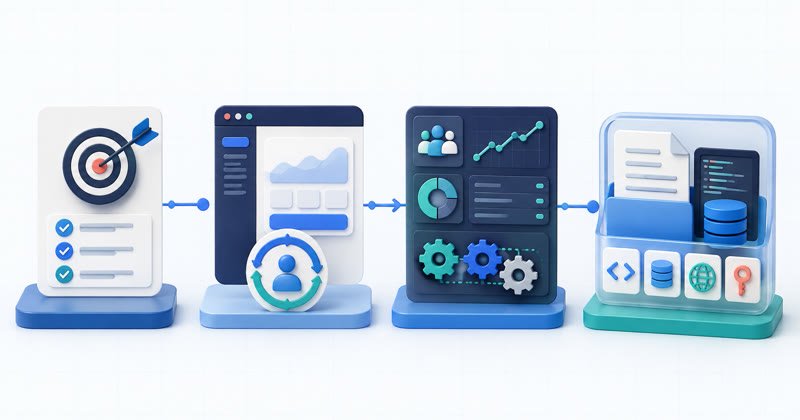
A buyer needs to believe that the product will continue working after the current owner steps away. That changes what you should build. Features matter, but transferability depends on the whole operating system around the code.
1. Revenue that can be verified
Keep payment-processor records, bank statements, invoices, refunds, discounts, and revenue definitions consistent. Separate recurring subscriptions from one-off services. A buyer should be able to reproduce your revenue totals without relying on a screenshot or a custom spreadsheet only you understand.
2. Customers who stay for a reason
Retention is evidence that the software solves a recurring problem. Track churn by plan and customer cohort, record why accounts cancel, and show whether growth comes from a repeatable channel or a temporary promotion. Heavy dependence on one large customer or one traffic source makes future revenue less dependable.
3. Clean ownership of the product
The company should control the source code, domains, design files, documentation, data-processing agreements, and licenses it intends to transfer. Contractor agreements should clearly assign relevant intellectual property. Third-party services and open-source dependencies need an inventory so the buyer understands what can move, what needs consent, and what carries an ongoing cost.
4. Operations that do not live in the founder's head
Document deployment, backups, monitoring, customer support, billing exceptions, security incidents, refunds, and common maintenance tasks. Give systems role-based access rather than sharing one owner login. The fewer undocumented emergencies that require the founder, the more transferable the operation becomes.
5. A product a buyer can inspect
Maintain a current architecture overview, setup guide, environment-variable inventory without secret values, test coverage summary, known-issues list, and product roadmap. Our SaaS due diligence checklist shows the questions a careful buyer is likely to ask.
What makes a SaaS business harder to sell?
Common value leaks are usually operational rather than glamorous:
- revenue mixed with unrelated consulting work;
- one customer representing a large share of income;
- growth dependent on one founder's personal audience;
- shared passwords, missing access records, or unclear data ownership;
- unlicensed code, fonts, photos, or templates;
- no reliable deployment, backup, or rollback process;
- large amounts of deferred maintenance hidden behind a polished interface;
- metrics that cannot be reconciled with billing and bank records.
Fixing these issues can improve the business even if you never sell. Cleaner records sharpen decisions. Better documentation lowers support risk. Reduced founder dependence creates more freedom. Preparing for a possible transfer is therefore useful operational discipline, not just an exit exercise.
Three practical ways to enter SaaS
Build a focused product from scratch
Start with a narrow group of customers and one expensive, frequent problem. Sell the proposed outcome before building a large feature set. The advantage is product knowledge and ownership from day one. The trade-off is time: discovery, design, engineering, distribution, and support all begin at zero.
Buy an operating SaaS business
An acquisition can provide a product, customers, and operating history, but it also transfers technical and commercial risk. Review the guide to buying a SaaS product, inspect the Codeblix sold-business archive to understand how transferred assets are presented, and validate every material claim independently.
Start from source code or a customizable product foundation
A source-code product can shorten the path to a working first release when its architecture matches the intended business. It does not provide customers, market fit, revenue, or effortless operations. Browse SaaS products and source-code concepts, or review examples such as the LedgerFlow finance SaaS starter and Micro SaaS marketplace kit. Treat every listing as a scope to inspect and customize, not proof of an existing profitable business.
How to prepare a SaaS for sale
Start with an evidence-based view of value rather than a headline multiple. The online business valuation guide explains how earnings quality, transfer risk, concentration, and documentation affect what a buyer can reasonably evaluate.
- Decide what is being sold. Define whether the transaction includes company shares, selected assets, source code, domains, customer contracts, content, and brand rights.
- Reconcile the numbers. Produce a monthly view of recurring revenue, expenses, refunds, churn, and owner adjustments that ties back to source records.
- Build a data room. Organize corporate documents, intellectual-property records, product documentation, security notes, analytics, customer metrics, and supplier agreements.
- Reduce avoidable dependency. Document recurring work, move infrastructure into transferable accounts where appropriate, and make access auditable.
- Qualify the buyer. Share sensitive material in stages, use appropriate confidentiality terms, and confirm that the buyer can complete the transaction.
- Plan the handover before closing. Assign responsibility for data, customer communication, credentials, domains, repositories, third-party approvals, and post-sale support.
If you already own a software product or digital asset, the sell a digital asset page explains what Codeblix can review. For the operational side of a transaction, use the web application transfer guide before moving production access or customer data.
A sensible 90-day plan for a first SaaS
Days 1-15: choose the problem. Interview a small, specific customer group. Identify a recurring job, what failure costs, how it is handled today, and who controls the budget. Write one measurable promise the product could make.
Days 16-30: sell the workflow. Create a prototype or a manual version of the service. Ask prospective customers to commit time, data, or money. Objections at this stage are cheaper than unused features later.
Days 31-60: build the smallest dependable product. Implement the core workflow, billing, access control, backups, basic monitoring, and a support route. Avoid a broad platform unless customers have already proved they need it.
Days 61-90: improve retention and documentation. Watch new users complete the workflow, measure where they stop, fix support-heavy steps, record cancellations, and document deployment and recovery. Your first goal is not a huge audience. It is a small group that repeatedly receives enough value to stay.
The durable lesson
SaaS is powerful because one well-designed product can serve many customers repeatedly. But the wealth does not come from the acronym. It comes from owning a useful, financially sound, well-operated system. Build recurring customer value first, make the operation understandable without you, and you gain options: keep the cash flow, reinvest in growth, or offer a credible asset to a future buyer.
When you are ready to study concrete product directions, explore the Codeblix software marketplace. Compare scope, delivery, documentation, and transfer requirements before deciding whether to build, buy, or customize.
Frequently asked questions
How does a SaaS business make money?
Most SaaS businesses charge recurring subscriptions, usage fees, per-seat fees, or tiered plans. Profit depends on retention, pricing, gross margin, acquisition cost, and the ongoing cost of serving customers.
Can SaaS make you rich?
SaaS can create significant owner value through profit, reinvestment, or a sale, but there is no guaranteed or passive path. Durable outcomes depend on solving a real problem, retaining customers, controlling costs, and owning transferable equity.
What makes a SaaS business sellable?
Buyers usually need verifiable revenue, defensible customer retention, clear intellectual-property ownership, documented operations, secure transferable access, understandable code, and limited dependence on the current owner.
Should I build or buy a SaaS business?
Building offers product knowledge and control but starts without customers or operating history. Buying can shorten that path but transfers technical, commercial, legal, and retention risk that must be checked through due diligence.
Does buying SaaS source code include customers or revenue?
Not unless the sale documents explicitly include and verify them. Source code or a starter product can reduce development time, but it does not by itself include market fit, customers, traffic, or recurring revenue.