

Last updated:
SaaS is often described as passive income because customers can be billed every month without the founder sending a new invoice each time. That description confuses automated collection with an automated business. Recurring revenue can make income more predictable, but the product still has to work, customers still need help, and the company still has obligations.
The useful question is not whether SaaS is passive. It is how much of the operation can run reliably without one owner handling every routine task and emergency.
Recurring does not mean passive
A subscription renews only while the customer continues to receive enough value. Behind that renewal are product maintenance, hosting, security, backups, billing, failed-payment recovery, support, onboarding, sales, accounting, and legal administration. Even a small product can create urgent work when an integration changes or a customer cannot access important data.
That does not make SaaS unattractive. It makes it a business. The SaaS business model is powerful because work invested in one product can serve many customers. The owner still has to design an operating system that keeps those customers successful.
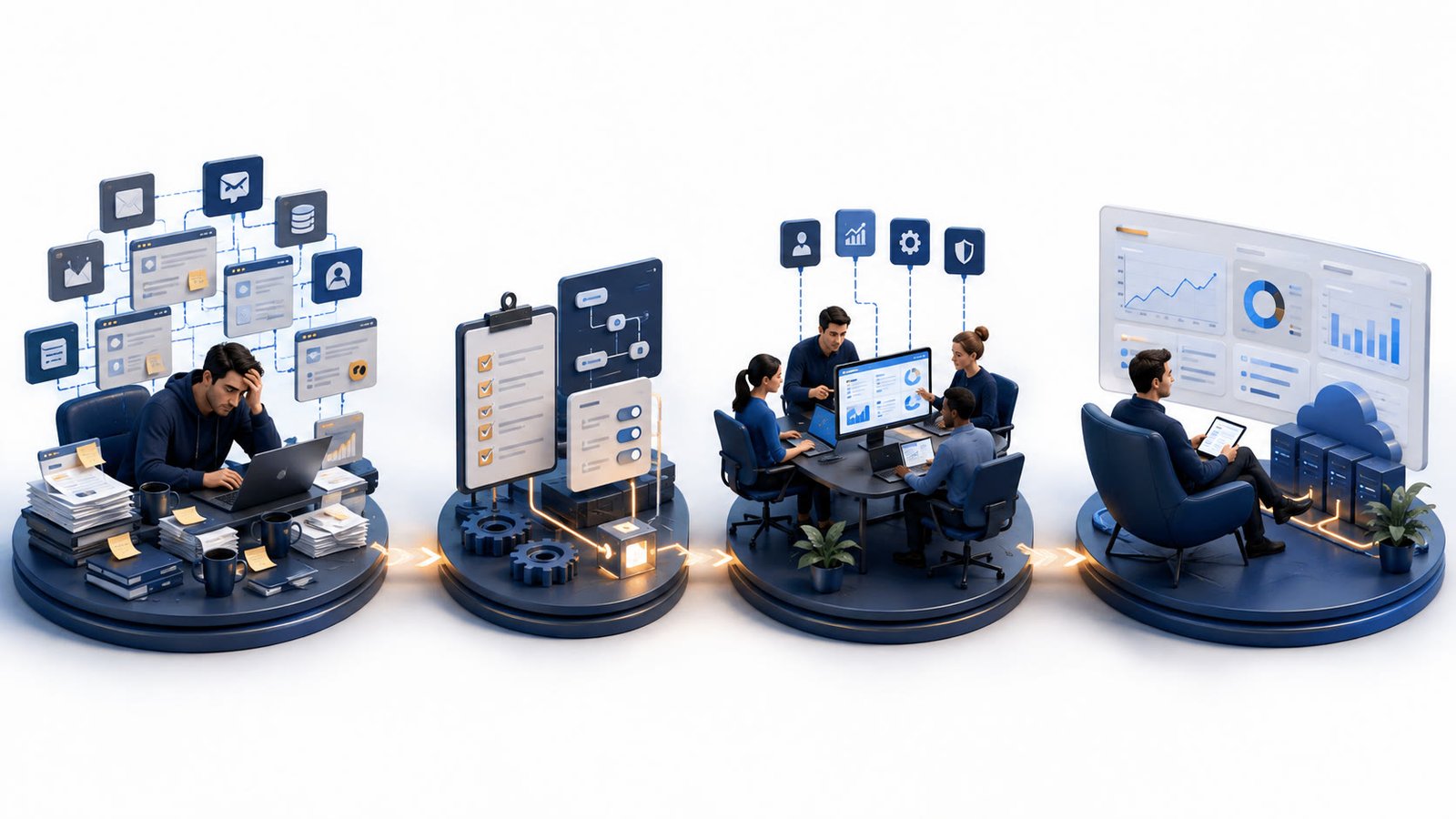
Four levels of owner involvement
- Founder-operated: the owner writes code, answers support, sells, deploys, and approves every exception.
- Process-assisted: checklists and automation reduce repetition, but the owner remains the default decision-maker.
- Team-operated: named people or suppliers own routine functions, follow service standards, and escalate defined risks.
- Governed ownership: management reports outcomes to the owner, who focuses on capital, strategy, senior hiring, and material risk.
A business can move between these levels. A major outage, security incident, product migration, or loss of a key employee can pull the founder back into daily work. The goal is resilience, not a claim that nothing ever needs attention.
What can be automated safely?
Good automation handles predictable, reversible work. Examples include subscription invoices, payment reminders, backups with restoration checks, uptime alerts, access provisioning, onboarding messages, and standard reports. Automation should have an owner, an exception path, and evidence that it ran.
Avoid automating judgement before the rules are clear. Refund disputes, security incidents, unusual account access, vulnerable customers, and legal requests usually need a responsible person. An unattended workflow that quietly makes the wrong decision is not passive. It is hidden operational debt.
What should be delegated?
Delegation works when a role includes authority, information, and a measurable outcome. “Handle support” is vague. “Own first response during these hours, resolve documented cases, protect customer data, and escalate severity-one incidents immediately” is operable.
Start with a weekly responsibility map:
- who watches availability, backups, and security alerts;
- who owns customer questions and cancellation feedback;
- who reconciles billing, refunds, taxes, and supplier costs;
- who approves releases and can roll them back;
- who maintains marketing and sales activity;
- who can access each critical account, and how access is revoked.
Measure dependence, not just revenue
Track founder hours by function for at least four weeks. Record interruptions, unresolved incidents, overdue customer requests, undocumented tasks, and decisions that only one person can make. Revenue can rise while owner dependence gets worse, especially when custom work is sold without enough delivery capacity.
Useful signals include support hours per customer, incidents requiring the founder, percentage of routine releases completed without the founder, documentation freshness, revenue concentration, and the number of critical systems with only one knowledgeable operator.
A practical path toward a less dependent SaaS
- List every recurring job and exception from the last month.
- Remove work that does not improve customer value or reduce risk.
- Document the remaining workflow while doing it.
- Automate stable rules with monitoring and a recovery path.
- Delegate a complete outcome, not isolated clicks.
- Run a planned founder-absence test and record where work stops.
- Fix the weakest dependency, then repeat.
If you are assessing a product to buy, use the SaaS due diligence checklist to examine support load, access, documentation, infrastructure, and founder involvement. A listing that says “passive” is not evidence. Ask for operating records and verify them.
SaaS can create income with less direct labour per transaction than a project business. It can also become transferable. Neither result happens because billing repeats. It happens because customer value repeats and the operation is deliberately made reliable.
Frequently asked questions
Can SaaS generate passive income?
It can produce recurring income, but software still needs support, maintenance, security, billing, and customer retention. It becomes less owner-dependent only when those jobs are reliable and delegated.
What makes a SaaS business owner-independent?
Clear procedures, monitored infrastructure, role-based access, documented support, dependable acquisition, and a team or vendors that can operate without the founder handling every exception.