

Last updated:
You can build a useful SaaS product without writing every part in code. Visual application builders, hosted databases, workflow automation, authentication, billing, and email services can turn a narrow process into a working subscription product. The danger is not that no-code is “unprofessional.” It is choosing tools before understanding the product’s data, risk, and escape routes.
Begin with the workflow and constraints
Write one complete customer journey from input to valuable result. Identify users, roles, records, approvals, integrations, notifications, exports, retention requirements, and failure cases. Note the information that is personal, financial, confidential, or regulated.
Then validate the outcome with customers. A polished builder does not answer whether people need the product. Use the SaaS idea validation guide to collect behavioural evidence first.
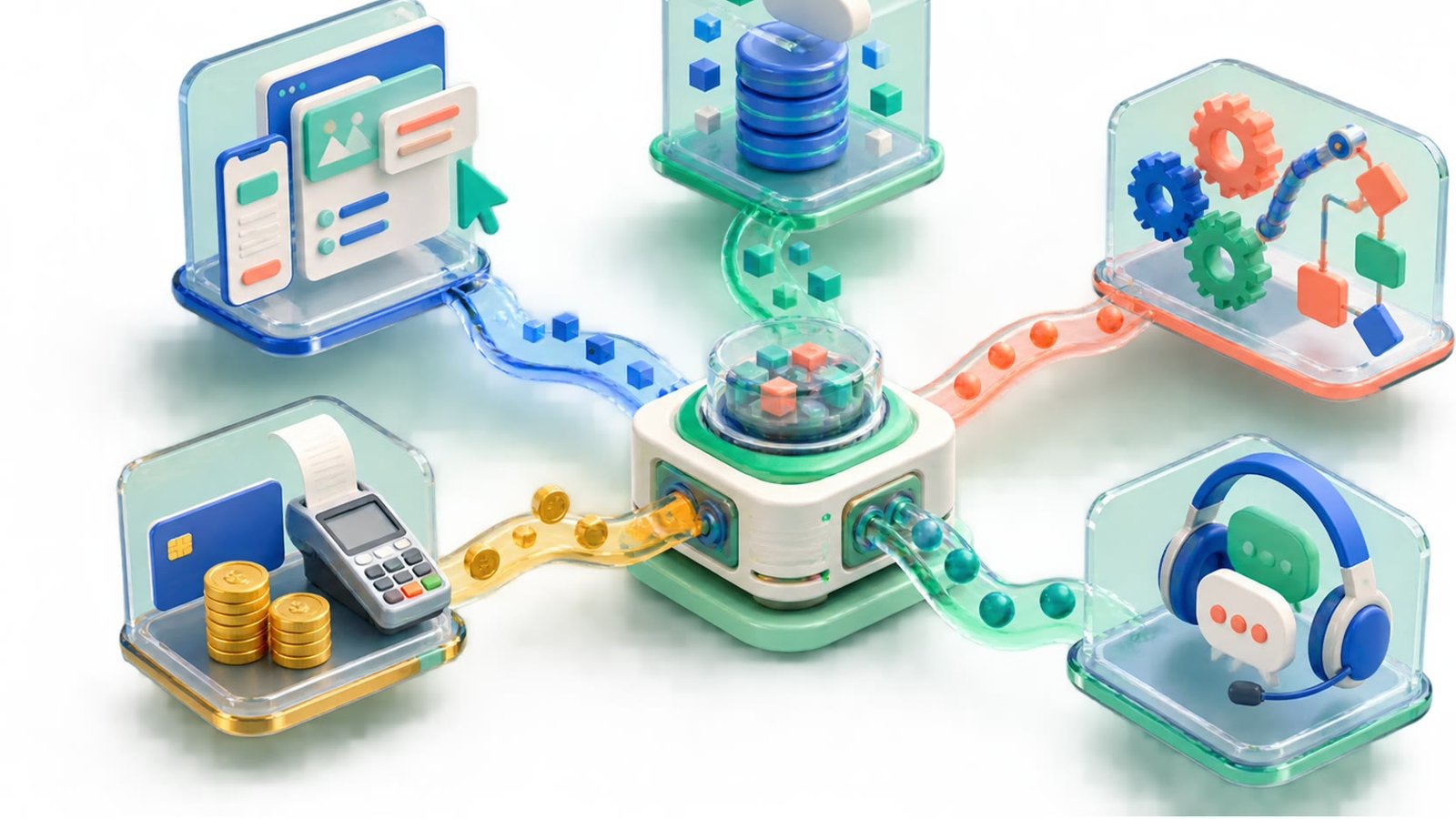
Choose a stack by responsibility
- Interface: pages, forms, navigation, responsive behaviour, and accessibility.
- Data: record structure, relationships, validation, access policy, backup, and export.
- Identity: signup, login, recovery, roles, organisation membership, and session security.
- Billing: plans, tax handling, invoices, failed payments, changes, cancellations, and refunds.
- Automation: jobs, retries, idempotency, alerts, and an audit trail.
- Operations: monitoring, support, releases, incident response, and supplier status.
One platform may cover several responsibilities. Keep the boundaries visible so you know where customer data lives, which supplier can stop the workflow, and how each part can be replaced.
Design the data before the screens
Define the main records and who can see or change each one. Test organisation separation carefully. A filter in the interface is not necessarily a security rule in the data layer. Verify permissions with accounts from two different organisations and with every user role.
Plan export and deletion at the start. You should know how to give a customer their data, honour retention rules, restore a backup, and leave a supplier if needed. Export a real test set before launch rather than trusting a feature label.
Build billing as a state machine
Subscription billing has more states than paid and unpaid. Trials expire, payment attempts fail, cards change, plans upgrade or downgrade, tax information changes, refunds occur, and cancellations may apply immediately or at period end. Decide what product access should do in each state and make webhook processing safe to retry.
Treat automation as production software
Every important workflow needs a unique job identifier, visible status, retry rules, and an alert when human action is required. Do not let the same payment, message, or external update happen twice because an automation retried after a timeout.
Test the risks, not only the happy path
Test failed payments, interrupted uploads, duplicate submissions, expired sessions, permission changes, deleted records, unavailable integrations, and recovery from backup. Check the product on a slow connection and a small screen. Give a first-time user a task and observe without guiding every action.
Know the signals for custom development
Custom code becomes reasonable when a documented platform limitation blocks customer value or creates unacceptable cost, security, performance, ownership, or integration risk. Before migrating, compare the cost of the constraint with the cost and risk of a rebuild. Sometimes a hybrid approach is enough: keep the interface in a builder and move one critical service to code.
Estimate both routes with the SaaS development cost framework. If you prefer a code foundation, inspect the license, architecture, dependencies, security, and handover material of any customizable SaaS product. No-code and source code are delivery choices. Neither replaces a validated market or responsible operation.
Why this matters for Mauritius businesses
Mauritius is rolling out MRA e-invoicing in phases by taxpayer category. The timetable and status can change, and MRA may separately notify a taxpayer, so businesses should check the current MRA e-invoicing page and their own notices before acting on a deadline.
The Codeblix approach
Codeblix eInvoicing is MRA-listed as an EBS Solution Provider (SN 95, BRN C24214425). The system handles every aspect of MRA compliance automatically - real-time fiscalisation, IRN tracking, QR code generation, hash chain maintenance, and monthly transaction reporting. The local support team in Chamouny is available to help with any MRA query, audit, or transition question.
What to do next
If your present process does not support the fiscal-invoice requirements that apply to your business, document the gap and test an appropriate EBS workflow. Codeblix can review your business requirements and onboarding scope before preparing a proposal; regulatory conclusions remain with the taxpayer and its advisers.
Frequently asked questions
The most common questions about how to build a saas without code without building a trap are covered in the FAQ section below. If you have a question that is not covered, the local Codeblix support team is available by phone, WhatsApp, or email.
Related resources
Codeblix publishes a regular blog covering MRA e-invoicing, VAT compliance, payroll, and business management for Mauritius businesses. The blog is updated weekly with new guides, how-tos, and case studies. You can also find detailed product documentation, video tutorials, and a knowledge base in the Help Centre.
Frequently asked questions
Can a no-code SaaS be a real business?
Yes, if it solves a real problem and the chosen stack can support its security, reliability, data, billing, and customer requirements. The tool does not create demand by itself.
When should a no-code product move to custom code?
Consider a change when hard platform limits, cost, performance, compliance, integration, or ownership constraints materially block the product, not simply because custom code feels more prestigious.