
Buy a recipe-licensing platform for your publishing catalogue
Acquire RecipesMondial around a named collection, retained licence terms and a clear edition procedure.
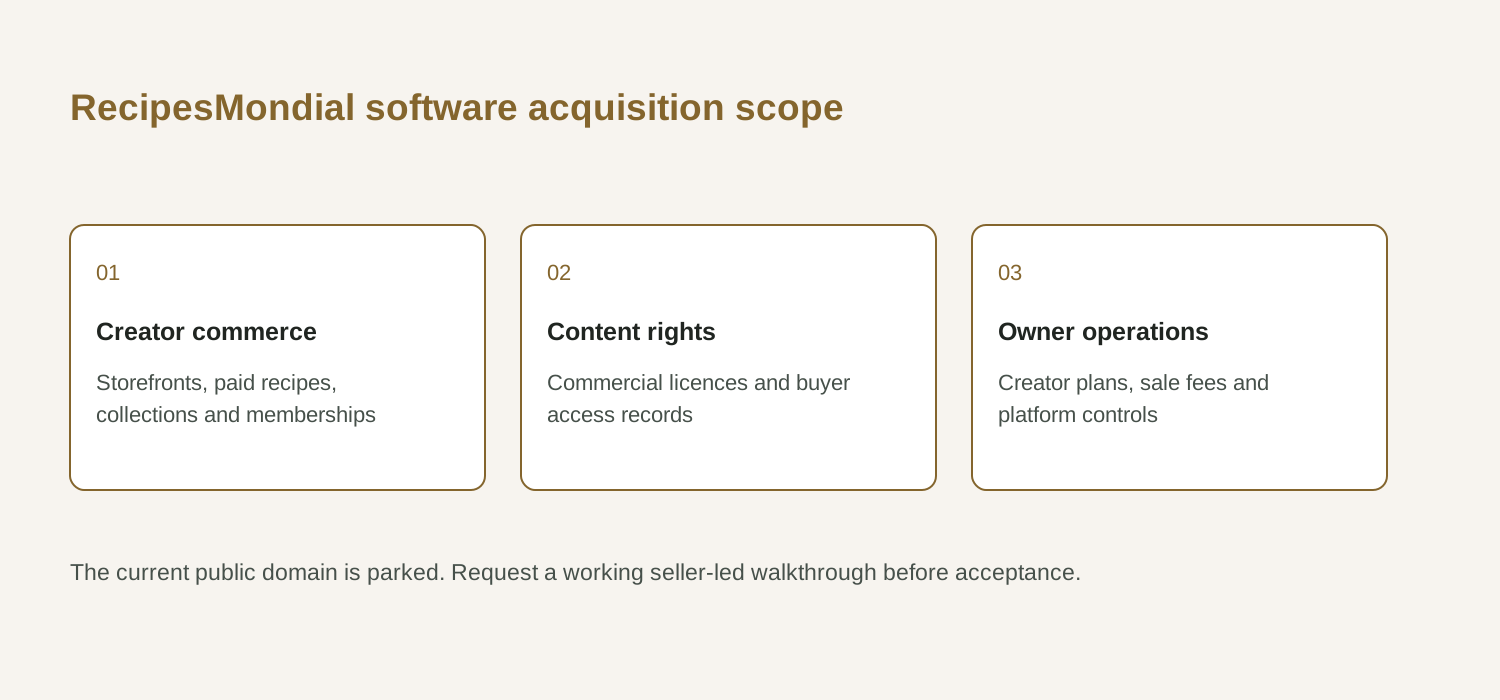
Request RecipesMondial for a publisher-owned commercial-licence catalogue. Inspect the product, retained terms and customer access after a corrected edition.
Buy RecipesMondial's application and domain for a recipe publisher's commercial-licence catalogue. Request the existing software package through the RecipesMondial Flippa listing. This purchase case concerns a publisher that already has permission to offer its own material. The sale does not supply a rights-cleared publishing catalogue, a contracted creator audience or customer licences merely because the software can record content purchases.
The public RecipesMondial domain returned a parked redirect when checked on 23 October 2026. No working public demo is represented here. Request an authorised current application walkthrough and agree the working domain and deployment condition explicitly. The edition examples below are fictional purchase tests based on documented product scope and inspected source, not claims of completed commercial transactions.
Request the software for a catalogue whose authority you can explain
Request the RecipesMondial source-and-domain acquisition offer →
Start with the RecipesMondial asset page and the broad recipe-commerce acquisition brief. Read the user guide and technical handover document before the seller workshop. Confirm current availability, price, represented finances and included assets through the actual transaction.
RecipesMondial is documented as creator-commerce software for free and premium recipes, collections, memberships and commercial licences. It has customer purchase libraries, creator storefronts, platform plans and connected-account commerce foundations. This publisher's purchase centres on a narrower question: can the delivered application represent the publisher's permitted catalogue, customer licence record and edition-change procedure accurately enough for its intended offer?
The worked publisher has already chosen licensed content commerce
Imagine a fictional publisher with a small catalogue of recipe text and photographs it is authorised to offer for specified commercial uses. It wants to sell a named digital collection to business customers. It is not deciding whether to launch grocery delivery, build a household meal planner or operate a restaurant. It has chosen licensed-content commerce and is deciding whether to buy this application as the foundation of that operation.
For the purchase workshop, call the fictional product Citrus Lunch Collection, first edition. Use artificial recipe text and placeholder material the buyer is entitled to supply. Define a proposed commercial use in the publisher's own draft terms, then identify the person authorised to approve those terms. The software demonstration should show where that description and licence information belong, not decide the publisher's permissions on its behalf.
The buyer also plans a later corrected edition. That change makes the acquisition decision concrete. It needs to understand what the application records at purchase, which content remains editable and what an earlier customer sees after a revision. A licence screen alone cannot answer those questions, and a stored terms record should not be confused with an immutable archive of the entire published collection.
Keep material authority outside the software's claim of entitlement
There are two different uses of permission in this transaction. The publisher must be authorised to offer the material and the stated customer use. The application must grant a particular customer the access its implemented purchase rules provide. A valid application entitlement does not independently establish that the publisher was entitled to make every content promise.
Prepare the catalogue authority record before import. Identify the recipe text, photograph, product description and other material that the publisher intends to include. For each item, name the responsible source and the permitted use the publisher has confirmed. The buyer should resolve unclear permissions with the relevant parties before offering the product; this article does not supply or interpret the publisher's content agreements.
Give the acquisition two useful inventories. The seller identifies the transferable software package and its dependencies. The publisher identifies the catalogue it plans to operate inside that application. Put a responsible person beside each inventory so the buyer can obtain a clear answer about the software, the material or the permitted customer offer during the same purchase discussion.
Give the first edition an explicit product identity
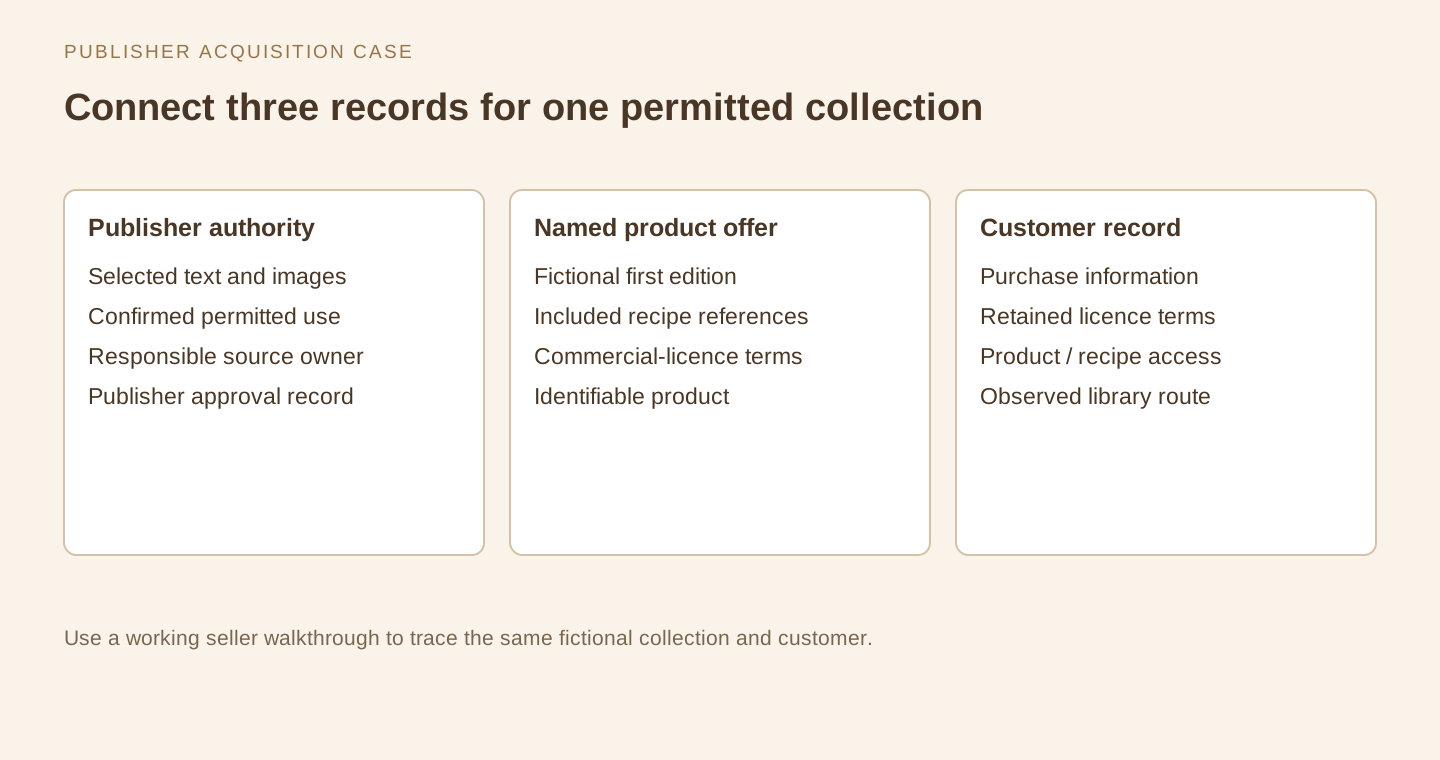
For the fictional collection, name the edition and list the recipe records it is intended to contain. Identify the associated permitted photographs and the proposed licence wording. Then ask the seller to show how the current creator product controls represent that collection and its commercial-licence product type. Use actual fields rather than assuming a dedicated publisher-edition module exists.
The current source includes products that reference recipe records and can carry licence terms. Creator editing supplies the catalogue side of the workflow, while the customer library supplies the access side. Ask the seller to connect those two views using the same fictional collection. Keep the publisher's edition name and approval record beside the demonstrated product so the team can follow the relationship easily.
A clear product identity helps prevent an ambiguous sale. A business customer should be able to understand which collection and use they are purchasing. If the publisher requires an edition identifier, licence field or display rule not present in the delivered interface, put it in the additional scope. Source ownership makes future changes discussable; it does not make them current features.
Use an edition-to-entitlement acquisition record
| Record | Fictional first-edition example | Evidence to obtain |
|---|---|---|
| Material authority | The publisher may offer the selected text and images for its stated purpose. | Publisher's own confirmed authority record; not inferred from the app |
| Product identity | Citrus Lunch Collection, first edition | Current creator product and included recipe references |
| Advertised use | The publisher's approved commercial-licence wording | What the customer sees before the authorised test purchase |
| Purchase record | One fictional customer and one identified product | Resulting order, product information and stored licence terms |
| Content access | The customer's actual library route to purchased material | Observed current access, including after a content change |
| Later edition | A corrected recipe and revised collection description | Existing behaviour versus any newly required archive or migration work |
The publisher may keep its authority record outside the application while using the current licence and entitlement records inside it. Identify where each answer lives and who maintains it. A catalogue editor can then trace a photograph to the approved material, while a commerce operator can trace the customer's purchase to the relevant product and licence record. That is a practical record for the seller workshop.
Ask the seller to annotate the record against the release being demonstrated. A current behaviour, an optional configuration and a requested new feature should have different descriptions. This makes the acquisition offer reviewable without promising that the seller will build an unspecified catalogue migration or rights-management service.
Inspect what the paid purchase actually preserves
The inspected source includes order-item information for product title, type and licence terms, together with a commercial-licence record that can preserve terms and a start time. This is a specific implementation foundation to demonstrate. It is not a claim that every recipe, image and product page becomes an immutable historical copy when someone buys.
Use a fictional customer and an authorised test purchase. Ask the seller to show the information retained in the resulting purchase and licence records, then compare it with what was displayed in the product offer. Identify when the application records those details and what happens if the catalogue changes around the transaction. Do not replace this demonstration with a screenshot of an editable licence form.
The publisher should decide whether the observed record supports its intended offer. If it requires a separately stored signed document, a fixed content package or additional fields, ask for those requirements explicitly. A terms snapshot is useful only when the buyer understands its actual scope and does not advertise it as evidence of a stronger archive.
Inspect purchased access through ordinary customer accounts
Use the same fictional buyer account from the test purchase through the normal library route, then inspect the relevant product and recipe access. Keep the current product record and customer identity traceable throughout the workshop. The publisher's operator should be able to point from the customer's purchase to the material that account can open and the licence information it can read.
Use a second artificial account without that purchase as a comparison. Ask the seller to explain the public product view, the purchase route and the full library view for each account. This gives the publisher a practical way to understand the difference between displaying an offer and granting access, using the actual interfaces its future customers would encounter.
The source links library items to product and recipe records. This makes later content editing an important part of the publisher's purchase test. The buyer needs to observe the actual behaviour rather than promise that earlier customers always receive a permanently frozen edition. A current entitlement and a historical content package are different product requirements.
Make the corrected edition the central purchase test
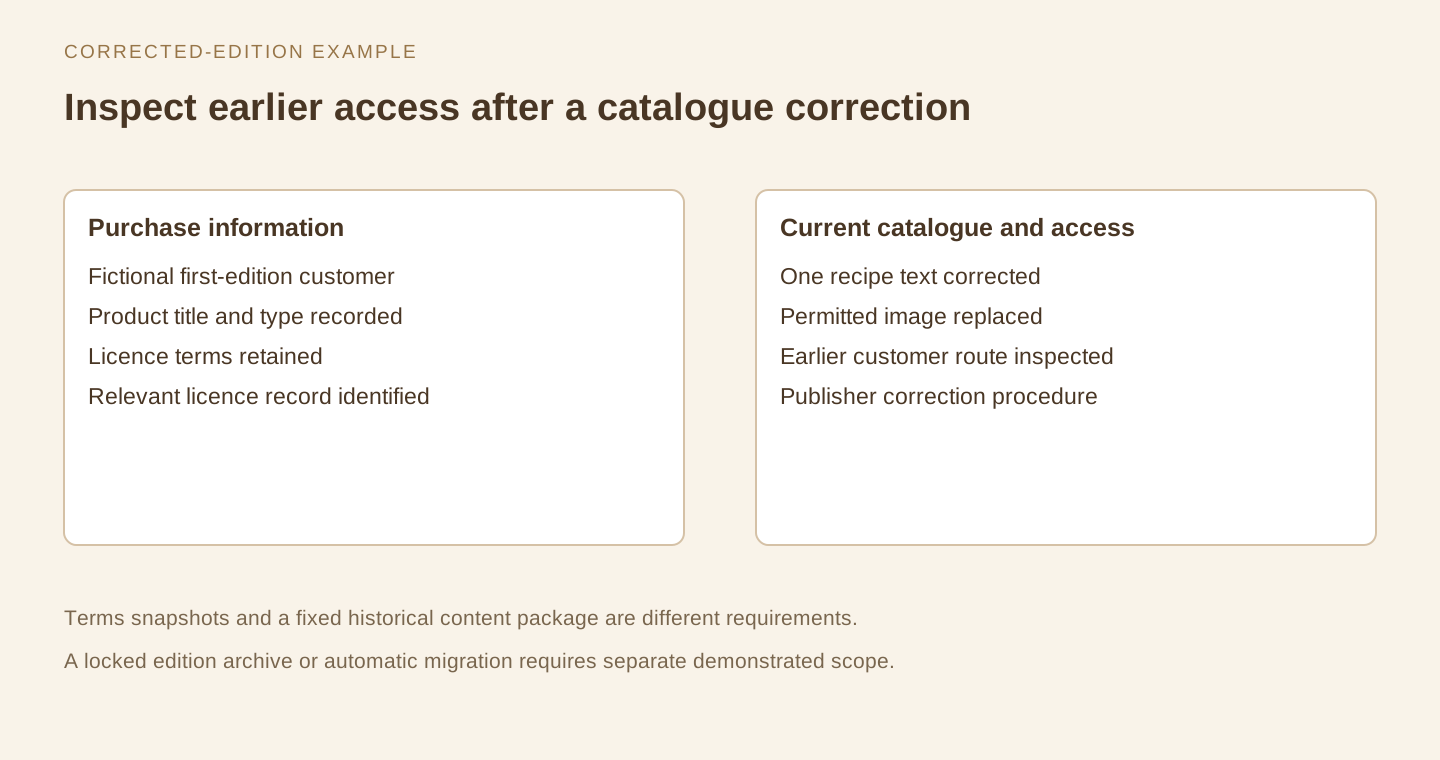
Now change one fictional recipe after the first test purchase. The publisher corrects a text detail and wants to use a replacement image it is authorised to offer. Keep the earlier product and buyer identifiable. Ask the seller to demonstrate the supported edit path and inspect what the earlier customer sees afterwards.
The buyer is determining whether the delivered content-reference model suits its intended publishing offer. It may accept a purchased product that shows current maintained content, with a clear human record of corrections. That can be a useful publishing service when the customer offer explains it accurately. Ask the catalogue editor and commerce operator to describe the same observed behaviour in plain language.
A fixed historical package is a separate requirement to demonstrate and agree. The current terms snapshots are not an immutable content archive, and automatic edition migration is not represented as delivered. If the publisher requires those stronger guarantees, keep them in a single additional-work schedule and resolve them before advertising that particular edition promise.
Record content corrections separately from licence wording
A change to a recipe and a change to the permitted commercial use are separate publisher decisions. The fictional collection might correct a heading without changing its proposed licence wording. A later product might carry a different permitted-use description. The purchase workshop should keep those cases distinct so the buyer understands both the current content and the retained terms record.
Ask the seller to demonstrate an edited product offer and the earlier fictional customer's stored licence information. Record the actual result. The publisher must then decide how it will describe corrections, later offers and any requested customer action through its own authorised process. The application should not be presented as automatically renegotiating customer permission.
Write the publisher's human procedure beside the result. Name who approves a content correction, who approves a new offer's wording and who answers a customer question about an earlier purchase. Identify the current application controls each person uses. Any required automated notice, approval or renewal should have its own agreed scope and observable result before the publisher relies on it.
Keep commercial licences separate from reader memberships
RecipesMondial also supports memberships and other digital product types. A publisher can keep those future offers understandable by giving each one a clear customer promise. The commercial licence describes the publisher's permitted-use offer; a reader membership describes its own access benefits. The product and resulting customer records should make the chosen mechanism easy to identify.
For the worked catalogue, start with the named licence product and one customer. If the buyer also wants subscribers to read new recipes, demonstrate that as another entitlement path. Inspect the actual subscription state and content access separately. Do not imply that membership automatically grants commercial reuse rights or that buying a licence automatically grants every future membership benefit.
This distinction helps the buyer choose an initial scope. It can purchase the existing application for a narrow licence catalogue, train its operator on that path and consider a reader subscription later. Ask Codeblix to organise the walkthrough around the initial mechanism so the buyer can leave with one complete product, purchase and access example it understands.
Accept creator and merchant readiness without treating it as catalogue authority
The documented commerce foundation uses Stripe connected-account payments alongside platform software billing. Provider verification and payout onboarding remain account-owner approval steps. The project documentation describes the application failing closed until the relevant payment account is ready. Ask the seller to demonstrate the current readiness boundary in the authorised release.
The publisher should name who owns its merchant and creator accounts after transfer and what configuration remains. Put the account-readiness evidence beside the catalogue authority record, with a different responsible person where appropriate. This lets the publisher coordinate the payment and content sides of its launch while preserving a clear answer for each purchase requirement.
No live commercial licence sales or paying creator history are established by this case. Confirm represented finances through the current listing and supporting evidence. Example products, orders and creator records remain demonstration material. The buyer's planned catalogue and future business customers are not revenue transferred with the software asset.
Import a small permitted catalogue before promising bulk migration
The publisher may hold many items, but the acquisition example should begin with a small permitted sample. Prepare a few artificial recipe records and associated image references, then ask the seller to show the current creator controls for adding and organising them. Identify which source information maps to actual fields and which information the publisher must keep elsewhere.
Do not infer a bulk catalogue importer or automated edition migration from ordinary product editing. If the buyer requires those capabilities, supply a sample structure and request an explicit scope. The purchase can be accepted against current manual controls or a separately agreed addition, but the buyer needs to know which arrangement it is choosing.
Include one deliberately unclear catalogue row in the sample. For example, an image may have a different permitted use from the accompanying text. The publisher should hold that row until its own authority is resolved rather than rely on the application to decide. This keeps the publishing decision with the responsible buyer and the software inspection focused on the records it actually delivers.
Retain an edition procedure the next operator can follow
A content editor and a commerce operator may need different information. The editor needs to know which material may change and who approves the change. The commerce operator needs to identify the product, the customer's purchase and the relevant terms record. The buyer should be able to hand over both responsibilities without assuming a specialised publishing role system.
For the fictional corrected edition, ask a second authorised operator to follow the record from the product title to the selected recipe references and the earlier test licence. They should be able to explain the current material, the retained purchase information and the publisher's correction procedure. That provides a practical handover test using the same records the first operator inspected.
If the buyer needs formal content approval, a locked edition package or an automated customer-upgrade path, define that requirement before the offer is final. The existing application can still be a suitable foundation. Suitability depends on accepting its actual content and entitlement model, not renaming editable catalogue records as a complete rights-management platform.
Answer one commercial-use question from the retained record
Give the fictional customer a practical question after the test purchase: which material in the collection belongs to the commercial-use product they selected? Ask the publisher's operator to locate the purchase, identify the product and read the associated licence information. The operator should be able to explain where the answer comes from and who approves an interpretation of the publisher's own terms.
Next ask about the corrected image. The catalogue editor identifies the current recipe material and the publisher's change record, while the commerce operator identifies the earlier customer's retained purchase information. The two people can then prepare an accurate response using the actual evidence. This is a useful test of the publishing operation the buyer wants to own: the customer question connects the catalogue, the purchase and the current content.
Use the workshop to find an efficient repeatable route. The operator might begin in the customer library or the relevant creator customer and order view, depending on the current demonstrated interface. Record the supported route and the information the operator must obtain from the publisher. Keep sensitive or genuine customer material outside this artificial exercise.
The result is a concrete acquisition benefit to assess. A publisher that can trace its permitted collection to an understandable product and customer record has a usable commerce workflow to discuss with Codeblix. The purchase decision rests on whether that workflow and the agreed edition procedure fit the publisher's offer, with any additional requirement clearly assigned.
Agree the public deployment separately from the publisher launch
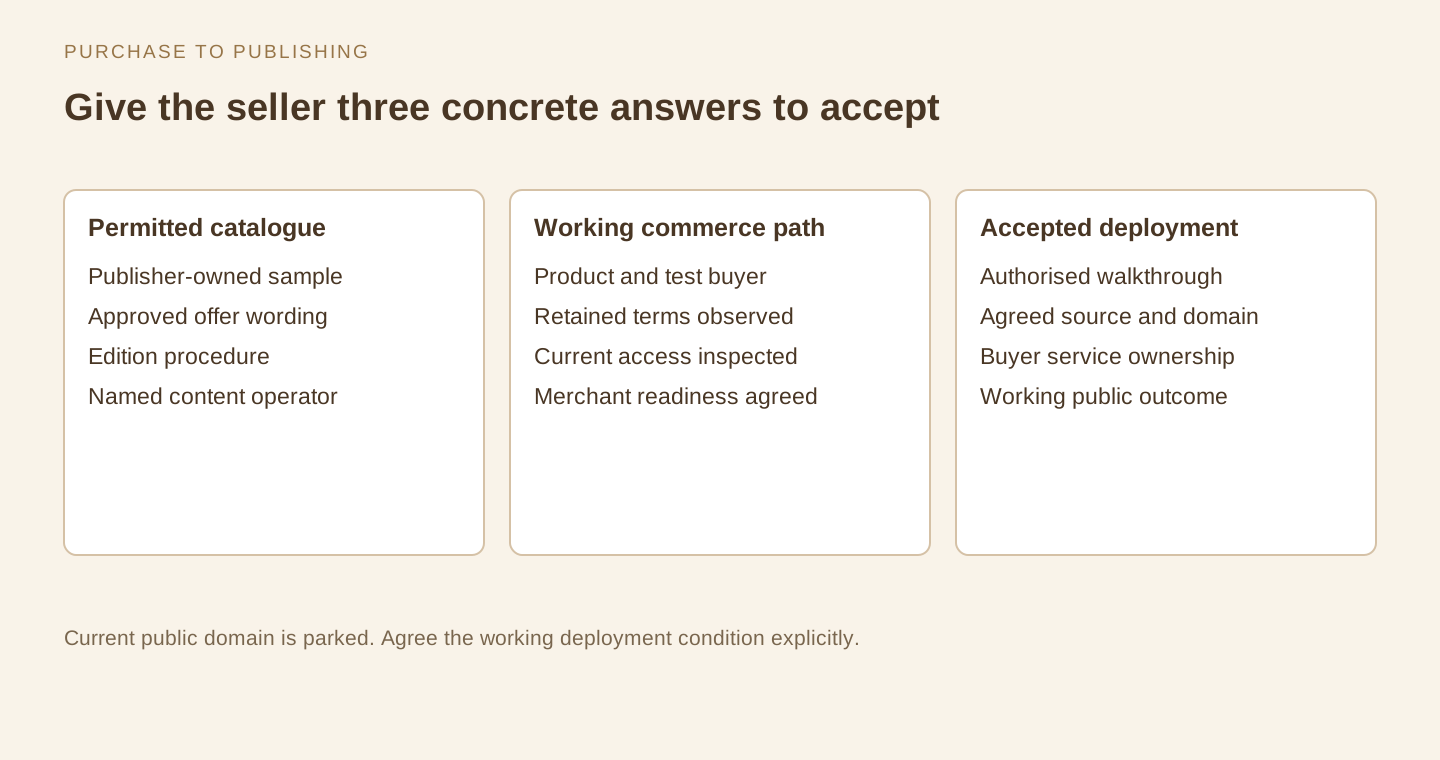
The parked public domain remains an explicit condition. The buyer should request the release and environment used for the seller walkthrough, the agreed domain transfer and the working public deployment outcome. A source repository or an old deployment description does not establish that the current public address serves the application.
Coordinate the publisher's launch work around permitted live content, approved offer wording, account configuration and named operators. The transaction should identify what Codeblix will deliver and what the publisher will prepare. Put those responsibilities on the launch record alongside the software acceptance evidence so each person can see the next purchase or preparation action they own.
Use the worked first-edition record to keep the two stages understandable. The agreed software release must demonstrate the current purchase and access path. The publisher's own permitted catalogue and customer promise must be ready before it offers real licences. Any additional development or migration assistance should have its own defined result rather than an open-ended launch promise.
Complete the publisher's licence-catalogue acquisition record
- Prepare one permitted fictional edition and its proposed licence description.
- Request a working seller demonstration of the actual product, purchase, licence and library records.
- Change one recipe and inspect what the earlier customer can access.
- Resolve any gap between that behaviour and the publisher's intended edition promise before accepting the package.
Contact Codeblix for the RecipesMondial acquisition offer with the completed edition-to-entitlement schedule. A publisher can make a precise purchase request when it knows which material it may offer, what the software retains and which edition guarantees it still needs to agree.
Explore the products discussed
Explore related acquisition offers