
Buy a booking application for your existing bicycle rental fleet
Acquire FunRideBikes around one owned bicycle, accepted dates and the physical handover.
Request FunRideBikes for an existing rental shop. Work one bicycle through listings, date boundaries, pickup and late-return responsibility before purchase.
Buy FunRideBikes' domain and application for an existing bicycle rental shop's owned fleet. Request the current individual package through the FunRideBikes Flippa listing. This is a software acquisition for an operator that already controls its bicycles and customer service. The sale does not include a physical fleet, workshop, premises or rental workforce.
The worked purchase follows one artificial bicycle through a listing, selected dates, pickup responsibility and a late-return exception. FunRideBikes has provider storefronts, bicycle records, discovery and date-range booking foundations. The buyer should accept the actual current availability and payment behaviour through a seller demonstration, with any maintenance, out-of-service, turnaround-buffer or reassignment controls separately demonstrated or scoped.
Request the application around a fleet your shop already owns
Request the FunRideBikes source-and-domain acquisition offer →
Use the FunRideBikes asset page and broad bicycle software acquisition brief to inspect the individual offer. Confirm current availability, price, represented finances, source and domain, service ownership and agreed assistance through the actual listing. The buyer's existing bicycles and trading history remain its own separate operation.
Explain that your goal is an owned online channel for a particular shop and fleet. The delivered product is a marketplace application with provider and platform roles. Ask Codeblix to show the actual account arrangement for your proposed use. If you require a restricted single-provider site or a connection to an existing shop system, agree that work explicitly.
The buyer needs an accurate physical promise from a digital record
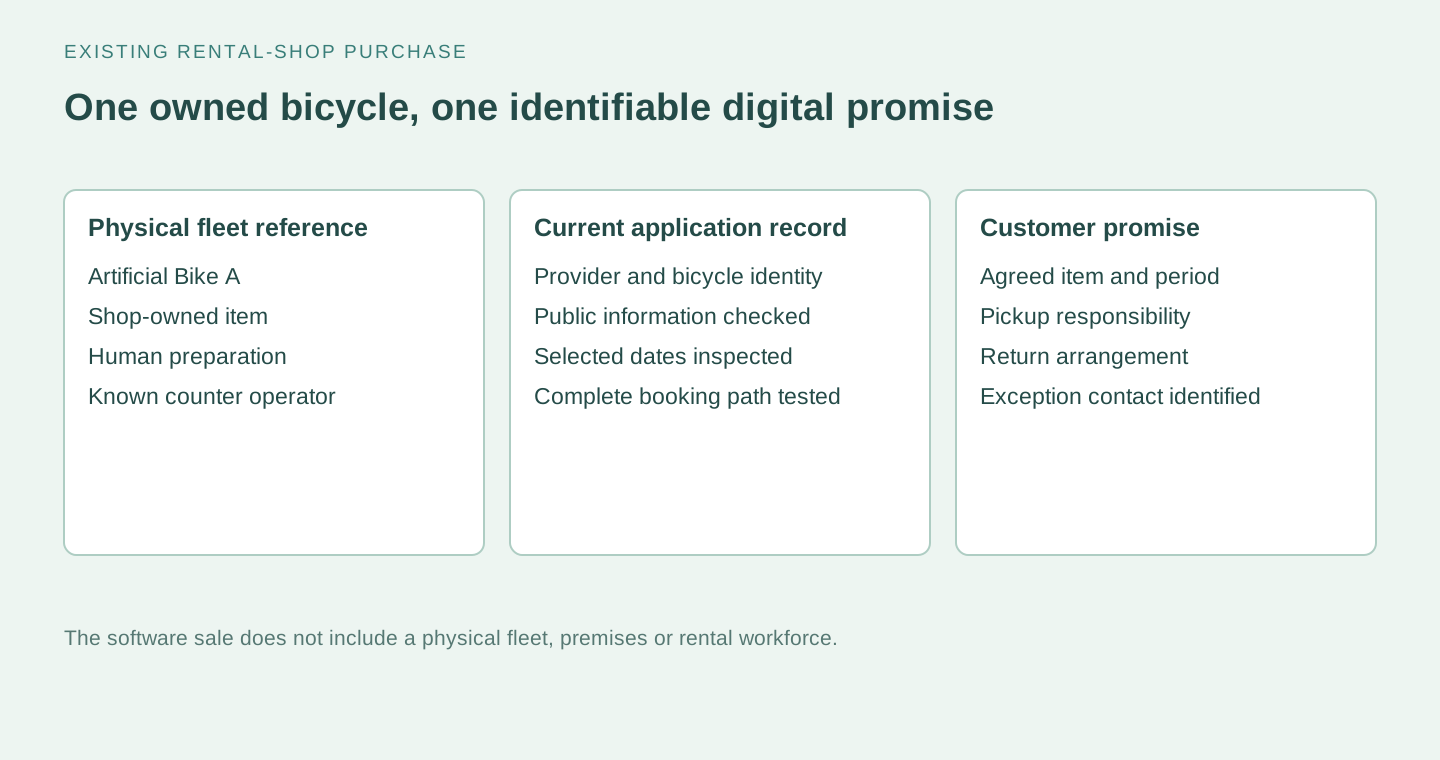
Imagine a fictional shop that owns several bicycles and wants customers to find and request them online. Its workshop label Bike A refers to one actual bicycle in its own fleet. For the purchase demonstration, all bicycle and booking details are artificial. No example inventory, rider or rental shown in the software represents an asset or customer transferred by this case.
The shop's desired promise is specific: a customer chooses a listed bicycle for an agreed period and knows where the physical handover belongs. The application record helps represent that promise, while the shop still prepares the bicycle, hands it over and handles the return. The buyer should know how those responsibilities fit together before making an offer.
This differs from a guesthouse distributing another company's rental service or an operator recruiting an unknown provider network. The shop already controls its fleet. It is deciding whether to acquire this application as the digital channel for those existing assets, using the delivered provider model and a clear human operating procedure.
Map one physical bicycle to one identifiable listing
Start with the shop's own fleet reference for artificial Bike A. Ask the seller to create or identify the corresponding bicycle record through the actual provider controls. The current schema includes a provider relationship, bicycle name, category, hourly and daily prices, image and features, with location context available in the listing and provider model.
Keep a simple human crosswalk between the shop's fleet reference and the actual application record. A public name such as City Bicycle may describe several bikes in a physical shop, so the buyer needs to know what this particular listing represents. Ask the seller to demonstrate the current record model rather than assume it is a pooled quantity or automatic fleet-allocation system.
Open the public listing and provider storefront. Compare the displayed bicycle and service information with the artificial fleet record. The buyer should recognise the item a customer believes they are choosing and the shop responsible for fulfilling that choice. Any desired additional serial, maintenance or inventory fields should be separately scoped.
Use a fleet-to-booking-promise purchase record
| Operating question | Artificial Bike A example | Evidence to inspect |
|---|---|---|
| Which physical item is represented? | The shop's fleet reference Bike A | Actual listing identity and provider relationship |
| What period does the customer request? | A defined start and end in the current date interface | Search selection and resulting booking record |
| Who performs pickup? | The shop's named counter operator | Current customer information plus the shop's handover procedure |
| What happens on return? | The shop checks the physical item and records its next action | Actual supported booking controls and the human return record |
| What if the item is unavailable? | A late return or workshop decision affects the next promise | Current controls, customer communication and any required additional scope |
Keep the schedule attached to one bicycle and a small set of artificial bookings. It lets the seller demonstrate a connected journey while the buyer identifies the person who performs each real-world action. The purchase evidence should make the shop's online promise understandable to another staff member.
The final row is important to the acquisition decision. A rental shop knows that physical availability can change outside a browser. It needs a procedure using actual controls it has accepted, or a specifically agreed addition, before it advertises the channel as ready for its live fleet.
Inspect discovery with the dates the rider intends to use
FunRideBikes includes discovery by bicycle attributes, location and price, with date inputs used by its availability logic. Ask the seller to search for the artificial bicycle through the normal public route. Select a clearly identified period and inspect the resulting listing and booking path.
The source's search and ordinary booking checks contain date-range overlap logic for bookings that are not cancelled. That is a specific foundation to investigate, rather than a guarantee about every concurrent payment or booking path. The buyer should follow the actual end-to-end current release and retain the accepted result.
Use the same selected dates in the customer and provider views. The shop should be able to explain when the customer expects to collect and return the bicycle, and which application record describes that period. Keep any required time-of-day, local display or turnaround rule in the purchase questions until demonstrated.
Test an overlap and a touching date boundary
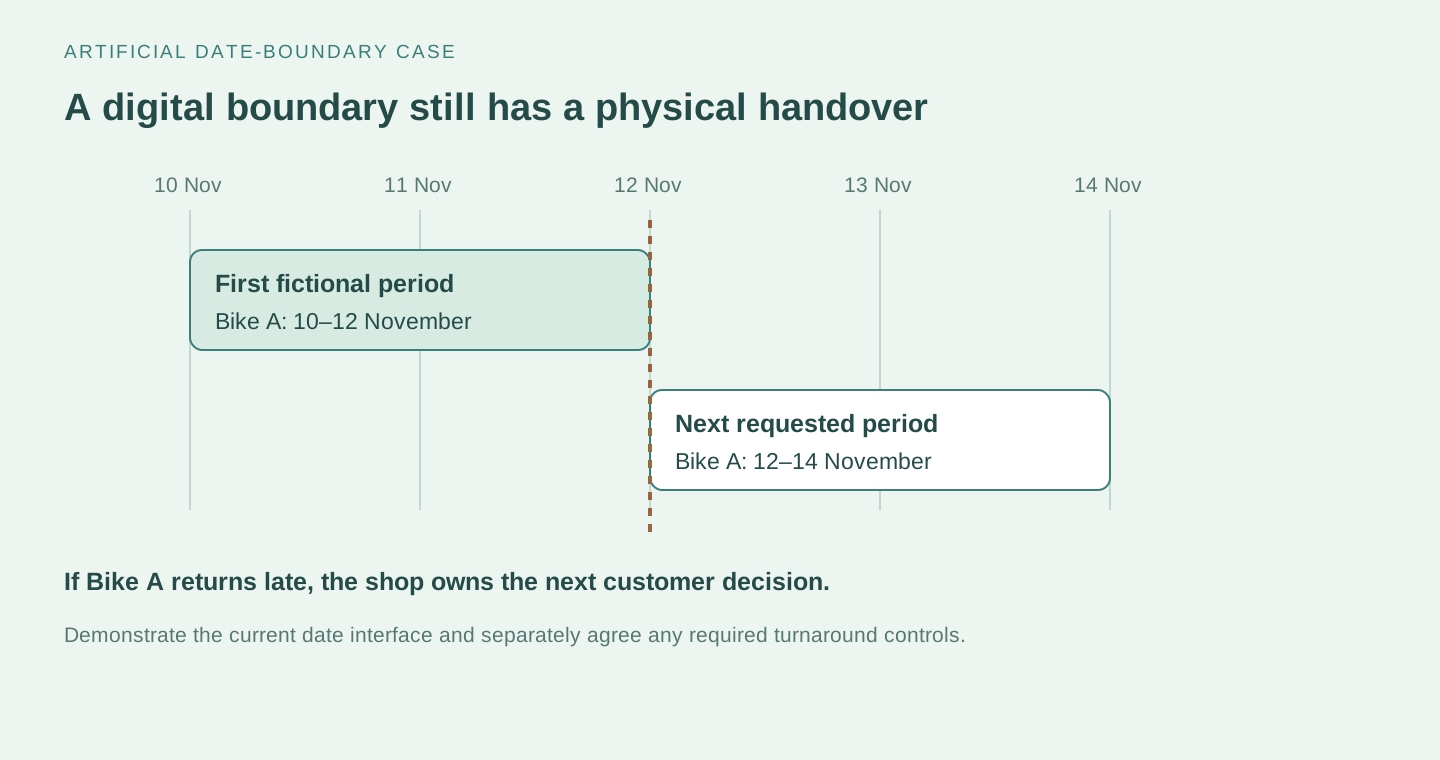
Give the seller three artificial periods. The first booking uses Bike A from 10 to 12 November. Another request runs from 11 to 13 November and overlaps the first. A third begins on 12 November and runs to 14 November, touching the first period's boundary. These are fictional dates used to inspect behaviour.
| Case | Requested period | Purchase question |
|---|---|---|
| Existing artificial booking | 10–12 November | Which actual record and state reserve Bike A? |
| Overlapping request | 11–13 November | How does the current search and complete booking route handle the overlap? |
| Touching boundary | 12–14 November | What does the current date model permit, and does the shop need additional turnaround time? |
The inspected overlap expression treats one period beginning exactly when another ends differently from a period that overlaps it. Ask the seller to demonstrate how that appears through the current date interface. Then compare the result with the shop's physical preparation procedure. A digital boundary may still require a human turnaround decision.
The buyer should accept the actual supported rule it can operate. If it needs a configurable cleaning interval, workshop buffer, pooled replacement or more detailed time slots, request those specific controls separately. The exercise gives the shop a concrete requirement to discuss without assuming that every rental convention is already implemented.
Give the pickup operator a customer record they can recognise
After the authorised artificial booking, ask the seller to open the relevant provider view. The source includes booking relationships to a bicycle, provider, customer, dates, amount and status. Use the current interface to identify the same request the customer sees.
The fictional counter operator should be able to connect that record with Bike A and the agreed pickup procedure. The shop supplies the actual handover, condition check and any other operational steps it requires. Ask where the application presents the information the operator needs and where the shop maintains additional details through its own permitted process.
Keep the buyer's promise specific. It wants a useful online reservation record and a clear physical handoff. The software acquisition is not a transfer of premises, insurance, maintenance expertise or customer-facing staff. Those are parts of the existing rental operation the buyer continues to own.
Run the counter operator's handover as a connected example
Bring the fictional pickup into the workshop without using a real rider. The counter operator begins with the current booking record, finds the shop's Bike A reference and reads the agreed dates. They should be able to point from the application to the physical item the shop intends to supply. This is the central value the existing fleet buyer wants from an owned online channel.
| Counter question | Artificial example | Owner to identify |
|---|---|---|
| Which booking is being fulfilled? | The current record for Bike A and the chosen period | The authorised counter operator |
| Which physical bicycle is handed over? | The shop's Bike A fleet reference | The person preparing the item |
| When is the item expected back? | The accepted period shown in the workshop record | The person explaining the return arrangement |
| What changed on physical return? | The shop's recorded return observation | The person deciding the next availability promise |
Ask the seller where the current provider interface supplies the booking information needed by this procedure. The buyer can keep any additional physical handover record in its existing permitted shop process. It should identify the connection clearly, so staff can locate the relevant application record when a customer asks a question later.
Then let a colleague explain the same artificial handover without help from the first operator. They should recognise the listing, period and human responsibility. If the explanation depends on an extra reference or field, the buyer can request that precise addition. This makes the acquisition acceptance practical for the people who will use the channel every day.
Check how a cancelled reservation affects the next search
Use the artificial existing booking for a cancellation example. Ask the seller to demonstrate the actual current authorised cancellation or status route, then search the same bicycle and dates again. The inspected availability logic excludes cancelled bookings, giving the buyer a concrete behaviour to inspect through the complete current interface.
The operator should identify the resulting booking state and the public availability result together. This helps it understand when a digital reservation stops restricting that period. The shop still needs to confirm that the physical bicycle is suitable and available before making another customer promise.
Keep any money question on its own accepted path. A cancellation state and a return of funds are different records; the demonstrated status mutation alone does not establish a refund. Ask the seller to show the actual procedure relevant to the proposed checkout arrangement and agree any missing payment work separately. The buyer can then describe both the reservation result and the customer-service responsibility accurately.
Accept payment evidence through the buyer's real account arrangement
The project contains Stripe rental checkout, connected-provider and software subscription foundations. A source implementation or a product preview does not establish live settlement, payouts or recurring renewals. Ask Codeblix to explain the current configuration and demonstrate the agreed payment path before the buyer accepts that part of the package.
Identify the buyer-owned merchant, provider and application service arrangement without placing private credentials in public notes. The purchase record should name who configures each service and what evidence completes the agreed check. Keep a booking status, a payment event and a bank payout as separate observations to verify where relevant.
The existing shop may already have an external payment procedure, but that does not automatically connect it to the application. Explain the intended customer payment promise in the transaction. Any new connection or changed checkout route should have its own defined scope and acceptance.
Make the late return the fleet operator's central exception
Now suppose artificial Bike A is returned later than the shop expected. The physical fact changes before the next customer arrives. The operator needs to identify the affected booking, the later promise and the person responsible for contacting that customer.
Ask the seller to demonstrate the actual current controls on the relevant booking and listing. The inspected source records dates and booking states; it is not represented here as automatically detecting a physical late return or reassigning another bicycle. The shop should choose a supported human procedure or request the exact additional control it requires.
The purchase test should leave a clear next action: who checks the item, who decides whether another owned bicycle can be offered, who obtains the customer's agreement and where the resulting record belongs. Those are the shop's operating commitments. A useful digital channel makes their relationship to the current booking understandable.
Handle an out-of-service item through a demonstrated procedure
Use a second artificial exception: the shop decides Bike A should not be offered for the next period. Ask the seller which current listing or booking controls can support that decision. Record the actual public result and how the operator prevents a promise it cannot fulfil.
The current inspected bicycle schema does not provide a dedicated out-of-service field. A richer workshop or maintenance calendar is therefore an additional requirement unless demonstrated elsewhere in the delivered application. The buyer should agree the procedure it will actually use instead of presenting a requested pause feature as current.
Return to the artificial public search after the supported action. The counter operator should recognise whether the intended result has occurred. This gives the existing fleet buyer a concrete stop condition: if the current controls cannot support an acceptable unavailable-item procedure, resolve that before adopting the software for live rentals.
Keep the service listing accurate when the physical fleet changes
The shop may change a bicycle's public description, rate or image during ordinary operations. Ask the seller to demonstrate the actual current provider editing controls with Bike A and inspect the resulting public view. The buyer should be able to connect the changed information with the same fleet reference.
Use the shop's own permitted material and a named person who confirms it. A photograph and a list of features help a customer understand the offer; the shop remains responsible for the physical item it hands over. The application should be accepted as the presentation and booking record supporting that real operation.
If the buyer later adds several similar bicycles, revisit the listing model deliberately. The source identifies individual bicycle records. Any pooled stock allocation, automatic substitutions or workshop inventory integration should be specifically demonstrated or separately scoped. The initial one-item purchase test gives the operator a clear baseline for that later decision.
Use search assistance within the actual booking promise
FunRideBikes includes Gemini-backed natural-language search that translates a request into structured filters such as category, location, budget and dates. Ask the seller to demonstrate that feature with an ordinary artificial rider request if it matters to the shop's intended channel.
Then inspect the resulting filters and selected dates. The shop's responsibility remains the same: the listing and booking must describe a bicycle it can supply for the accepted period. Search assistance helps a customer express a request; it does not establish physical availability or guarantee a booking outcome.
The buyer can decide whether this optional interaction is useful after it has accepted the basic discovery and rental path. Keep the service-account configuration and actual error behaviour clear in the handover. The purchase should stand on a defined shop workflow rather than a speculative conversion or automated-sales claim.
Rehearse a staff handover using the same bicycle
Ask another authorised shop operator to follow the fleet-to-booking record. They should identify Bike A, the accepted period, the pickup responsibility and the later exception. Use actual current application controls alongside the shop's human record.
The second person should know whom to contact when the bicycle cannot be supplied and which current record supports the next customer promise. This is practical evidence that the buyer can operate the channel after the original setup person is unavailable. It is not a claim that the application supplies a complete workforce-management system.
Give that colleague two ordinary questions from the fictional case. First, another bicycle in the shop has a similar public name: which actual listing and fleet reference belong to this booking? Second, the customer arrives at the touching date boundary: which person confirms that the returned item is ready for another handover? The colleague should trace the application record and the shop's human procedure. That explanation helps the buyer judge whether the channel will remain understandable at the counter.
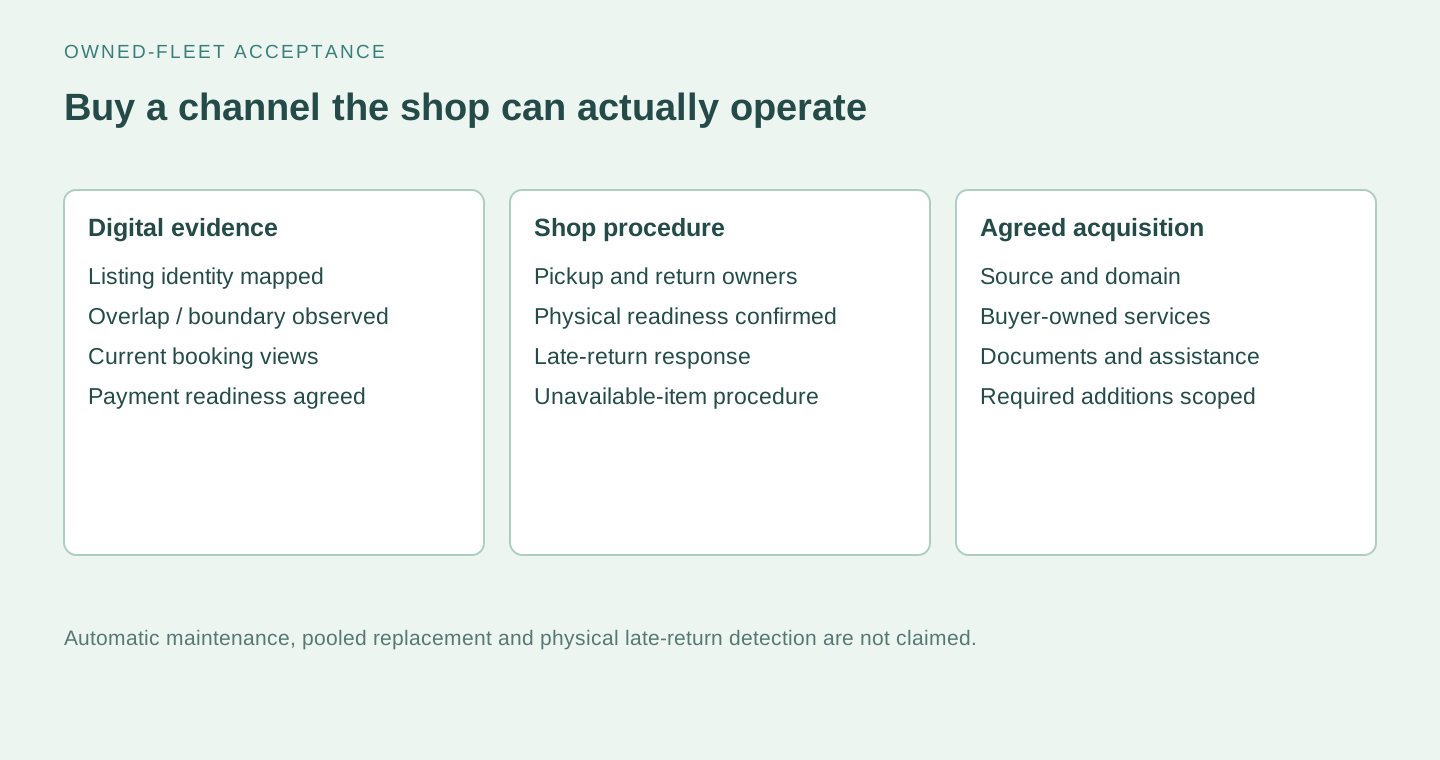
Confirm the source, domain, documents, accounts and agreed assistance through the current individual offer. Assign the technical maintenance owner and the shop's operating owner. A bicycle rental business can then make a precise acquisition request for software around its existing physical responsibilities.
Complete the owned-fleet application purchase record
Keep the artificial Bike A crosswalk, date cases and counter handover record beside these answers. The purchase decision should leave another staff member able to explain which item and period the online promise represents. An unresolved answer gives Codeblix a specific demonstration or additional-work request before the buyer adopts the software for real rentals.
- Prepare one permitted artificial bicycle and a small set of date cases.
- Ask Codeblix to demonstrate the listing, complete booking path and actual provider controls.
- Work a physical late return and an unavailable item through the proposed shop procedure.
- Agree the asset transfer and any required fleet-specific additions before using the channel for live rentals.
Request the FunRideBikes acquisition offer on Flippa with the completed fleet-to-booking schedule. The existing rental operator is buying a digital promise it can connect to the bicycles, people and procedures it already controls.
Explore the products discussed
Explore related acquisition offers