
Buy a booking web app for rentals, gym passes or professional services
Choose the reservation object and the provider fulfilment procedure you will operate.
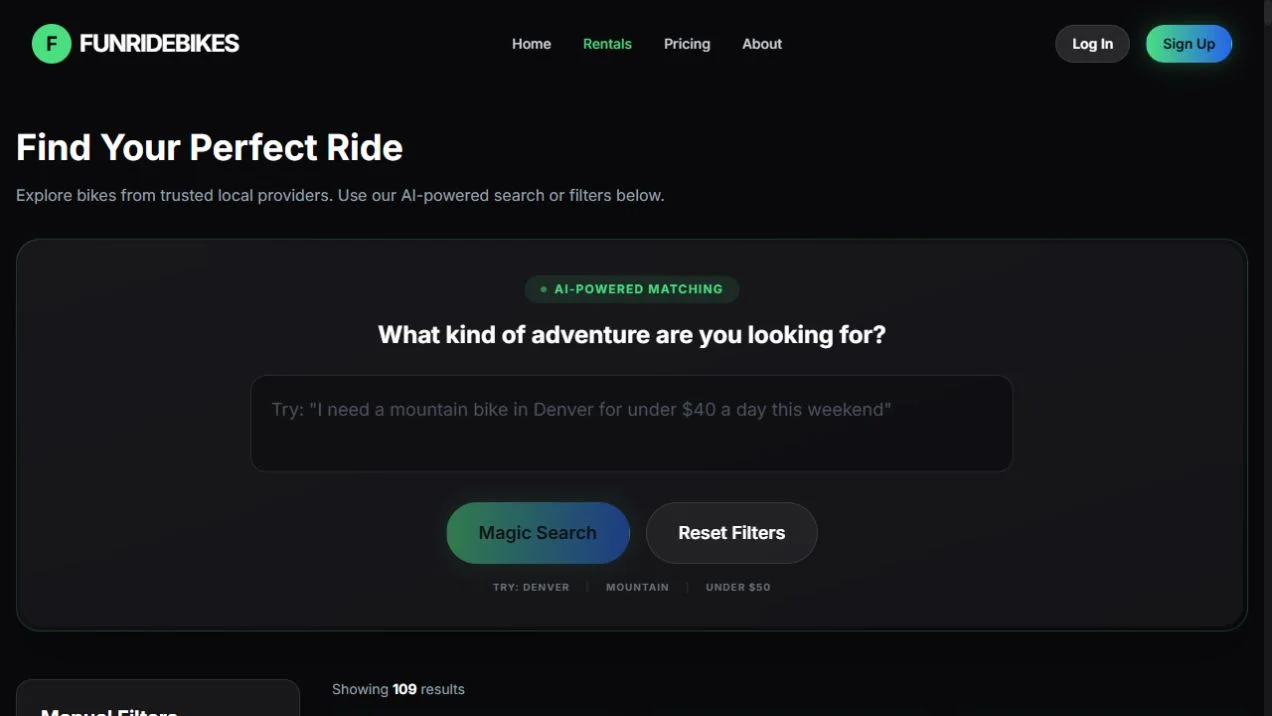
Request a booking web app acquisition through FunRideBikes, WowGyms or GlobStaff. Inspect rental dates, pass validation or service progress alongside provider onboarding and fulfilment.
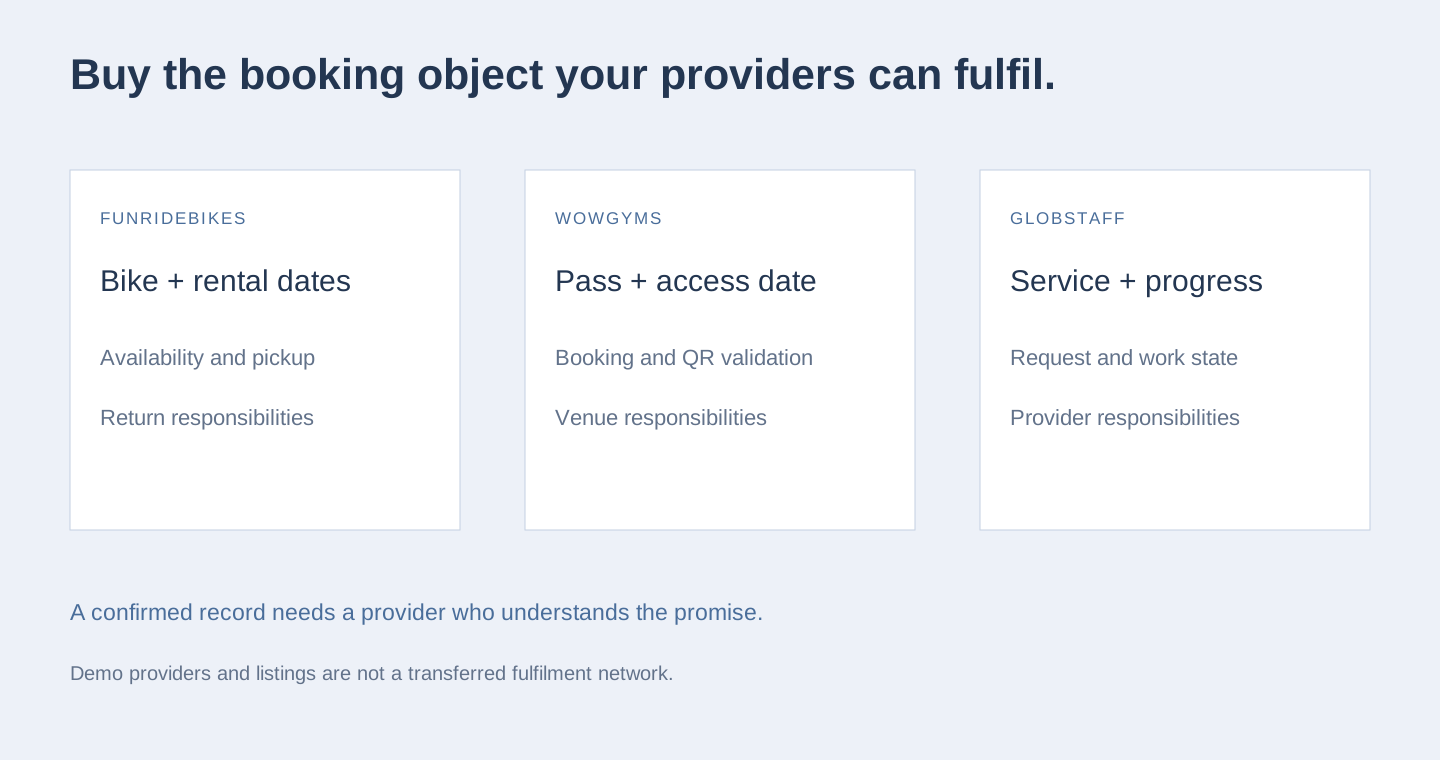
If you want to buy a web app with source and a domain for a provider-based booking business, start with the thing a customer reserves. A bicycle for selected dates, a gym pass for an access period and a professional service with progress states are different objects. Codeblix offers separate software foundations for those jobs: FunRideBikes, WowGyms and GlobStaff.
This purchase brief is for a buyer who intends to onboard providers and operate the booking handoff. It does not offer a pre-existing network simply because demo providers appear in the application. Choose the asset whose reservation object and fulfilment responsibilities match the relationships you can build and support.
Request the booking asset around your intended providers
- Contact Codeblix for the FunRideBikes domain and source package if your offer concerns bicycle rental listings and dates.
- Request the WowGyms marketplace acquisition package if you want to sell a platform for gym passes and provider access.
- Request the GlobStaff software and domain offer if your intended providers sell remote professional services.
Each Flippa listing has its own current availability, price, financial representation and transfer terms. These are individual acquisitions. Ask the seller for the corresponding user and technical documents and a walkthrough of the exact booking journey you need to inspect.
The FunRideBikes, WowGyms and GlobStaff product pages provide the documented boundaries and purchase links. A shared booking label does not mean one product can fulfil the others' job without additional work.
A reservation object is more precise than a feature count
Write one sentence describing what the customer believes they have obtained. For a rental, it may be a particular type of bicycle for a defined period and pickup location. For a gym pass, it is an access entitlement under the pass conditions. For a professional service, it is the agreed service request and its progress through provider work.
Then name the record that supports that promise. Which provider owns it? What date or state makes it valid? Which action changes it? A search interface and a payment button do not answer these questions. The buyer needs to see the customer and provider views for the same transaction object.
This is also where operating fit becomes clear. A buyer with bicycle rental contacts may understand pickup and returns. A buyer with fitness-provider relationships may be able to organise reception procedures. A buyer experienced in remote services may understand briefs and delivery expectations. None of those relationships is supplied by sample data in a starter application.
FunRideBikes puts dates and physical handover into the offer
FunRideBikes is a bicycle rental SaaS and marketplace foundation. Its documented scope includes rental-shop storefronts, bicycle listings, rates, availability, pickup information and a customer discovery flow. The source also includes payment and provider onboarding foundations, plus natural-language search support that turns a request into search filters.
The buyer should request a fictional rental with a clear start and end period. Ask how the customer sees the bicycle information and how the provider identifies the booking. Inspect the current availability and date behaviour rather than assuming a listing card guarantees a physical bicycle will be ready.
Physical handover, bicycle condition, late return and local operating requirements remain important provider questions. Do not infer a complete fleet-maintenance, insurance or damage-management product from a rental booking workflow. If those features determine the offer you plan to make, ask the seller which are delivered and which would require a separate process or development scope.

WowGyms adds a venue access decision after checkout
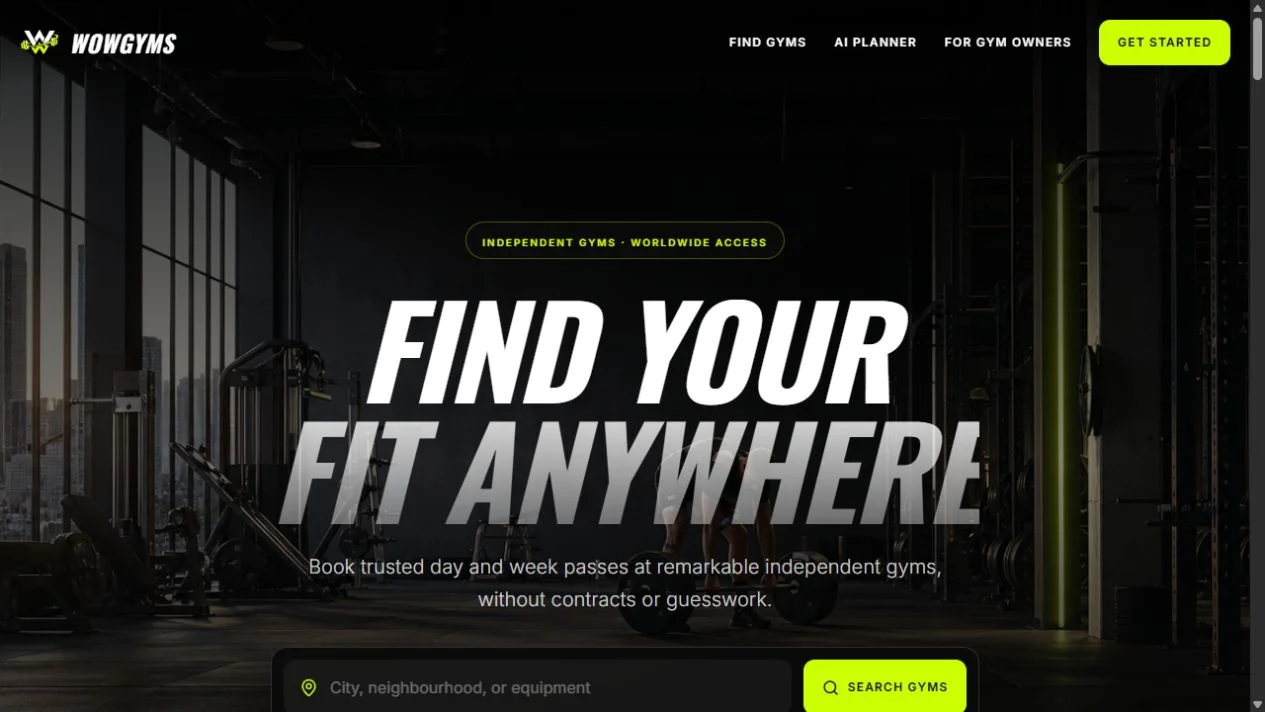
WowGyms is a gym-pass marketplace foundation with provider storefronts, daily and weekly passes, bookings and QR access tools. The product is relevant when the customer is buying flexible access and the provider must recognise that booking at a venue. It is not the acquisition of gym premises or a complete membership administration business.
Follow one fictional pass from the selected date through the customer's booking and the provider's validation view. Ask what makes it valid and what happens under a relevant exception. A QR image by itself is not evidence that a provider can make the correct access decision.
The current source documents a publication gate connected to the payment provider reporting charges enabled. Inspect that implementation boundary and the buyer configuration it requires. Demo gyms may use sample payment references, so they should not be presented as a signed provider network or proof of live settlement. Provider recruitment and venue procedures remain part of the new owner's work.
GlobStaff tracks a service relationship instead of physical inventory
GlobStaff is a remote-professional marketplace foundation with storefronts, skills and language discovery, provider services, bookings, progress and completed-job reviews. A buyer should assess it as a service platform. The customer is not reserving a physical item or a gym entrance; they are entering a provider relationship whose work and completion must be understood.
Ask the seller to create a fictional service request with a clear description. Inspect how the provider sees it and which progress states the application supports. Determine how both parties recognise the next action. If your intended service needs milestones, files, time tracking or other specialist controls, request evidence for those exact requirements rather than assuming they are included.
The current handover evidence records Stripe in test mode and no current AI feature requirement. Keep those facts in the acquisition discussion. A checkout foundation is not a proven live payment lifecycle, and remote staffing language does not make the product an applicant-tracking, payroll or employer-of-record service. Buy the documented application you can operate, not a broader staffing promise.
Inspect the provider acknowledgement before accepting confirmation language
A booking can be requested, accepted, paid, confirmed, completed or cancelled. These words are not interchangeable. Ask the seller which states exist in the selected product and which party or event changes each one. The customer-facing wording should match that actual state.
Use the same fictional record in both views. If a provider must accept a request, observe the period before acceptance and the action that changes it. If payment changes the state, ask what evidence is recorded and how the application handles an incomplete payment. Do not treat a successful return page as a substitute for the application's confirmed transaction record.
Then decide whether that behaviour fits the promise you intend to make. A request-based service can be useful when a provider must assess the work. A date-based rental may need a different availability procedure. The acquisition should make these differences visible rather than flatten them into one generic “book now” claim.
| Word used | Question for the buyer | Evidence to request |
|---|---|---|
| Requested | Has the provider committed yet? | The provider action and customer status before acceptance. |
| Confirmed | Which condition makes the booking valid? | The relevant application record, date and payment or acceptance state. |
| Completed | Who records that fulfilment occurred? | The supported completion process and resulting history. |
| Cancelled or refunded | What customer entitlement remains? | The changed record and the procedure each party follows. |
Bring the provider's real-world procedure into the acquisition
A rental operator needs to prepare and hand over a bicycle. A gym needs to recognise a pass. A professional needs to understand and deliver a service. Those actions are outside a browser screen even when the application records their progress. The buyer should identify who performs them and how the platform supports the handoff.
Ask the future operator to describe the first provider onboarding. What information will be checked? Which account needs to be ready? Who explains the customer promise? The package may include tools for onboarding without including an existing operational relationship. A buyer should not market sample profiles as providers who have agreed to fulfil bookings.
Keep the responsibilities practical. A short written procedure with a named exception owner may be appropriate for a small launch. If the intended offer needs stronger automation, hardware or integrations, make those requirements explicit before purchase. Do not assume that software ownership supplies every part of service delivery.
Separate provider software charges from customer booking payments
The products include intended provider-plan models and payment foundations, but the exact commercial configuration differs. A provider's software plan is not the same transaction as a customer's rental, pass or service payment. Inspect both relationships in the selected asset and identify the buyer-owned accounts required to operate them.
Ask what the provider receives for its plan, including any free configuration. A configurable paid plan is not evidence of existing paying providers. Ask what the customer payment represents and how the application records the resulting entitlement. Where a payment provider handles a flow, inspect the state and handoff rather than promising automatic outcomes without a demonstrated basis.
The current Flippa listing is where the seller's represented financial position should be evaluated. Keep it separate from your own proposed pricing and launch plan. You can decide to acquire useful source code without assuming a particular number of bookings, subscriptions or repeat customers after transfer.
Test a change that happens after somebody has booked
Provider information changes. A bicycle listing may be paused, a gym's pass conditions may be edited, or a professional may need to discuss an altered service request. Ask the seller to demonstrate how the selected application handles a relevant change and what the existing customer sees.
Do not infer a complete historical contract record from a generic booking table. If your operation requires a preserved version of specific conditions, inspect it. If the product instead uses current listing information with a manual support process, assess whether that is acceptable for the first offer or needs additional work.
This test is especially useful because it joins catalogue management with customer support. A product can demonstrate a smooth initial booking while leaving later exceptions to an operator. The buyer should know those exceptions before agreeing the acquisition, rather than expecting the first provider to invent a procedure.
Choose the reservation you can support from beginning to end
Which provider promise would you operate first?
This is a purchase-scope selector, not a ranking of the assets. It points the seller conversation toward a different reservation object and the responsibilities that follow from it.
Make one exception repeatable before transferring the source
Select one case that would create a genuine support question in your intended operation. For a rental it might be an unavailable item after a request. For a gym pass it might be a failed validation. For a professional service it might be a request the provider cannot accept. Ask the seller which behaviour the product supports and what the operator does next.
Use controlled, seller-authorised test data. There is no need to create an unnecessary live payment to understand an application state. Record the before and after views, the responsible party and any external step. The buyer needs an understandable process, not an invented claim that every exception is handled automatically.
If the seller identifies a missing requirement, classify it honestly. It may be configuration, training, a manual procedure or a new feature. Agree the remaining scope and owner before the transaction. This gives both parties a concrete basis for the handover and avoids treating future ideas as already delivered.
Use the source transfer to establish your operating starting line
Ask for the domain, repository, user and technical documents, editable assets and required service list. Name the buyer owner for hosting, application services, authentication and payments. Inspect how a clean setup differs from the seller's demonstration environment, including any sample providers or payment references that need replacement.
The support agreement should distinguish technical handover from operating the future network. You may need help understanding setup or a delivered workflow; you will still need to recruit providers, prepare procedures and reach customers. Additional integrations, new business modules or ongoing provider management should be explicit rather than assumed.
- Choose one booking asset and write the customer's reservation promise.
- Use a fictional provider and one controlled booking.
- Compare the customer and provider records for that booking.
- Inspect the relevant payment, date or service-progress state.
- Demonstrate one exception and identify its owner.
- Agree the transfer package and the remaining configuration.
Make the purchase around an accountable booking chain
Ask what happens to tomorrow's bookings when a provider pauses
A provider may need to stop accepting new work while existing bookings remain. Ask the seller to demonstrate the relevant state in the chosen product. Is pausing a storefront different from cancelling a booking? What can the provider and customer still see? The buyer should not assume that one publishing control settles every outstanding obligation.
Use a controlled future booking and then change the provider's availability or publication state through the supported interface. Observe the result without inventing an expected feature. If the application leaves existing records available and requires a manual response, assess whether that is suitable for the first operating offer. If additional automation is essential, agree it as separate work.
This case matters across all three assets, but for different reasons. A bicycle still needs a pickup decision, a gym pass still needs a venue procedure and a service request still needs a provider response. A buyer should know how to manage those obligations before recruiting real providers.
Separate a catalogue edit from a customer's accepted terms
Ask which details are stored with a booking and which are read from the current listing. A customer may have chosen a rental period, a particular pass or a described service before the provider changed the public catalogue. The buyer needs an explanation of what the delivered record preserves and what the operator must confirm elsewhere.
Do not infer a legally complete contract history from the presence of a database entry. The practical purchase question is whether the application gives your team enough information to understand the customer's booking. If a preserved price or condition is required for your intended operation, request the specific evidence and identify any missing scope.
For a starter product, a carefully defined initial offer may reduce the number of exceptions the operator must handle. That is a business choice for the buyer. The sale should describe the current software accurately so the choice can be made with the remaining work visible.
Give the next provider employee a procedure they can follow
A provider's owner may understand the application while another employee handles customers. Ask how the current access model supports that arrangement. Which actions are available to the intended staff member, and which require the provider's main account? A dashboard label should not be mistaken for a complete staff-permission system.
Have the future operator explain the process to someone who did not watch the initial walkthrough. They should be able to identify a booking, understand its status and know when to escalate. If the product cannot support the desired staff arrangement without sharing an account or making a change, record the issue before purchase and decide on an acceptable approach.
This does not require the software seller to train an entire future network. It requires a buyer to understand the delivered tool well enough to prepare a credible onboarding procedure. That procedure is part of the operating work which demo provider profiles do not supply.
Keep transaction testing under the seller's agreed controls
The acquisition walkthrough should use environments and data that the seller authorises. Ask how payment tests are distinguished from real customer transactions and how the resulting records are identified. An unnecessary live payment is not a substitute for understanding the implementation. Where a live provider or settlement test is needed, agree its purpose and responsibilities explicitly.
Inspect the application evidence relevant to the chosen package: the booking state, payment reference, provider readiness or service progress. A payment provider's setup screen alone does not establish that the application handles every later event. Request the exact tests that determine your purchase and keep untested cases in the handover notes.
After the test, identify what should be cleaned up or retained as evidence. The buyer should receive a clear separation between demonstration records and any genuine business data included in the sale. This protects the accuracy of the future public offer without requiring a claim that the product has an established trading history.
Match the customer's receipt to the entitlement you are selling
Ask the seller to open the confirmation or receipt produced by the chosen application. Compare it with the booking record and the customer's next action. A payment acknowledgement, an accepted service request and a valid access pass communicate different things. The buyer needs to understand which one the software actually supplies before writing its own customer offer.
For a bike rental, identify how the customer knows the requested period and the pickup arrangement. For a gym pass, identify what the venue checks and whether the pass is valid for the selected date. For remote work, identify the distinction between submitting a request and the professional accepting or progressing it. Demonstrate only the relevant path in the asset you intend to acquire.
If a confirmation leaves a necessary instruction to the operator, include that instruction in the launch procedure. If your intended service requires another application state or notification, price that as a separate requirement. A clear receipt does not prove future demand, but it can reveal whether the current product supports the promise your first customer would read.
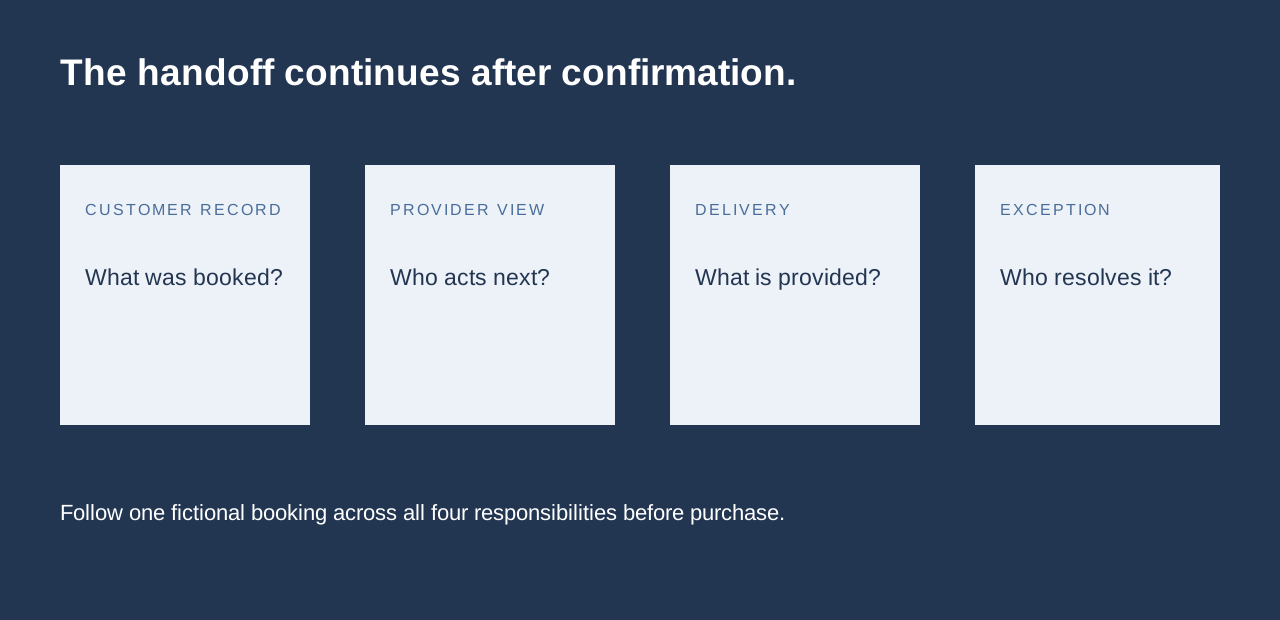
A useful acquisition file joins the reservation object, the software record and the provider's fulfilment procedure. It should tell another operator what the customer bought, what the provider sees and what happens when the normal path fails. The application can provide a strong starting point without supplying a proven provider network or guaranteed bookings.
Booking asset purchase evidence
Request the individual FunRideBikes, WowGyms or GlobStaff purchase package from Codeblix. You can compare the wider online business collection if another operating model fits your providers better.
Explore the products discussed
Explore related acquisition offers