
Buy a supplier marketplace for your ingredient consultancy
Acquire FlowerWax around one supplier activation and one same-supplier label order.

A worked acquisition case for an ingredient-sourcing consultancy buying FlowerWax as a separate commerce channel. Inspect one-time supplier setup, clear units, checkout and supplier order responsibility.
Buy a supplier-checkout marketplace when your existing ingredient-sourcing consultancy wants to own a distinct commerce channel alongside its advice. Codeblix's FlowerWax offer provides a botanical wholesale marketplace foundation with supplier storefronts, catalogue listings, single-supplier checkout and order tools. Request the package around the first supplier and buyer transaction you intend to support.
This worked case assumes a fictional consultancy already has its own client and supplier relationships. Those relationships, actual ingredients and professional advice are buyer inputs, not included assets. FlowerWax's configured platform fee is a one-time supplier setup fee where applicable, rather than a recurring supplier SaaS subscription. Ingredient suitability and consulting judgments remain separate from platform payment readiness.
Request FlowerWax around a consultancy-owned commerce offer
Contact Codeblix to request FlowerWax's current source and domain acquisition package. Tell the seller that your proposed operation is a separate supplier-checkout channel beside an existing sourcing consultancy. Ask for one supplier activation exercise and one same-supplier purchase in the authorized demonstration environment.
The current Flippa listing owns price, availability, represented financials and transfer terms. The authoritative FlowerWax product page and individual wholesale marketplace acquisition offer explain the package. This case centres the consultancy's operating boundary and first buyer order.
A consultant may also need a private sourcing desk or an RFQ process. The FruitKiwi sourcing product serves a different underlying job. Choose FlowerWax for the supplier catalogue and checkout model actually described, rather than expect every procurement or consulting function inside one asset.
Name the product the consultancy wants to add
Imagine a fictional consultant who helps small beauty labels understand their ingredient-sourcing options. It already communicates with clients and suppliers through its own business. The proposed acquisition adds an owned place where a participating supplier can present a clear catalogue and a buyer can purchase through a defined transaction route.
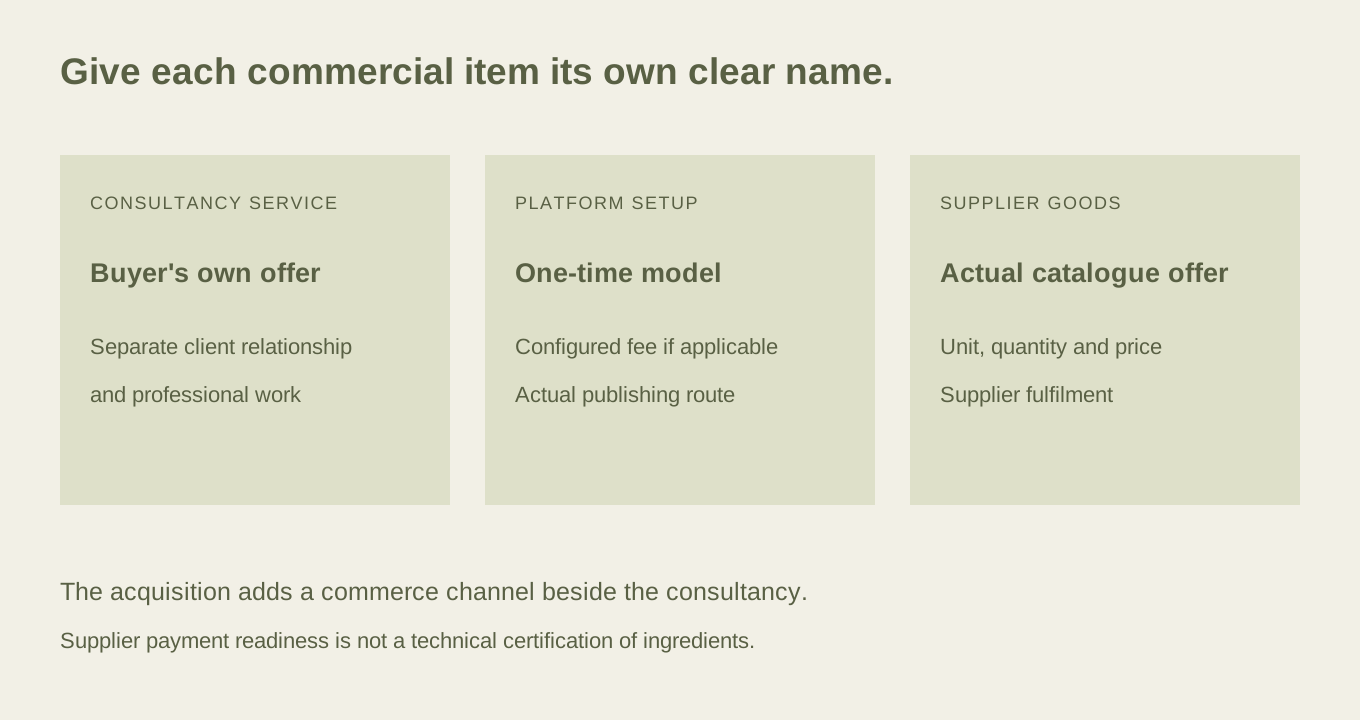
The consultancy should write that offer in plain language. It can operate the marketplace and supply its own separate professional service. The supplier sells and fulfils the ingredient offer. The label makes the actual purchasing choice. FlowerWax supplies records and controls around the commerce relationship.
This is a concrete reason to inspect the application: the buyer wants an owned catalogue-to-order channel, with the advice relationship kept understandable. A broad ambition to become an ingredient marketplace is less useful to the seller than a first supplier and first buyer scenario.
Use the first supplier invitation to define the activation work
FlowerWax supports provider accounts, storefront content, catalogue listings and Stripe connection. The documented public marketplace excludes disabled or unpublished suppliers. A provider's publishing readiness is therefore a useful first exercise for the consultancy buyer.
Prepare a fictional supplier with authorized demonstration information. Ask the seller to show the relevant profile, configured one-time setup condition and connected-account readiness. Follow the actual route to the public storefront state, keeping each step tied to the supplied implementation.
The consultancy can put its own participation conversation around that route. It may decide what information it requires before working with a supplier. That human decision is separate from a payment account being ready to receive funds, and the buyer should describe each accurately.
Keep the one-time platform setup product precise
The owner fee in the supplied model is a configured one-time supplier setup fee where applicable. It should be explained as that product, with its actual configuration inspected. A zero configured fee and a paid setup are different states to demonstrate where relevant.
For the fictional consultancy, this gives a clear question: what does the supplier receive through the platform offer, and what separate consulting work does the business provide? The buyer should choose a manageable first arrangement rather than combine all services into an undefined supplier payment.
Recurring supplier software revenue is not the delivered monetization model to claim here. If the buyer requires a different model, state it as a requirement and agree scope explicitly. The current asset can be evaluated as a one-time-setup wholesale marketplace foundation.
Make a supplier storefront that a label can understand
The provider record includes store name, slug, biography and visual storefront information. Ask the seller to show the actual supplier presentation beside the catalogue. The buyer should be able to identify who offers the goods and how the label reaches that supplier's products.
Use authorized fictional material for the exercise. The consultancy can then prepare a release standard for real participants after transfer. That standard can include accurate identification and a clear route for product questions without pretending the application performs an independent technical certification.
A recognizable storefront gives the first order context. The label should know which supplier it selected, while the consultancy knows which participant is responsible for the offer. This helps the buyer evaluate a real commerce relationship rather than only a collection of attractive product cards.
Give the product unit the same attention as the product name
FlowerWax's product model includes name, supplier, price, unit, category, description and image. In the worked case, the label needs to understand what a quantity means. A supplier's unit description and the selected whole-unit quantity should describe the same offer.
For an expressly illustrative example, a supplier might describe a pack and the buyer selects two packs. Use the actual product and checkout fields to inspect the unit wording, quantity and displayed price. The example is a transaction test, not a claim about a real ingredient's availability or specification.
Ask what details are retained in the resulting purchase records. The source stores purchased quantity and unit price alongside product and seller identifiers. If the consultancy's intended operation requires another specification or document to travel with the order, identify that requirement during the purchase discussion.

Follow a small label's same-supplier basket into payment
FlowerWax blocks a cross-supplier checkout. The first buying exercise should therefore select products from one fictional supplier and follow the supported basket and payment route. This fits a focused first consultancy channel with an explicit supplier relationship.
The server source calculates checkout amounts and the supplier destination from its own product records. Ask the seller to demonstrate the current configuration and relevant buyer view. The buyer can compare the displayed item, selected quantity and resulting payment evidence.
The intended connected supplier account is used in the payment flow. Actual buyer-owned service setup, readiness and live acceptance should be inspected separately before making commercial claims. A sample purchase page establishes the interface, not a completed live supplier settlement.
Keep consulting fees outside the ingredient checkout promise
The fictional consultant might charge for an existing professional service, while the supplier charges for goods and the platform may charge its configured setup fee. These are separate commercial items. FlowerWax should not be described as automatically invoicing or administering every consulting engagement.
| Commercial item | Responsible offer in this case | Evidence to inspect |
|---|---|---|
| Consultancy advice or sourcing service. | The buyer's own separate professional business. | The actual client arrangement the buyer supplies. |
| Configured supplier setup. | The platform's one-time setup model, where applicable. | Current configuration and supported setup/publishing route. |
| Ingredient purchase. | The selected supplier's catalogue offer and fulfilment. | Same-supplier checkout, purchased items and seller records. |
| Payment readiness. | The buyer-owned application and connected service accounts. | The current account configuration and controlled acceptance evidence. |
This separation helps both parties understand the asset. The buyer can run advice and commerce alongside one another while keeping the actual application role precise.
Make the supplier's fulfilment state visible to the label
The supplied order model has pending, shipped and completed states, with seller and administrator controls. The source prevents a pending order jumping directly to completed and prevents reopening a completed order through that update path. Ask the seller to demonstrate the ordinary progression relevant to the first purchase.
The consultancy should then decide how its operation explains those states. The supplier owns the physical fulfilment; the application supplies order records and supported status changes. A label asking about an order should be directed to the correct record and responsible person.
Use the fictional purchase to prepare a short instruction for the supplier and the platform operator. Name who updates the record and who receives a buyer question. The buyer can evaluate the existing tools against that concrete process.
Choose the first channel the consultancy will actually sell
What does the first label need from your acquired product?
The result helps the buyer make a focused seller request. It does not decide whether an ingredient is suitable for a formula or authorize a live payment. Use the actual supplied records and the consultancy's separate expertise for their different purposes.
Rehearse a product question before calling it platform support
A fictional label may ask what a product description means or whether the offered unit fits its intended purchase. Identify which question the supplier answers and which application record the platform operator can explain. The consultancy may have its own advisory service, but that is a separate role.
Ask the seller to show the actual product and purchase views that support this conversation. The operator should be able to identify the supplier, the selected item and the relevant order. The buyer can then prepare a useful support instruction from those records.
This keeps ordinary platform support manageable. A question about checkout or order state can go to the relevant operator, while a question about the actual goods or professional recommendation goes to the responsible party. The application does not need to be described as every kind of support desk.
Use a second supplier to check the public operating boundary
The consultancy may later invite another participant. For the buying exercise, use a second fictional supplier and inspect the separate storefront and catalogue. Confirm which records the supplier can manage and which products are publicly visible through the current publishing state.
Then demonstrate the cross-supplier cart boundary in the authorized environment. The source requires one supplier at checkout. The buyer should see the actual customer message and decide how to explain separate purchases in its first offer.
This is a useful acquisition test because the consultancy's wider supplier knowledge may be broader than one order. It can operate a marketplace with multiple participants while keeping each transaction's seller and fulfilment responsibility clear.
Make publication readiness a platform check with a separate meaning
The supplied product has provider publishing and payment-readiness conditions. Ask the seller to show the actual setup and public listing state for a ready participant and one not yet ready. This helps the buyer understand how its first supplier enters the commerce channel.
The consultancy may separately review the participant's information for its own business purposes. That review should have its own described basis. The payment provider's readiness and the platform's publishing state should not be presented as technical certification of the supplier's ingredients.
Write a first release procedure naming the actual application step and the human decision beside it. The buyer can choose an operating standard appropriate to its own offer, with any essential additional tool or record identified during negotiation.
Also rehearse a fictional supplier whose public offer is being paused or disabled through the current controls. The supplied public queries filter unpublished and disabled providers. Ask the seller to show the resulting public state and the actual management route. The consultancy can then keep its own client introductions consistent with the catalogue that is currently available.
If a prior purchase is part of the exercise, inspect that purchase separately. The label's existing order question and the supplier's new public visibility are different matters. Identify the actual record and responsible participant for the order while the public listing state is handled through the demonstrated product.
This gives the consultancy a useful first operating rule: check the current supplier offer before directing a client to it, and use the actual order context for an existing transaction. The buyer can prepare that procedure from the seller walkthrough and decide whether any essential additional record or communication is needed for its intended channel.
Walk the first supplier from preparation to public storefront
For the fictional consultancy, choose one supplier who is prepared to participate in the separate marketplace. Prepare its authorized storefront description and a single catalogue offer. Ask the seller to show the provider's actual account, setup condition and payment connection through the supplied product.
Inspect what is public before and after the relevant publishing step. The owner should understand which current controls determine visibility and what the supplier still needs to complete. A clear first invitation can tell the participant what information to prepare and which actual product action comes next.
The buyer can keep this first release deliberately small. It does not need to describe a large supplier network or a guaranteed sales opportunity to evaluate the asset. It needs a complete provider route that matches the consultancy's proposed commerce offer.
Use explicit test units and prices in the first label purchase
Use expressly illustrative catalogue values to make the first order easy to check. Suppose one fictional supplier offers an item described as a pack at USD 20 per pack, and the test buyer selects two. That line's source-product subtotal is USD 40. A second item from the same supplier might use an illustrative USD 15 unit price and quantity one, producing a combined source-product subtotal of USD 55.
These are test values only, not actual supplier prices or a quotation for a named ingredient. Ask the seller to follow the current basket and payment route, then inspect the purchase records created by the supported flow. The source's item quantity and unit-price fields should be understood in relation to the selected offer.
The buyer should also identify any separate commercial arrangement outside that source-product subtotal. The purpose of the arithmetic is to make the software exercise checkable, not to claim that every real order will have the same charges or scope.
Compare the product listing with the created purchase record
After the authorized test purchase has created its records, have the fictional label and supplier identify the selected item. The buyer can inspect the recorded name, quantity, unit price and seller context through the actual views. This connects the catalogue offer to a supportable transaction.
The source's recorded fields are specific. A unit description on a product page and the details retained in an order are not automatically the same set of information. If the consultancy requires an additional specification, document or unit statement to remain attached to every purchase, ask for that exact evidence or separately agreed scope.
Use a later catalogue edit as another controlled exercise where useful. Ask which information the existing purchase record shows after the edit. The buyer can then explain the actual retained context rather than promise a complete immutable technical dossier that the application has not demonstrated.
Give the first technical product question the right recipient
The fictional label may ask for more information before ordering. The consultancy should decide whether this is a question for the supplier's actual product offer, a separate professional advisory service or the platform's checkout support. The buyer's existing business can supply its own arrangements for those conversations.
For the acquisition demonstration, use the named product and seller records to locate the relevant context. A question about the goods can then be routed to the responsible participant, while a question about the application goes to the platform operator. The exercise is useful even if the buyer's advisory process remains outside the marketplace.
The buyer should choose the asset for the channel it actually wants to own. A public supplier catalogue and same-supplier purchase route can complement an existing consultancy. A requirement for a full private procurement workflow should be stated separately, with the actual appropriate product or scope evaluated on that basis.
Explain the new channel to the consultancy's next client
Prepare one short introduction for the fictional small label. It should identify the marketplace as the place to inspect participating suppliers and use the supported purchase route. It should also identify the consultancy's separate service if the client needs advice from that business.
Read the introduction beside the seller demonstration. Can the label tell who offers the goods, how to choose the unit and where an order question goes? Can the supplier recognise what it must fulfil? The buyer should be able to give both parties a clear next step based on the actual application.
That is the useful outcome of the purchase case. The consultancy owns a defined commerce channel beside its established work, with one supplier release and one buyer transaction it can explain. The next step is to request the individual package and agree the remaining scope concretely.
Attach the first supplier and label exercise to the offer
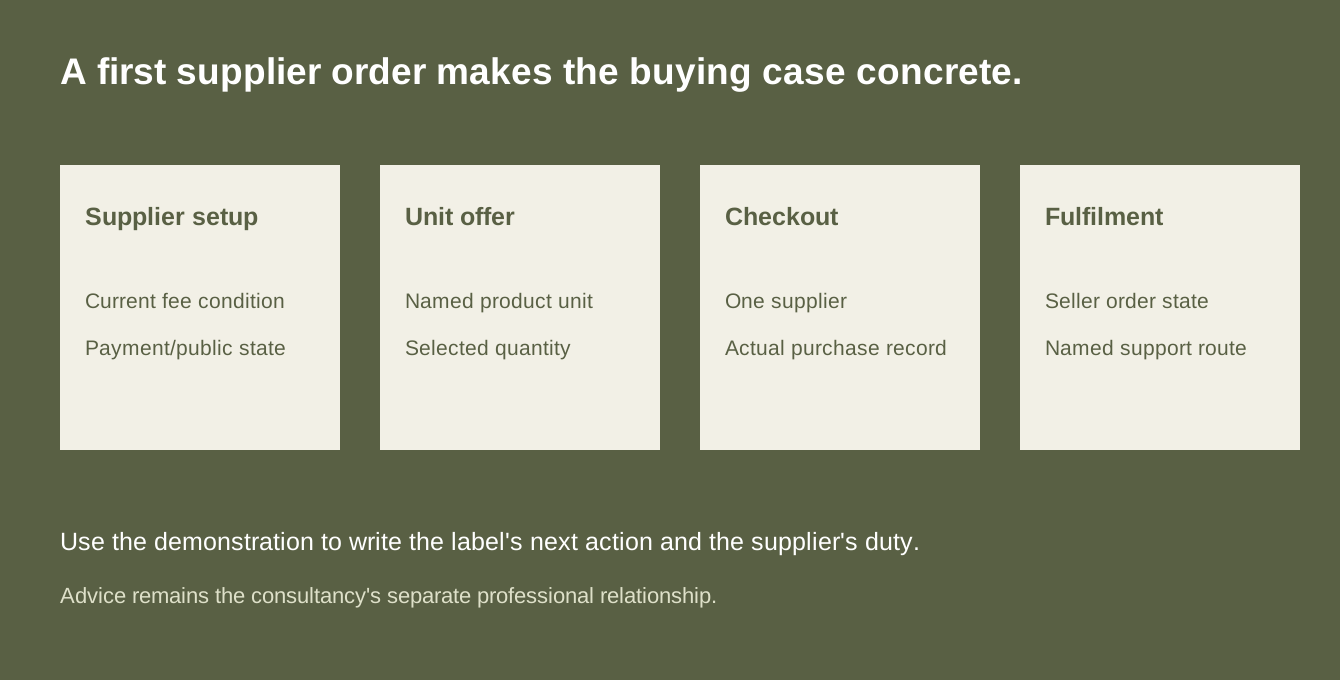
Prepare a short buying attachment with the fictional supplier profile, one clearly described unit offer and one label order. Include a cross-supplier boundary question and an ordinary fulfilment-state update. Ask the seller to demonstrate the relevant current controls.
- Define the separate commerce product beside the consultancy's advice.
- Inspect supplier setup, connected-account readiness and publishing.
- Follow a clear product unit and quantity into same-supplier checkout.
- Compare buyer and supplier purchase records.
- Rehearse one order-state or product-support question.
- Request the individual source-and-domain package against that worked case.
The buyer can then make an offer for an understood catalogue-to-order channel. It brings its own relationships and professional work, while the source package supplies the defined marketplace foundation and any expressly agreed additional scope.
Request FlowerWax's current acquisition package on Flippa. Explore the available online business collection if another delivered customer job is closer to the commerce channel your consultancy intends to own.
Explore the products discussed
Explore related acquisition offers