
Meal planning app for sale: acquire RecipeGPT
Digital asset purchase, included software and agreed transfer.
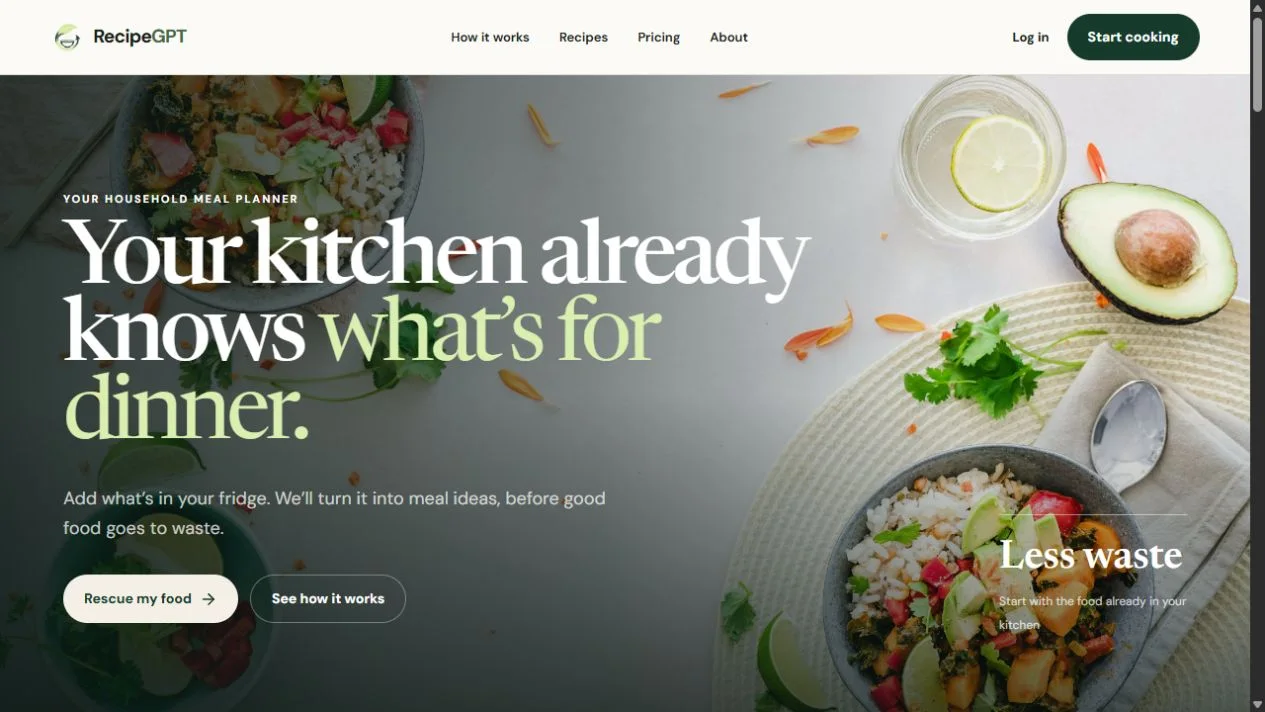
Acquire RecipeGPT, a household meal-planning software asset with pantry tracking, AI meal suggestions, shared shopping lists and subscription foundations.
Acquire RecipeGPT as a household meal-planning application with pantry and fridge tracking, expiry-aware meal suggestions, guided cooking, leftovers and shared shopping lists. Its intended commercial model is household subscriptions. The purchase concerns the digital application, domain and agreed handover, rather than a food-delivery operation, grocery inventory or a contracted customer audience.
View the RecipeGPT sale and send a purchase offer on Flippa. Inspect the current application package and technical handover document when agreeing the source, service accounts and acceptance conditions.
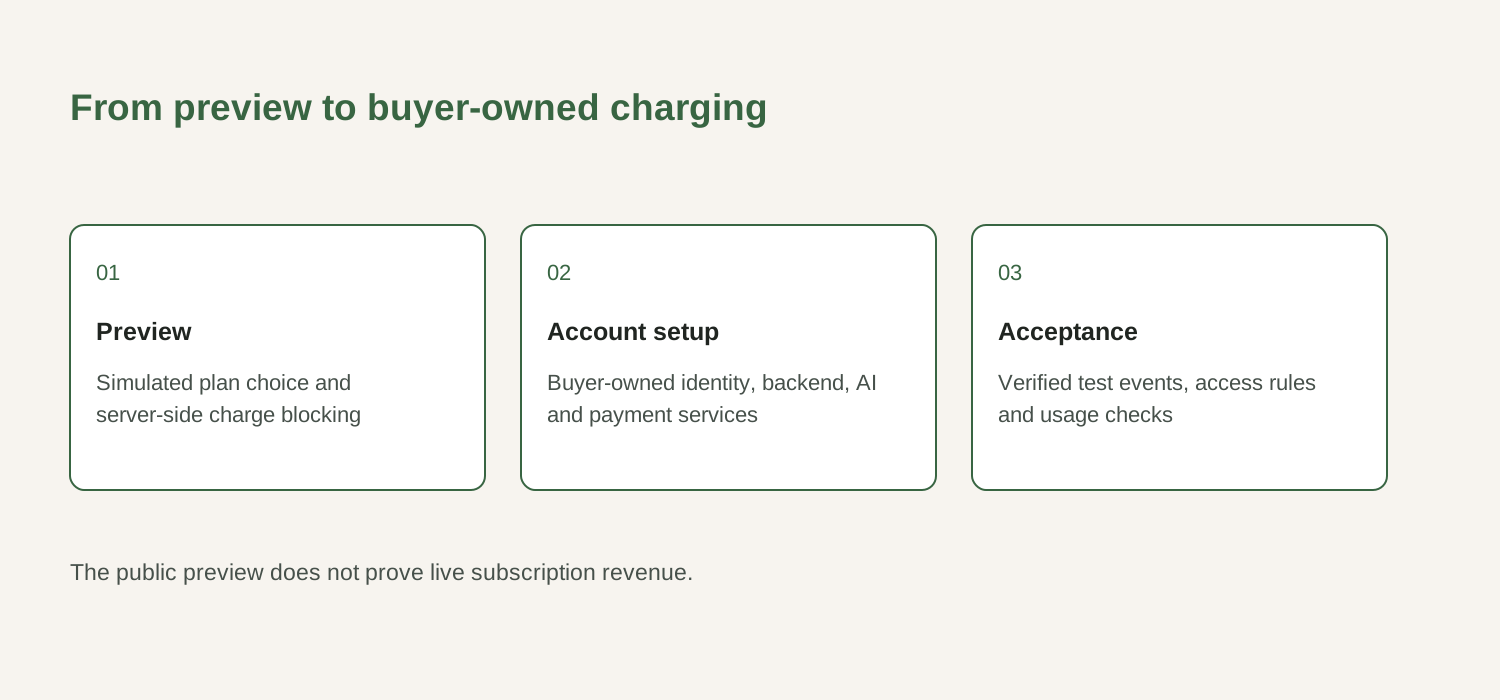
RecipeGPT is presented as a starter asset with no represented paying-customer history or revenue. Its buyer preview uses simulated plan selection and blocks real charging on the server. That preview provides product context; it is not a live subscription-income demonstration. A buyer must configure its own services and accept the relevant workflows before taking genuine household subscriptions.
The RecipeGPT software package in the purchase
The application connects food already recorded by a household with the next meal and shopping task. Pantry and fridge items carry context such as quantity and expiry. Meal suggestions use that context, cooking steps guide the household through a selected dish, and leftover and shopping records carry the result forward. These connected records are the product being acquired.
The sale should name the application source, matching domain, current design and buyer documentation. Any represented customer relationships, physical goods or commercial revenue need separate evidence and agreement. Demonstration recipes and household records show software behaviour; they do not establish an audience that will transfer to the buyer.
Request a seller-led walkthrough using sample household data alongside the current repository and installation material. Record the release and the account configuration used. The buyer should accept the actual pantry, planning, cooking and owner functions rather than treating an attractive public page as a substitute for the delivered application.
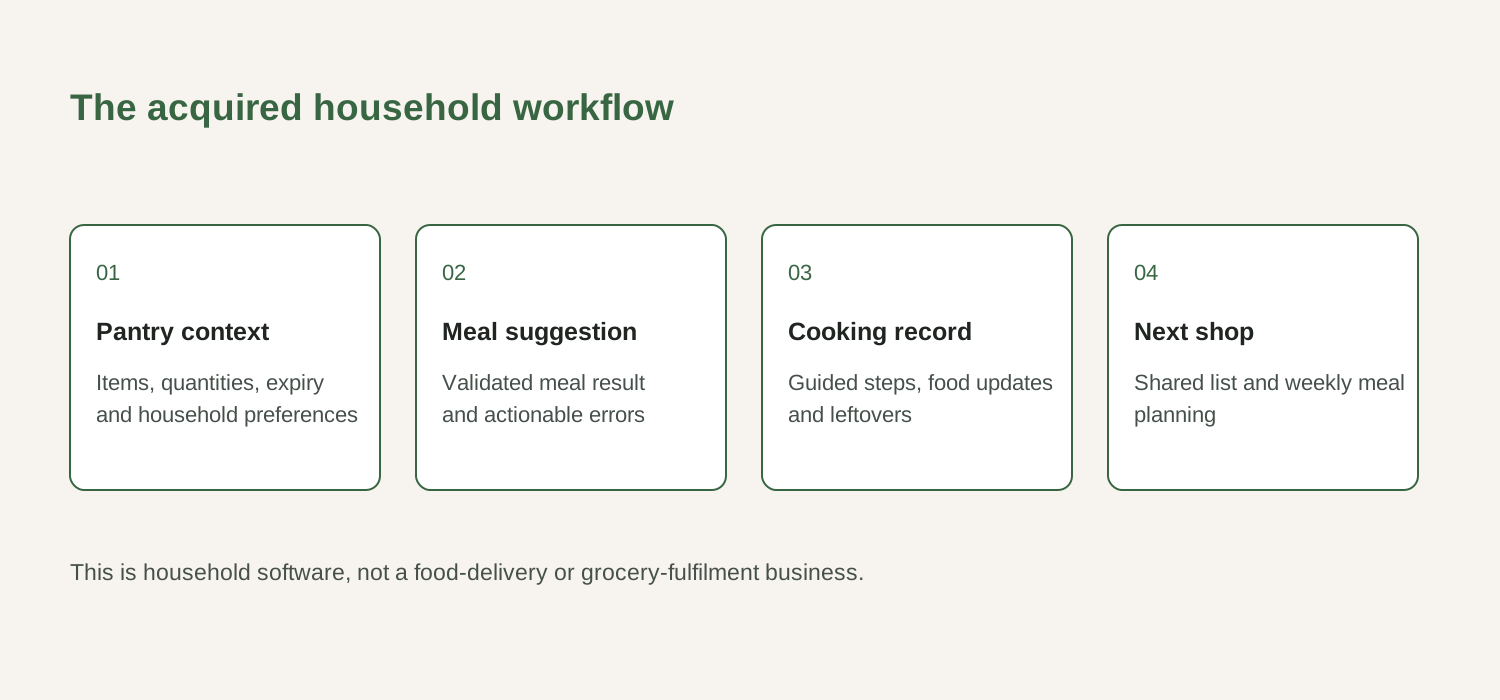
Pantry and fridge records to accept
Inspect the fields a household can create and change for an item. Use representative pantry and fridge entries with different quantities and dates. Add an item, edit it, reopen the page and confirm what remains saved. This provides an acceptance record for the everyday work that gives the application value beyond a recipe suggestion screen.
Ask what the product does when an entry is incomplete or its quantity changes. Record the available correction actions and the way the interface displays expiry context. Avoid assuming that a household food record is a precise retail stock-control system. The buyer should understand the level of inventory detail the delivered product actually maintains.
Keep the demonstration fictional and small enough to trace. An acceptance sheet can identify each sample item, its household, its initial value and its expected change. This makes later cooking and shopping tests reproducible. It also avoids using private family food records simply to show that a database screen can display information.
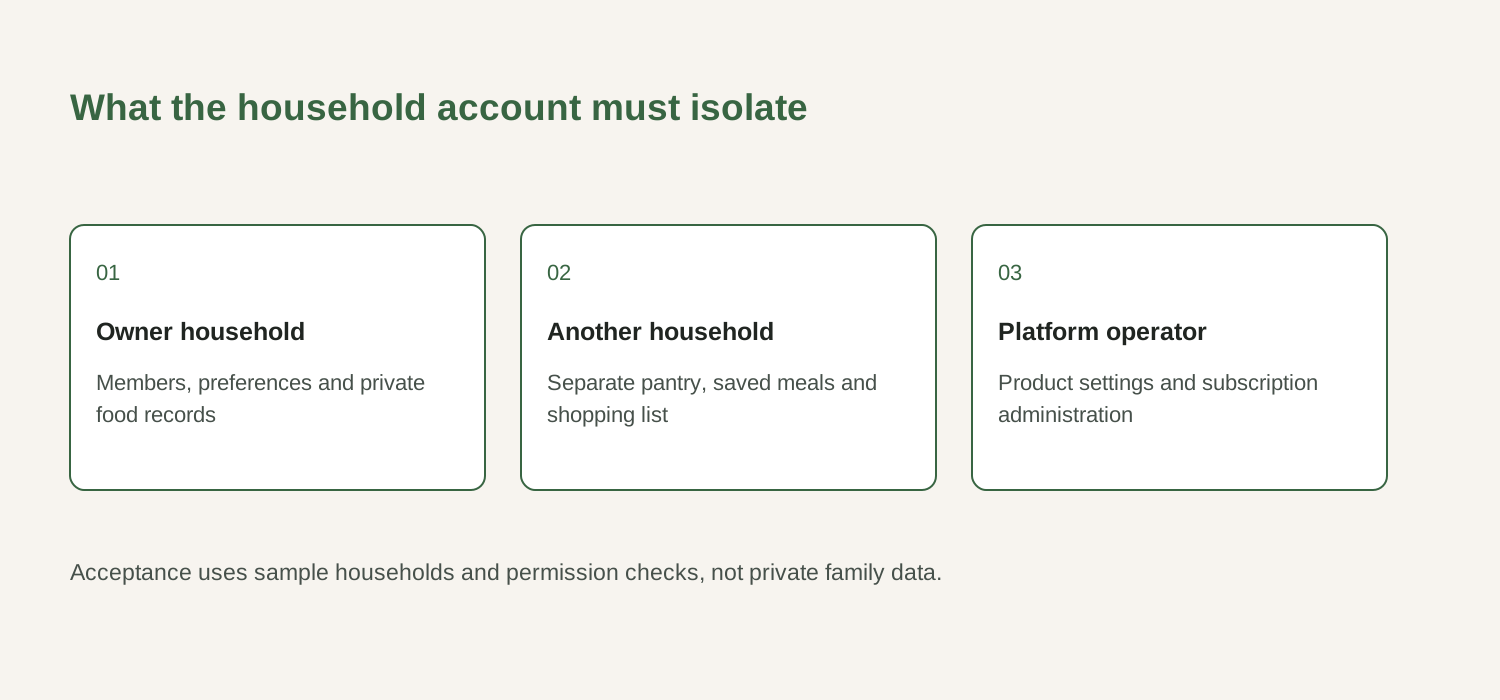
Household ownership and member access
The documented product supports household onboarding, owners, members and shared food tasks. Inspect who can invite a member, which household context is selected and who may change pantry or shopping records. A buyer needs to know these boundaries before offering a shared subscription to genuine households.
Create two sample households and an additional member in an authorised test environment. Save distinct pantry items and meal records in each. Then inspect account navigation and attempted access to the other household's material. Record the observed permissions and any correction required before launch. Private sample data is sufficient to establish this acceptance condition.
Membership changes also deserve a purchase decision. Ask what occurs when an invitation is used, an account leaves or a member loses access. Identify the delivered behaviour and any additional role policy needed. The acquisition should not promise a larger team or family-permission system than the current product can demonstrate.
AI meal generation in the acquired scope
RecipeGPT includes AI rescue-meal generation using pantry context and household preferences, with validated structured results and actionable errors or retries instead of invented fallback meals. The buyer should request the current generation path and the account requirements. Keep the capability specific: the product proposes meals from supplied information and stores results within its household workflow.
Run an authorised demonstration with a short, known pantry list. Inspect the suggestion, its ingredients and the actions available to save or use it. Then change the context and observe the result. The purpose is to understand the delivered interaction and error handling, rather than to claim that every generated meal is correct for every household.
Ask which source information is sent to the AI service and where the private key is configured. The buyer needs a controlled, buyer-owned service account and a defined operating budget. A working seller example does not establish future usage cost or unlimited generation. Record any intended usage limits and the current enforcement behaviour in the acceptance scope.
Pantry photo recognition and confirmation
The current source and handover material describe pantry-photo recognition with an explicit editable confirmation step. A recognised item should be checked before it becomes part of a household's saved pantry. Inspect that sequence with a suitable sample image during the walkthrough and distinguish recognition results from confirmed inventory.
Ask what happens when the image is unclear, a label is missed or the service cannot produce a useful response. Observe the available editing, retry and cancellation actions. An acquisition acceptance should record the actual recovery path, since households need a usable route back to their food records after an unsuccessful import.
The operator test described in the documentation is recognition-only and does not save household inventory. Keep that boundary visible when accepting an owner demonstration. A no-save test can establish service configuration, while the household confirmation flow must be accepted separately. Neither should be presented as evidence of real customer activity or a previously operating subscription service.
Guided cooking and pantry changes
Follow one saved meal into guided cooking. Inspect the steps, the household context and the action that records completion. The documented product includes approximate pantry deduction and leftover tracking. The buyer should see which records change and what the household can correct afterward, rather than assume the cooking interface maintains exact measured consumption.
Use sample ingredient quantities that make the resulting update easy to inspect. Record the pantry before cooking, complete the agreed action and inspect the result through normal account navigation. Then check how a mistaken completion or inaccurate amount can be handled. Any correction workflow important to the proposed launch should appear in the accepted scope.
This is household planning software. It does not include physical meal preparation, ingredient fulfilment or verification of the food a household actually used. The buyer should keep the public product promise connected to the records and guidance the application provides. Additional operational services require their own resources and agreement.
Leftovers, saved meals and the next plan
Leftover records connect a completed cooking task with a later meal decision. Ask the seller to create a sample leftover, reopen it and show the actions available to the household. Record the fields, quantities and dates the product retains. The buyer should know whether those records can be corrected and how they interact with the rest of the household workspace.
The application also includes saved recipes and weekly planning. Accept a specific example: save a recipe, place it in a plan and return to it from another permitted household account. Inspect whether the selected meal remains linked to the intended household and how changes appear to members. This makes the shared workflow concrete.
Do not count sample recipes or plans as customer retention evidence. They establish that the application can store and present records. Any representation about returning subscribers or engagement would need supported operating data. The starter acquisition can be assessed on its delivered functionality without borrowing results from its demonstration catalogue.
| Record | Action to demonstrate | Evidence to retain |
|---|---|---|
| Pantry item | Create, edit and reopen a fictional entry | Household, quantity and date context |
| Photo import | Recognise, edit and explicitly confirm | Difference between recognition and saved inventory |
| Meal suggestion | Generate from known sample context | Response, save action and error recovery |
| Cooking result | Complete guidance and inspect changes | Approximate pantry update and leftover record |
| Shared plan | Open a saved meal from an allowed member | Correct household access and consistent record |
Shared shopping-list access in the transaction
The shared shopping list is another household surface included in the documented application. Ask two permitted sample accounts to inspect the same list and make an authorised change. Record the resulting item state and the visibility available to each account. This checks the actual shared task the future subscription offer would provide.
Inspect what happens when an item is added manually, changed or removed. If your launch needs store assignments, price comparisons or grocery checkout, require separate evidence for those functions. A shopping list does not establish a retail ordering integration. The current acquisition concerns the household planning product described in its documentation.
The list also helps define the buyer's support scope. Identify the records an operator can investigate when a household reports a problem and the permissions required to do so. Avoid promising support processes that depend on unbuilt administration features. Put additional diagnostic or export needs into the agreed development scope before accepting the purchase.
The preview payment block
The public buyer preview is at recipe-gpt.codeblix.com and uses simulated plan selection with server-side blocking of real payments. Keep that fact in the acquisition description. A preview user choosing a plan does not create evidence of subscription revenue or merchant-account readiness.
Ask the seller to identify the frontend and backend preview configuration during handover. The buyer should understand the intended route to a buyer-owned operating environment and the checks needed before charging. Do not remove a blocking control merely to create a more impressive demonstration. Payment activation belongs to an agreed setup and acceptance process.
Once the buyer's payment account is configured, repeat relevant tests with suitable test details. Trace the payment event, subscription record and household access state. Record cancellation and failed-payment behaviour as well as the successful path. Only the accepted configuration should support the launched subscription offer.
Household subscription product and access limits
The intended owner model is recurring household software access. Inspect plan names, prices and any usage limits in the current product. A configured price is a commercial option, not an accepted customer agreement. The buyer should decide the launch offer after understanding the delivered limits and the costs of the services it will operate.
Follow a sample household through the plan-related account screens and inspect the permissions attached to each state. Ask what remains accessible after a cancellation, what happens to private records and which actions depend on a paid plan. Record the current behaviour instead of assuming a standard policy from another subscription product.
Additional tiers, usage bundles or managed services can be future product choices. They should be separately scoped, including their billing and access lifecycle. Keep the purchase tied to the delivered subscription foundation. This makes the offer auditable without promising a recurring revenue stream that the starter asset does not represent.
Owner settings and the application handover
RecipeGPT's documented foundation includes protected owner administration and configurable pricing. Request a walkthrough of the settings the buyer needs to operate the product. Inspect the current credential-change route and the distinction between household identity and the private operator session. Administrative access should become part of the accepted transfer record.
Make a small authorised settings change in the demonstration context and confirm the relevant application result. Record which settings are stored in the backend and which require a new frontend build or service configuration. This gives the buyer a realistic operating picture after the seller's setup work is complete.
Identify any additional reporting, account support or content controls needed for the intended launch. A broad owner dashboard description cannot establish every support action. The offer should list those requirements clearly and distinguish current capability from agreed additional work, with a release and acceptance condition attached to each change.
Digital rights and domain assets to include
List the application source, current design, brand materials, domain and buyer-facing documents in the purchase schedule. The sale domain is recipe-gpt.com; the temporary buyer preview uses a Codeblix subdomain. Confirm the transfer of the purchased domain and the intended operating location without treating the temporary preview URL as a buyer-owned asset.
Request rights information for recipe content, photographs, fonts and other supplied material. Distinguish demonstration content from independently licensed or user-owned content. A buyer should know what can remain public, what needs replacement and what terms continue to apply after the acquisition.
Any real customer database or audience represented as part of the sale requires separate evidence and an agreed transfer process. The starter product does not represent that history. Keep the digital asset inventory clear so source ownership, content permissions and commercial relationships cannot be confused during the transaction.
Buyer-controlled AI, identity and backend accounts
The current product uses React, Convex, Clerk, Stripe and Gemini foundations. The technical guide identifies the configuration required. For each service, record the owner, required account state and normal transfer or recreation process. Private credentials should be rotated during the agreed handover and never placed in public frontend variables.
Accept a reproducible deployment with buyer-controlled configuration. Confirm sign-in, household creation, pantry persistence, AI response handling and owner access in the intended environment. A copied repository is useful, but it should be accompanied by instructions that allow the buyer to reproduce the running application.
Account service fees, provider approvals and usage charges remain operating inputs. The purchase should not promise identical costs for every buyer or market. Obtain current terms through the selected service accounts and put the required setup into the launch budget. The transaction can then finish against documented deliverables rather than an assumed zero-cost operation.
Usage budget and the remaining launch work
Separate the asset asking price from hosting, backend, identity, payment and AI-service costs. Add configuration, accepted corrections, content preparation and household support. Use actual technical requirements to obtain budget inputs, with every estimate labelled. Do not substitute a generic profit forecast for a concrete operating plan.
Choose an initial launch scope you can support. Identify who answers household questions, investigates incorrect records and maintains the application. Those responsibilities remain with the operator even when the software automates parts of planning. The acquisition transfers a product foundation, rather than a staffed consumer service.
Any future subscription target is an assumption until supported by actual customers. Keep it separate from the starter asset's current disclosures. The buyer can value completed product work and a focused domain without presenting demonstration meals or plan selections as demand. Review the current listing before making financial representations in the offer.
RecipeGPT offer documents and support acceptance
The stored product sale material describes thirty days of hands-on technical support after sale. Confirm the current written scope, start date and covered setup tasks. List the application release, domain process, account configuration and accepted corrections so the support period has a practical delivery boundary.
- Confirm the current asking terms and identify the source, domain, design and documentation offered.
- Accept the household, pantry, cooking and shopping-record workflows using fictional data.
- Record the charge-blocked preview state separately from buyer-owned payment acceptance.
- Agree the AI, identity, backend, hosting and payment-account setup.
- Complete the agreed transfer with a retained release reference and support schedule.
Keep additional work specific. A new subscription tier, grocery integration or expanded household role needs its own data, permission and acceptance requirements. Source ownership permits future development, while the current transaction should state what has actually been delivered.
Accepting household corrections before the purchase closes
Use the sample household to correct an item after a cooking action and then reopen the shopping and planning views. The buyer should see how a member recovers from an inaccurate quantity or a mistaken action. Record the available edit, removal and replacement paths. A household application needs understandable corrections as well as a successful first entry.
Ask the seller to distinguish automatic changes from actions requiring confirmation. Photo recognition, meal generation and cooking updates have different levels of certainty. The accepted scope should state the current behaviour for each, so the buyer can describe the product accurately and provide suitable support. Any requested additional confirmation should be agreed as a specific change.
Retain these results with the transfer checklist and release reference. They help establish the application the buyer is accepting without implying medical, nutrition or food-safety guarantees. The sale is a household planning software package, and its public promise should remain tied to the functions that have actually been demonstrated.
The accepted release in the RecipeGPT offer
Name the application release and configuration used for acceptance. If a later correction changes pantry updates or subscription access, repeat the relevant test and retain its result. This gives the buyer an identifiable delivered product and keeps a technical change from silently altering the purchase scope.
The same record should state which preview restrictions remain and which buyer-owned charging tests have been completed. Those are separate facts, and both help the handover finish against evidence.
RecipeGPT software-purchase checklist
Use the checklist to record evidence accepted or conditions included in the transaction.
Preparing the RecipeGPT acquisition offer
Base an offer on the delivered software scope, the rights and domain included, the buyer-controlled service setup and the agreed handover work. Retain a list of remaining content and launch tasks. Those details give the asset purchase a clear completion point and keep the future household offer aligned with accepted capability.
Open the RecipeGPT listing on Flippa for current availability and terms. Use the technical guide and acceptance record to discuss the package through the stated transaction channel, with no claim that sample recipes or simulated plans represent a running subscription business.
Explore the products discussed
Explore related acquisition offers