
Buy a professional-discovery platform for your beauty school
Acquire a graduate portfolio and enquiry business with a clear release process.
A worked purchase case for a beauty school buying HitByGlam as a separate graduate-facing professional platform. Inspect authorized portfolios, the actual profile release route and one client enquiry.
Buy an owned professional-discovery platform when your beauty school wants to operate a separate portfolio and enquiry business for graduates. Codeblix's HitByGlam offer provides a source-and-domain foundation with professional profiles, visual portfolios, Style Briefs, proposals and software-plan tools. Request the package around the graduate release process you intend to run.
This worked case assumes a fictional school already has relationships with its own graduates. Those relationships, their work and their consent are buyer inputs, not assets included in the sale. HitByGlam is a professional-discovery product. Teaching, qualifications and the school's alumni administration remain separate, as do professionals' service agreements, appointments, deposits and service payments.
Request HitByGlam for the graduate-facing offer you will operate
Contact Codeblix to request HitByGlam's current source and domain acquisition package. Tell the seller that you are evaluating a professional portfolio and enquiry channel around an existing beauty school. Ask for a walkthrough using one fictional graduate, one authorized portfolio item and one client request.
The current Flippa listing owns the price, availability, represented financials and transaction terms. The HitByGlam product page and individual beauty marketplace acquisition offer remain the authoritative owners for the software package. This case concerns a school's specific purchase purpose: releasing professional profiles responsibly and running an understandable enquiry offer.
The owner should choose that purpose before discussing a broad alumni portal. The delivered application is useful for a defined professional-discovery business. If the school instead needs a learning platform, official qualification system or centralized alumni database, that is a different requirement to state before making an offer.
Give the school a role that graduates and clients can understand
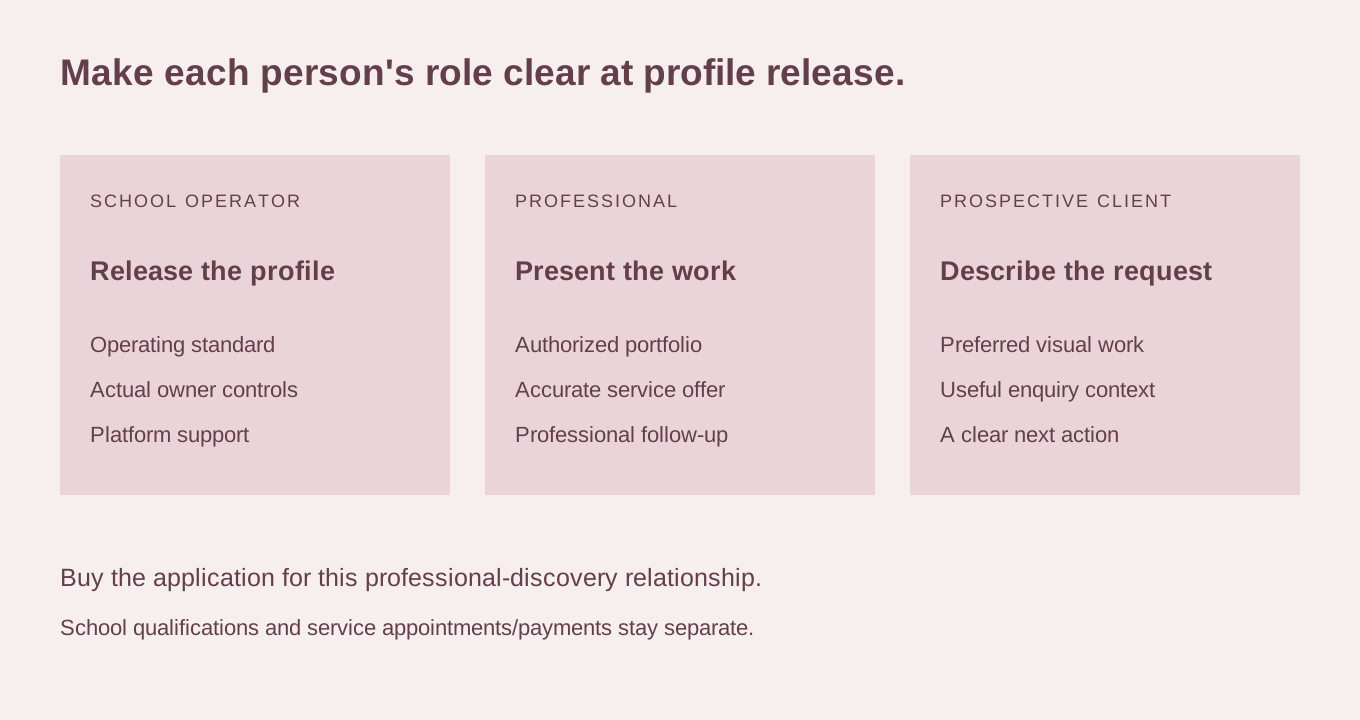
The fictional school wants to help graduates present their work and wants to own the digital channel rather than rely only on scattered social profiles. It can bring editorial standards, a release conversation and an existing relationship with each participating graduate. The application supplies a professional-profile and enquiry foundation around that work.
Write the public role in plain language. Is the school operating a directory of participating professionals? Is it providing software access and profile preparation? Which statements concern the school's own records, and which are supplied by the professional? These choices determine the release process and the customer promise the buyer should test.
A clear role helps the school avoid making every profile look like a school-delivered service. The client should know which professional receives the enquiry and who will discuss the work. The school's platform role and the professional's service role can be useful together when each has a clear boundary.
Use three fictional graduates to define the first release
Consider three illustrative graduates. The first is ready to present independent makeup work. The second works within a studio and needs to clarify which photographs and descriptions they are authorized to use. The third is still preparing a professional offer and wants time to complete the profile before it becomes public.
| Illustrative graduate | Release task for this case | Useful application work to inspect |
|---|---|---|
| Independent professional with authorized portfolio material. | Prepare an accurate service description and a clear public profile. | Professional draft, portfolio item, service and submission/approval route. |
| Studio-based professional with shared work examples. | Clarify material and wording authority before submitting the profile. | The actual professional editing and relevant Studio/member controls. |
| Graduate still preparing an offer. | Keep work in a preparation state until the agreed release criteria are met. | Draft/published states and the current submission requirements. |
These cases give the seller a useful demonstration brief. They also help the buyer decide what human work the school will perform. A graduate's willingness to participate is different from a complete profile, and a complete profile is different from the school's decision to release it through the platform.
Start the independent profile with work a client can recognise
HitByGlam's professional workflow supports a profile, services and portfolio items. For the first fictional graduate, prepare a small set of authorized material that clearly belongs to the professional offer. Use the actual product fields to describe the work, rather than ask the seller for a generic tour of every screen.
The source includes portfolio titles, descriptions, image descriptions and service/style/occasion tags. Those are practical tools for a visual professional product. The buyer can ask the graduate to explain what the picture shows, which service it represents and what a client should understand from it. An accurate description is more useful than a broad claim that the platform will automatically bring bookings.
Follow the item into its actual draft or published state and view the relevant public presentation. The school can use that result to prepare its release standard. The standard is its own operating material, written from the delivered workflow and the professional's authorized content.

Make the service description useful before inviting an enquiry
A photograph helps a client recognise a style, while the service description explains the professional offer. HitByGlam's source includes service names, categories, description, duration ranges, starting price, inclusions and preparation notes. The buyer can inspect these fields around a simple fictional service.
For example, the graduate can describe the work they are prepared to discuss, what the initial description includes and what a client should clarify. The public wording should match the professional's real offer. A starting price or a duration description is information for that conversation; the underlying appointment and service payment remain with the parties.
Have the school reviewer read the service beside the portfolio item. Do the two describe the same work? Does the profile give the client enough context to send a useful request? This is a practical release test for the software business the school wants to operate.
Use the actual submission route as a release checkpoint
The professional source documents a submission route with required profile material, including a published service and portfolio item, followed by the product's approval and public state. Ask the seller to demonstrate that route using the fictional graduate. The buyer should see both the professional's preparation and the owner's relevant action.
The school can put its own pre-release conversation around that checkpoint. It may confirm who supplied the material and whether the wording is ready for the intended offer. That is a human operating standard, not an automatic official qualification check. Keep the public description of the school's role consistent with what it actually does.
Record the release decision in the school's chosen process and inspect the resulting public profile. The useful acquisition evidence is a coherent path from prepared professional material to a profile the client can understand. Any essential additional approval record should be identified during the purchase discussion.
Give the studio-based graduate a clear material-authority decision
The second fictional graduate has helped produce work in a studio. Before preparing a public profile, they need to clarify which examples they are authorized to use and how the work should be described. The school can make that a release question before the material enters the public offer.
Use the seller walkthrough to inspect professional editing and the relevant Studio or member controls available in the package. Identify who can prepare and change the actual profile material. The school's administration of an alumni initiative is a separate relationship from any professional team seat inside the application.
Once the participating parties have an agreed description and authorized material, follow the same product release path. This keeps the first operation manageable: the school has a repeatable profile process, while each professional remains responsible for the service they are presenting.
Let the preparing graduate finish a real offer before release
The third graduate is interested but has not yet prepared a complete professional offer. HitByGlam's draft and submission states give the buyer a concrete route to inspect. Ask the seller to show what a professional can prepare, what the submission checks require and what is public at the relevant stage.
The school can offer preparation help within its own agreed service. That might mean helping the graduate write a clear description or choose authorized portfolio material. The resulting application record should still accurately represent the participating professional rather than a fictional service created just to fill a directory.
This case is valuable because a buyer need not release every invited person at once. A small first group with complete offers can be an intentional operating choice. The acquisition can support that focused release without pretending that a populated marketplace or a transferred alumni roster comes with the source code.
Follow one client from a preferred look to a useful request
The client side of HitByGlam includes visual discovery, inspiration and Style Briefs. For the buying exercise, use a fictional client who likes a particular look and wants to discuss work with an appropriate professional. Ask the seller to follow the delivered path with that preferred material and the relevant request context.
Inspect what the professional receives and how the proposal or follow-up workspace supports the response. The buyer should be able to explain the next step to both sides. A useful enquiry contains enough context for a professional conversation and gives the client an understandable route forward.
Keep the service promise consolidated: this platform supports discovery and enquiries; the professional and client arrange appointments, deposits, service agreements and service payments outside it. The school's release and platform support procedure should make that handoff easy to understand.
Choose the profile-release decision before choosing a paid position
What does the first graduate profile need next?
The selector turns the school's goal into an actionable seller request. It does not decide whether a person is professionally qualified or ready to perform a service. That judgment and any school representation must have their own basis.
Separate the professional software offer from tuition and service fees
HitByGlam includes Pro and Studio software plans and one-time Featured Pro visibility. Those are the platform's own products. A school buying the asset should decide which professional software offer it intends to operate and inspect the relevant plan, access and visibility behaviour in the current package.
School tuition and a professional's payment for beauty work are other relationships. Keeping them distinct makes the first public offer easier to explain. A graduate should know what platform access provides, while a client should know what sending an enquiry does and who will discuss the service.
Use current seller evidence for represented financials and current terms. Configurable plans and a payment interface are not evidence of paying alumni. The buyer's school may bring its own participating professionals, but their choice to use or pay for a future product remains a future commercial matter.
Prepare the school's answer to the first ordinary support question
A graduate may ask how to replace a portfolio photograph. A client may ask where their enquiry went. A school reviewer may want to understand a submitted profile. Choose one ordinary question from each role and ask the seller to demonstrate the relevant current controls.
The buyer can then write a short support instruction naming the record and the next action. Use the actual professional, owner and client access model. The school may perform some platform support itself while the professional handles the service conversation. A clear division helps everyone get a useful answer.
Try the instruction with a colleague who did not watch the initial demonstration. If they can identify the right profile or request and explain the next step, the buyer has a concrete operating starting point. Any essential missing permission or record belongs in the acquisition scope.
Keep the profile accurate when a graduate's work changes
After release, a professional may change their service description, location or portfolio material. The source includes professional editing and publication states, so ask the seller to show the specific update route relevant to the school's intended operation. Observe how the current product presents the change and what the owner can inspect.
The school can maintain its own participation arrangement around that workflow. It should be clear who supplies updated information, who decides that the profile remains appropriate for the platform and how a question is escalated. This is an operating process around the actual application.
The release standard should stay small enough to run. A clear description, authorized visual work and an understandable enquiry route can be more useful than adding broad claims the operator cannot substantiate. The buyer is acquiring a focused discovery business, with the option to agree additional work explicitly when required.
Make the independent graduate's first service specific enough to inspect
For the illustrative independent professional, choose one service rather than a complete career history. The professional supplies a clear name, an accurate description of the work and authorized visual material showing the relevant style. The school reviewer reads those items together and asks what a prospective client should understand before sending a request.
Use HitByGlam's actual service and portfolio fields in the demonstration. A title can identify the work, preparation notes can explain what the professional needs to discuss, and an image description can make the visual item more understandable. The school can see whether the delivered product supports the kind of professional presentation it wants to operate.
Finish by viewing the public result after the demonstrated release process. The buyer should be able to identify which information belongs to the professional and which description concerns the platform itself. This turns the acquisition into a test of one complete offer rather than a request for an undefined graduate marketplace.
Let the studio example show who is speaking for the work
The studio-based graduate may have a different presentation. In the fictional case, the participating people agree which images can be used and which description accurately explains the graduate's contribution. Bring that agreed material to the seller walkthrough and inspect the relevant professional or Studio arrangement.
The buyer should be able to answer a client's simple question: whose offer am I viewing, and who will receive my enquiry? The application has professional profiles and team-related controls to inspect; the school can prepare its own participation process around the actual access model. The role of each person should be clear in the release material.
If the school's intended arrangement needs an extra owner approval or a particular team permission, identify it while evaluating the package. The seller can demonstrate the delivered route and name any separate requirement. The first public release can then be small, accurate and manageable.
Complete the client conversation with a human follow-up
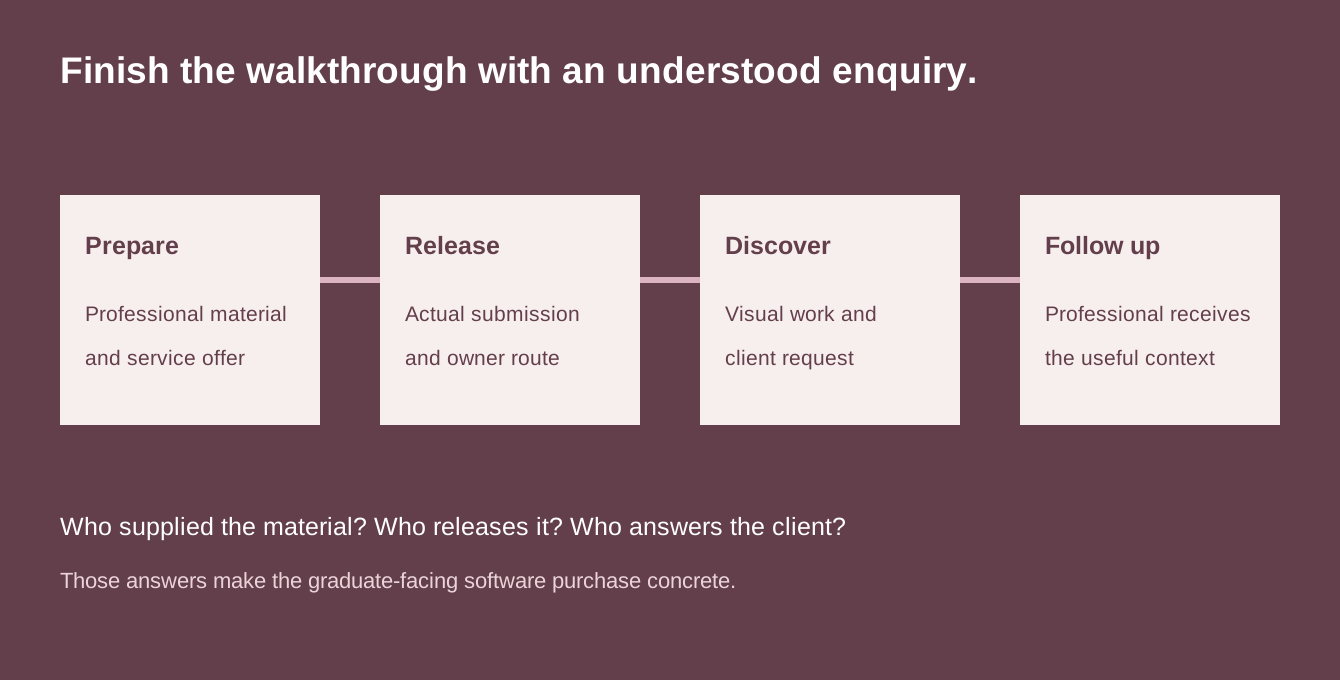
For a final fictional request, the client likes a particular portfolio look and has an occasion and location in mind. Ask the seller to show the actual Style Brief or enquiry information carried forward to the professional. The professional then uses the delivered proposal and follow-up workspace to discuss the request.
The school reviewer should be able to understand that conversation without becoming the beauty service provider. The platform can help present the work and organize the request. The participating professional handles the detailed service discussion and separate arrangement with the client. That is the business handoff the school is buying software to support.
Have the buyer repeat the request explanation after the walkthrough. What did the client submit? Which professional received the relevant context? What is the next human action? A clear answer gives the purchase a concrete acceptance exercise tied to the buyer's graduate-facing business.
Write a first-release note that another school colleague can use
Prepare a brief internal note with the participating professional, authorized material, agreed public wording and actual release step. Include the ordinary support contact and the route for a later profile correction. This is the school's operating note, built from the product demonstration and the participating people's agreement.
Ask a colleague to use the note with the fictional preparing graduate. They should know what is still being prepared and where the next action belongs. The exercise gives the buyer useful evidence about the work it will perform after acquiring the platform, while keeping the product scope focused on professional presentation and enquiries.
Turn the three graduate cases into the purchase attachment
Send the seller a short attachment describing the independent professional, studio-based professional and preparing graduate. Include the authorized test material and the client request you want to follow. The seller can prepare the relevant product walkthrough instead of relying on a generic landing-page presentation.
The purchase conditions can then name the delivered release and enquiry workflow, the source-and-domain package and any essential agreed work. Keep the school's actual alumni relationships and public representations on the buyer's side of the plan. This gives the negotiation a specific purpose without implying that school accounts or participating graduates transfer with the software.
A concrete request can say: “We operate a beauty school and want to acquire the professional-discovery application for a separate graduate-facing business. Please demonstrate one prepared independent profile, one Studio participation case and one draft still being prepared, then follow a client request into professional follow-up.” Attach the fictional material and identify the release step that determines your purchase.
After the walkthrough, compare the result with that request. Keep the controls the seller demonstrated, the operating tasks the school accepts and any remaining requirement in separate short notes. This makes the final purchase discussion easier for the person authorizing the acquisition and the colleague who will run the first release.
- Define the separate professional platform offer the school wants to own.
- Prepare the three fictional graduate release cases.
- Inspect the profile, service, portfolio and actual submission route.
- Follow one client Style Brief or enquiry into professional follow-up.
- Write a short release and support instruction from the demonstrated controls.
- Request the individual asset against that concrete operating scope.
Request HitByGlam's current acquisition package on Flippa with your graduate-release case attached. Browse the available online business collection if another customer job is closer to the business your school intends to operate.
Explore the products discussed
Explore related acquisition offers