
Buy a home-based digital business without a stockroom
Choose an owned application around the physical work you are prepared to arrange.
A worked acquisition case for a buyer with no-stock and no-customer-premises constraints. Request MemoSlide, ThatQuis or HitByGlam around a clear customer job and physical-work responsibility map.
Buy a digital business whose physical-work responsibilities fit the place you intend to operate it. If your purchase mandate excludes holding retail stock or receiving service customers at your address, inspect the actual customer job before choosing an asset. Codeblix offers individual application-and-domain foundations including MemoSlide, ThatQuis and HitByGlam.
This worked case follows a fictional buyer who wants to operate from a desk and has two explicit constraints: no stock stored at that address and no customer service appointments there. Those are the buyer's assumptions, not a statement that every home-based business is permitted everywhere. The purchase still needs an operator for software, content and customer support.
Request a product around the work your operating place can support
- Request MemoSlide's current source and domain package for a memo-to-presentation planning application with digital work and exports.
- Contact Codeblix about buying ThatQuis for an owned creator quiz product with questions, rules, outcomes and response records.
- Request HitByGlam's professional-discovery asset for a platform business where participating professionals provide the underlying beauty service.
Each is an individual purchase with its own current price, availability, represented financials and terms on Flippa. Describe your no-stock and no-customer-premises mandate when requesting the package. Ask the seller to follow one actual customer job so you can identify the physical work, digital record and responsible person.
The MemoSlide, ThatQuis and HitByGlam pages retain their individual product scope. The side-business acquisition case addresses working hours, while the family ownership case addresses operating roles. Here the deciding condition is physical custody and where the customer service is performed.
Put the physical constraint in the purchase mandate
The fictional buyer has a desk, ordinary communication tools and a plan to arrange the technical operation of a web application. They are prepared to answer customer questions and maintain the business. They are not prepared to receive grocery deliveries, store plants or invite beauty-service clients into their operating space.
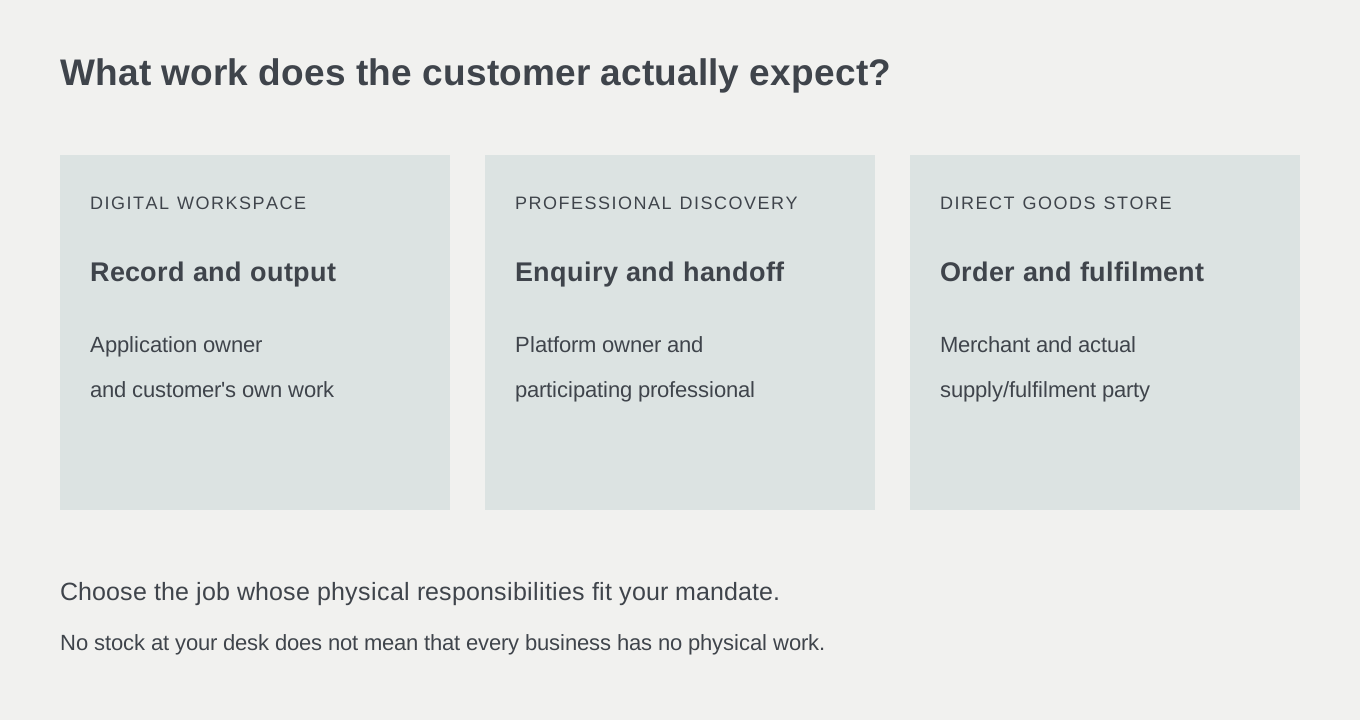
That distinction changes the asset shortlist. A digital workspace or publishing tool may fit because the customer's primary work concerns information inside the application. A professional-discovery platform may also fit when independent professionals perform the physical service elsewhere. A direct-goods storefront requires an actual fulfilment arrangement, even if its owner uses a laptop to run the website.
Write the constraint as an operational condition, rather than a vague wish for a business that works from anywhere. The buyer can then inspect an existing product and decide whether the required physical work has a responsible owner. This is a concrete purchase purpose with a useful stop condition.
Buy MemoSlide for the digital planning job you want to provide
MemoSlide's source-backed job begins with written memo material and produces an editable presentation plan. The product includes planning, editing, checks, collaboration and exports. For this buyer, the customer work is digital: the user prepares information, edits the plan and uses a supported output.
Ask the seller to demonstrate a fictional memo from input through the chosen export. The buyer should see where the application helps and where the person edits or confirms the work. The operating place needs to support running the application and handling the resulting customer questions, rather than a stockroom or a customer appointment area.
The buyer still decides the commercial offer. Selling application access is different from personally writing or editing every presentation for customers. If they want to provide an additional service around the software, they should describe that work in their plan and ensure the agreed rights and delivered tools support it.
MemoSlide also documents expiring and revocable view/comment sharing links. The buyer can request a demonstration of one plan shared for review, the recipient's actual view and the operator's change to that access. This provides another concrete digital customer interaction to evaluate alongside the supported export.
For the desk-run mandate, the useful question is which of those delivered routes belongs in the first offer. The buyer may want users to work inside their own accounts, share a plan for comments or open an exported file. Inspect the chosen route with fictional material and identify the ordinary support action it requires. The operator can then describe the digital service it is actually prepared to run, with physical printing or presentation work left to the separate arrangement chosen by the customer.

Follow the first digital support question from the desk
Use a fictional customer who wants to understand an exported presentation plan. Ask the seller to show the editable source plan, the relevant export path and the controls that matter to that question. The buyer should be able to identify the record and explain a practical next step.
That exercise reveals the operating work the buyer is accepting. Someone needs to understand the product, respond through an actual support route and arrange a technical investigation when necessary. A software business can fit the buyer's physical-space constraint while still requiring thoughtful customer service.
Keep the first offer focused enough for the operator to explain. The buyer might choose application access and clear product support, leaving any bespoke presentation service outside the initial offer. The acquisition can be evaluated against that defined job rather than an undefined promise to do every kind of digital work.
Buy ThatQuis around a creator's published experience
ThatQuis supplies a creator product for quiz questions, branches, outcomes, consent and response records. The relevant customer work is preparing and publishing an experience through the application. The buyer can inspect that workflow without needing to receive physical inventory or host the quiz participant at its address.
Prepare a fictional creator and a small branching quiz. Ask the seller to show the creator workspace, publication path and the response context the creator can inspect. The buyer should understand what the application stores and which parts the creator configures.
The business owner can then define product support around a specific question. A creator may ask why a selected answer reached an outcome or how a usage limit applies. Those questions concern the delivered rules and account configuration. They are different from providing an in-person service to every person who answers a quiz.
Keep the creator's content work with the right person
The fictional buyer wants to own the application, not automatically write every customer's questions. ThatQuis can support a creator preparing a configured experience, while the creator remains responsible for the meaning of the material they publish. The buyer should decide whether any additional campaign-preparation service belongs in the offer.
Follow one fictional correction. A creator changes an outcome description or discovers an answer path they want to revise. Ask the seller to demonstrate the relevant controls and records. The buyer can assess the support work involved and decide whether the application fits the business it wants to run.
This keeps the no-premises purchase grounded in a real customer job. The absence of stock is useful only if the operator actually wants to own that job. A digital tool that does not match the buyer's skills, resources or intended offer is not made suitable simply by having no physical goods.
Buy HitByGlam as the discovery operator rather than the beauty provider
HitByGlam supports professional portfolios, visual discovery, Style Briefs, proposals and follow-up. For the fictional buyer, the application business can be operated separately from the actual beauty service. Participating professionals present their work and discuss the client's request.
Ask the seller to follow an authorized fictional portfolio into a client enquiry and professional response. The buyer should be able to identify the platform's record and explain who answers the service question. This is a useful operating exercise for someone who wants to own a discovery channel.
Consolidate the service boundary in the offer: appointments, deposits, service agreements and service payments are outside HitByGlam. The buyer's role is the professional platform and its software or visibility products. The professional's actual working location and client arrangement remain part of their separate service.
Map each customer request to a digital record or a physical task
| Customer job in the worked shortlist | Main application record | Physical-work responsibility to identify |
|---|---|---|
| Prepare an editable presentation plan. | Memo, plan, edits and supported export. | The buyer's own operating workspace and the user's work; no retail stock is part of the application job. |
| Publish and inspect a branching quiz. | Creator quiz configuration and response records. | The creator's separate activity; platform support concerns the application. |
| Discover a professional and send a Style Brief or enquiry. | Portfolio, request and professional follow-up context. | The participating professional's underlying beauty service. |
| Buy grocery goods through a direct storefront. | Product, basket, order and customer information. | An actual stock and fulfilment arrangement supplied or organized by the operator. |
The buyer can use this map to ask a precise question: “Who owns this physical task in my intended operation?” The answer might be the buyer, a participating professional or a separately arranged fulfilment party. An unanswered task remains an operating requirement rather than disappearing because the website is digital.
Treat a goods storefront as a conditional comparison
TenBasket is an available direct-grocery storefront with catalogue, checkout, orders, tracking and rewards. It is a useful comparison because its customer ultimately expects goods. A buyer who can arrange the physical supply and fulfilment might operate the website from a desk, while the goods are handled elsewhere.
For this fictional buyer, the question is whether they have or are prepared to establish that arrangement. If they cannot supply or arrange fulfilment within their mandate, the goods offer is a poor fit. That is a conclusion about this buyer's constraints, not a claim that every grocery website requires the owner to hold a warehouse at home.
The TenBasket acquisition offer owns the direct-store product decision. This comparison helps the no-stock buyer keep a physical obligation visible while choosing an appropriate digital business foundation.
Choose the customer job that fits your physical-work mandate
Where will the customer's actual work be fulfilled?
The selector helps define a seller request. It does not establish business permissions, investment suitability or the existence of participating customers. The buyer should use the actual individual offer and their own operating constraints to make the purchase decision.
Use one customer rehearsal to identify what the desk operator does
Choose the product that best fits the mandate and rehearse one customer question in the seller's authorized environment. For MemoSlide, open the relevant plan and export. For ThatQuis, inspect a configured path and response context. For HitByGlam, identify the professional and enquiry record.
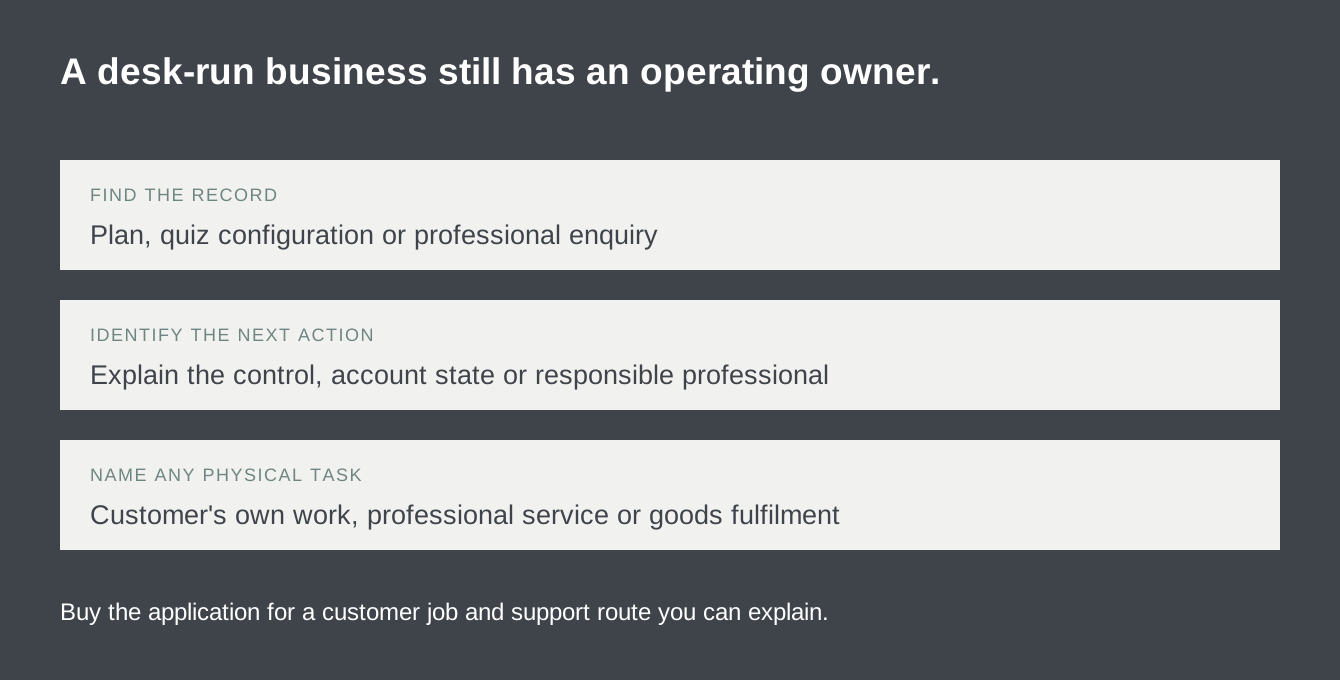
Write the operator's next action in ordinary language. It might be explaining a product control, identifying an account state or directing a service conversation to the professional. The buyer should know which actions they can perform and which require the technical or service owner.
The rehearsal gives the acquisition a practical boundary. The business may be run from a desk because the selected job fits that arrangement. It is still a business with records, communication and maintenance rather than a passive website left to operate itself.
Check what the public product asks the customer to understand
The buyer can inspect the public profile, product page and relevant customer records with fictional contact details. Read them as a new customer. Is the application operator's role understandable? Is a participating professional clearly identified? Does the message describe the next action accurately?
Use that evidence to prepare the buyer's own public wording and support information after transfer. The seller can demonstrate the current product presentation and available settings. Any essential change should be expressly agreed, with the buyer responsible for its actual operating arrangement.
A no-customer-premises mandate concerns the physical service the buyer is prepared to perform. It should not be confused with a promise that all business contact or address obligations disappear. Keep the product representation accurate and establish the buyer's own requirements through the appropriate current process.
Keep the operating place out of the customer-service promise it cannot fulfil
The fictional buyer can promise useful platform support without offering physical beauty work or grocery fulfilment at its address. It can also choose a digital application whose users do their own creative work. The important step is to define that offer clearly before purchase.
Write a short support description beside the product's customer job. For a planning tool, identify the application questions the operator will handle. For a creator product, identify account and publishing support. For professional discovery, identify the platform issue and the separate service recipient.
Have someone else read the description and explain where a real customer would go next. A clear answer shows that the buyer's physical constraint has become an operating design, rather than a phrase added to a sales page.
Test the presentation customer who asks for a physical output
For the illustrative MemoSlide case, the customer finishes editing a plan and asks the business to supply printed presentation material. The buyer can now apply the no-stock mandate precisely. The application supplies supported digital or print-oriented exports; arranging a physical printed product is a separate service the operator would have to accept or arrange.
Ask the seller to show the actual output the customer can obtain. The buyer can write a product promise around that file and its intended use. If the buyer wants to sell a printing service as well, they need an actual arrangement and a clear allocation of the additional work. That is a different operating offer from simply providing the application.
The exercise turns a broad physical constraint into a useful purchase question. Can the buyer provide the selected digital job without accepting a physical delivery promise? If so, MemoSlide can be evaluated for that focused offer. The customer can understand what the application provides and what they would arrange separately.
Give the quiz creator a clear publishing service boundary
Now imagine that the fictional ThatQuis creator runs their own event and wants a published quiz for participants. The platform operator can support the application's creator and response workflow, while the creator organizes the event. The buyer should ask the seller to show the actual published experience and the relevant account or usage controls.
The creator may also ask whether the platform owner will attend, supervise or administer the event. The buyer's no-customer-premises mandate can remain intact by defining an application service rather than an event-operation service. If the buyer intends another arrangement, it should be expressly added to the offer and operating plan.
This is a positive reason to inspect the customer workflow before purchase. The buyer can choose a product whose ordinary job fits its operating place, then explain that job accurately. The application owner supports the software; the creator owns the content and separate activity they choose to run around it.
Handle a beauty enquiry through the professional's actual offer
For the HitByGlam path, the fictional client sends a request after viewing a professional's portfolio. Follow the enquiry or Style Brief and the professional's response through the delivered workspace. The buyer should be able to identify the relevant professional and explain the next conversation.
The platform operator can help a person find the correct application record without becoming the physical beauty provider. The participating professional discusses their actual service and working arrangement with the client. This is the relationship the buyer should rehearse, because it is what allows a discovery business to fit the desk-run mandate.
Prepare a short support answer for a client who confuses the platform with the professional. It can identify the request, explain where follow-up belongs and give the actual product next step. The buyer can assess the application for that job and prepare its own support wording after transfer.
Keep an outsourced goods arrangement visible rather than assuming it
A buyer might satisfy a no-stock-at-home rule by separately arranging physical supply and fulfilment elsewhere. If that is part of the plan, inspect the actual merchant relationship and the direct storefront workflow. The existence of an external arrangement does not change TenBasket into a built-in supplier marketplace.
For the fictional buyer in this case, the decision depends on whether such an arrangement is available and acceptable. They can choose a focused digital product instead, or make goods fulfilment an explicit condition before considering a direct-store asset. Either decision is more concrete than treating an online checkout as proof that nobody has to handle the goods.
Make the purchase attach to a defined desk-run operation
A focused request can say that the buyer wants to acquire the individual application and domain for a specified digital job, with no stock held or customer appointments at its operating address. Attach the fictional customer rehearsal and ask the seller to show the relevant workflow and service requirements.
The source package, documents and agreed rights should fit that selected operation. The buyer can arrange technical support, maintain application services and prepare customer communication around the delivered product. Those are concrete duties it accepts as owner.
- Write the no-stock and no-customer-premises conditions.
- Choose the digital or separately provided service job that fits them.
- Follow one customer request through the actual application records.
- Name the person responsible for any physical task.
- Rehearse the desk operator's ordinary support action.
- Request the individual source-and-domain offer with that mandate attached.
Request the current MemoSlide, ThatQuis or HitByGlam acquisition package. Explore the available online business collection if another delivered customer job better fits the place and responsibilities you are prepared to operate.
Explore the products discussed
Explore related acquisition offers