
Web applications for sale for an agency client deliverable
Acquire an application for client quizzes, presentation plans or organiser workflows.
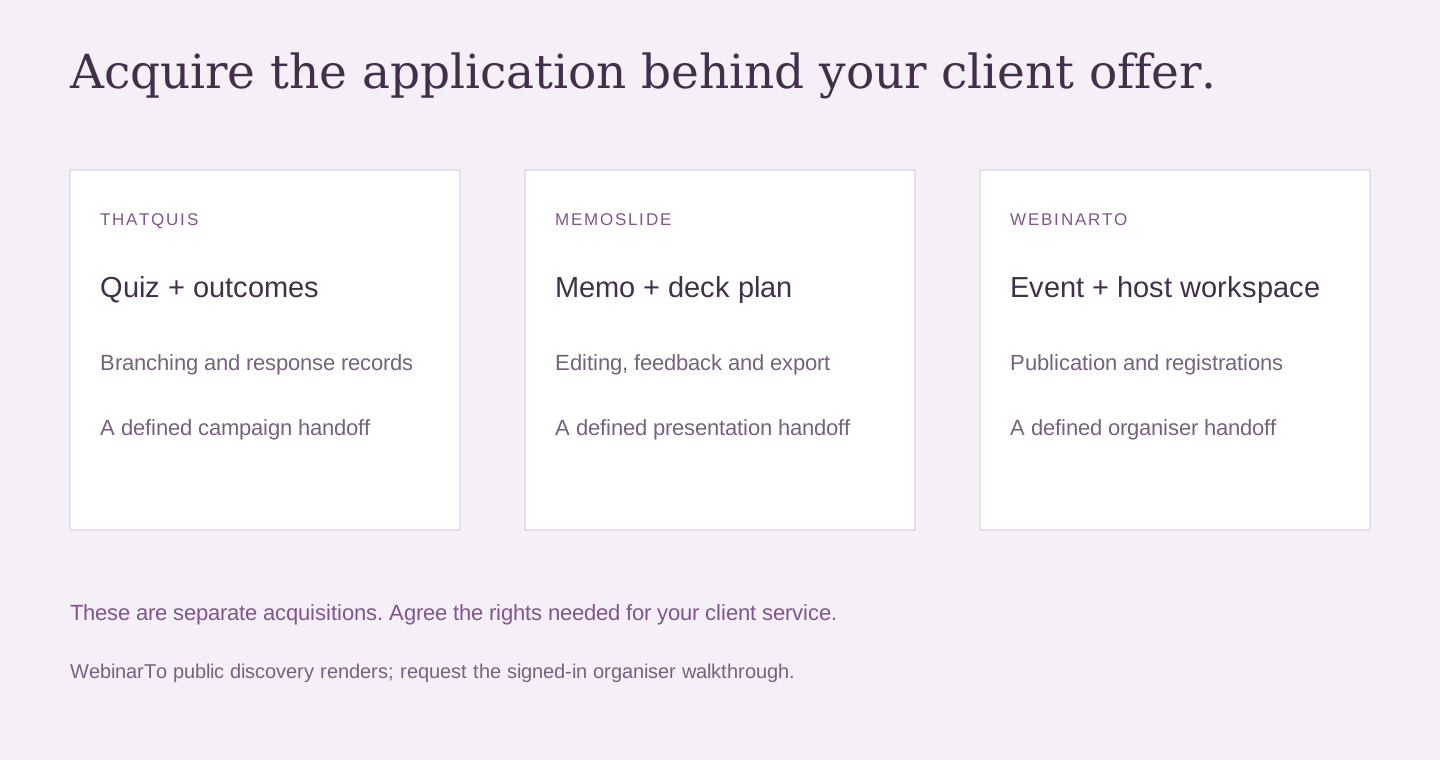
Buy an owned application for an agency service built around one client deliverable. Request ThatQuis, MemoSlide or WebinarTo, confirm acquisition rights and inspect the client handoff.
Choose web applications for sale around a client deliverable your agency can actually support. Codeblix offers separate acquisition packages for ThatQuis, MemoSlide and WebinarTo. Each can provide an owned software foundation for a focused service, but the deliverable differs: a quiz journey and its response records, a memo-based presentation plan, or an event publishing and host workspace.
This purchase brief is for an agency that wants to own an application behind a defined client offer. It is not an offer of an automatically bundled suite or unrestricted rights to resell every product across unlimited installations. Request the individual package and agree the source, deployment and client-delivery rights needed for your intended service.
Open the transaction for the deliverable you intend to sell
- Request the ThatQuis quiz SaaS acquisition package for a service built around quiz funnels, outcomes and creator workspaces.
- Request the MemoSlide domain and source offer for a memo-to-presentation planning service.
- Request the WebinarTo directory and host-software package for event preparation and organiser tools.
Confirm current availability, asking price, financial representation and transfer terms on each Flippa page. The products are separate assets, so ask Codeblix about the one you intend to acquire rather than assuming one transaction includes all three.
WebinarTo preview condition: its public directory preview is currently unavailable. A reachable homepage does not establish a working event-discovery journey. Request a current seller walkthrough and resolve the required acceptance scope before purchasing. This page describes the documented package, not a claim that its public directory currently passes a live test.
Name the client artifact before comparing application features
An agency can describe a service through what the client receives. For a quiz campaign, that might be an approved public quiz, outcome wording and an understandable response export. For presentation planning, it might be an edited slide sequence and an exported deck plan. For event preparation, it might be a published event record with organiser controls and registration information.
Those artifacts create different acceptance questions. A quiz needs known answer paths that produce the intended outcomes. A deck plan needs to preserve the argument and remain editable where the client works. An event package needs a clear publication and attendee workflow, including the current condition of the relevant application routes.
Buying source code can give an agency more control over the product foundation, but it does not define the client deliverable automatically. Write the offer in one sentence, name what you will prepare and name what the client must approve. Then use that brief to request the relevant software demonstration.
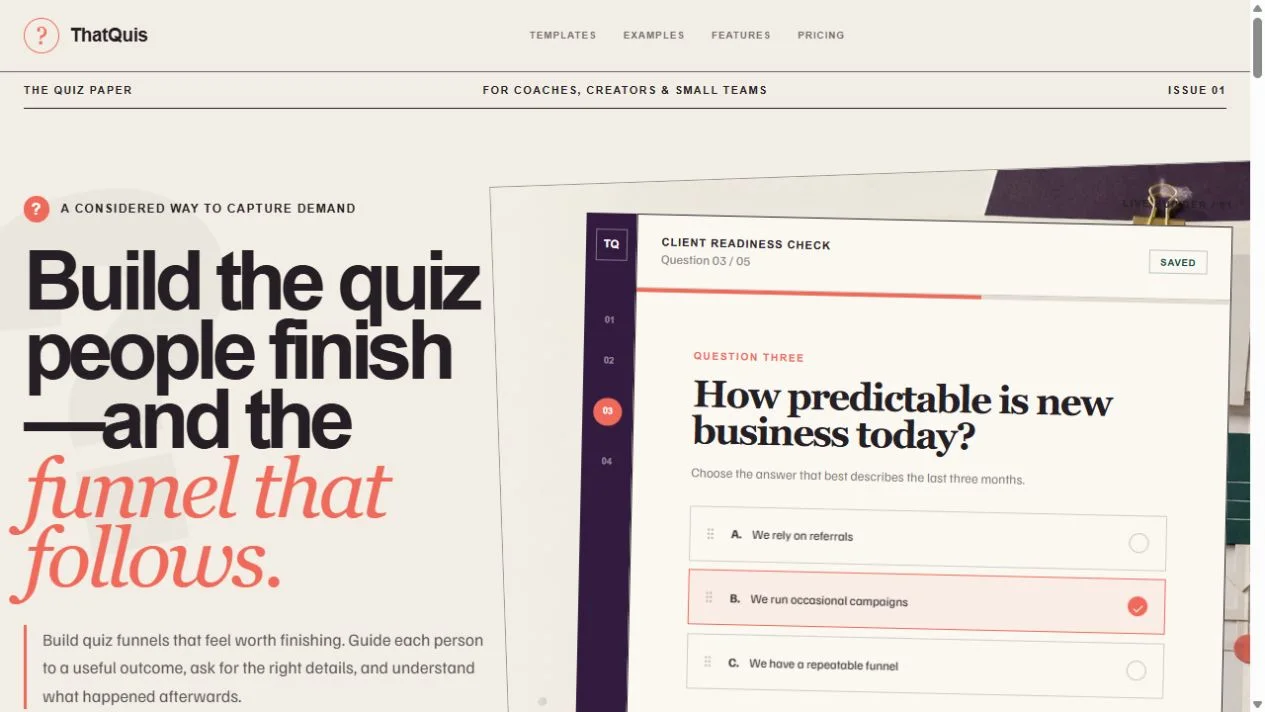
ThatQuis supports a campaign where answers must explain an outcome
ThatQuis is a quiz-funnel SaaS foundation with editable templates, question branching, scoring, outcomes, branding, consented leads and creator analytics. It can be relevant to an agency that wants to prepare a focused quiz campaign and provide the client with a useful result and response record.
Bring a fictional client brief with two answer paths and different intended outcomes. Ask the seller to build or edit it through the creator interface. Inspect the public journey and compare the saved response with what the test person submitted. A template library alone does not establish that the agency can deliver the campaign it intends to sell.
The product also has workspaces, usage limits and platform-plan foundations. Ask how those support the relationship you want between agency staff and clients. It should not be assumed that a plan labelled “Agency” automatically grants every deployment, sublicensing or client-account arrangement you might want. Agree the relevant software and commercial rights as part of the acquisition.
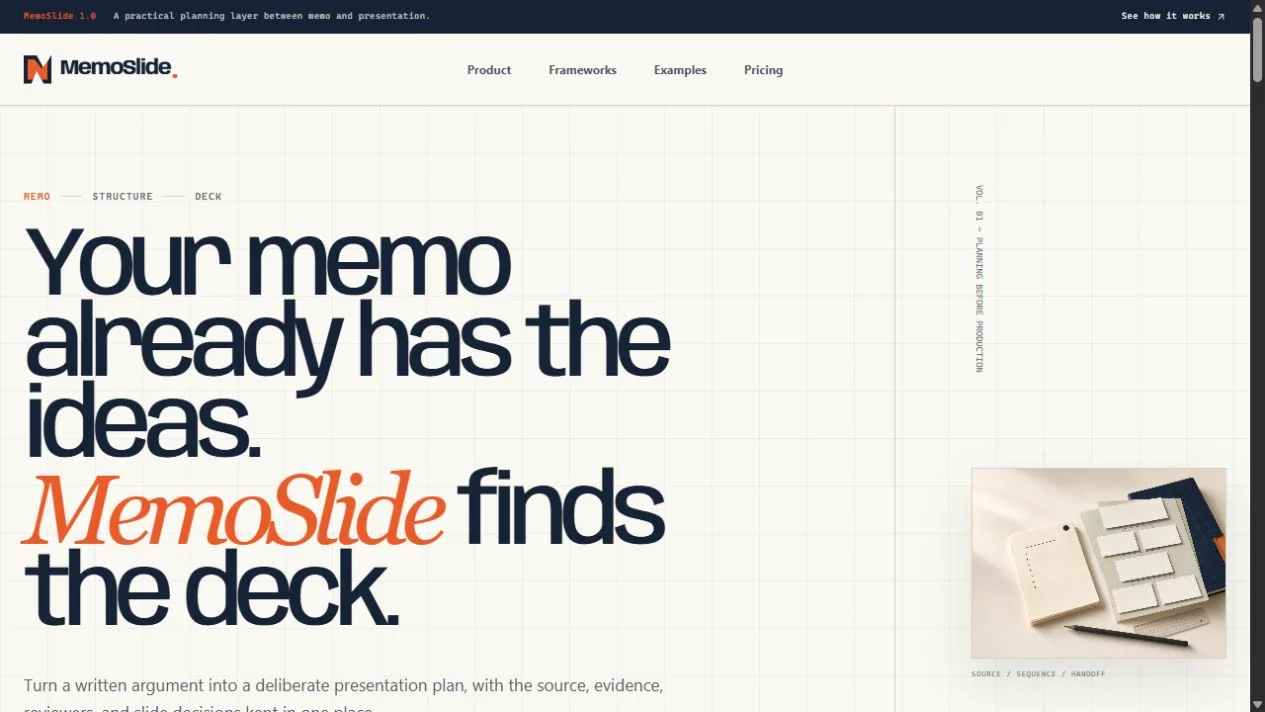
MemoSlide supports a service where the client's thinking stays visible
MemoSlide is a deterministic memo-to-presentation planning product. Its documented workflow includes plain text or Markdown import, editable section detection, narrative frameworks, slide planning, comments, assignments, approvals and exports. No external AI key is required for that planning workflow.
An agency using this foundation could prepare a presentation plan from a client's written material. The software does not remove the need to understand the material, verify the client's claims or decide what the audience should learn. The service offer should distinguish the agency's human work from the application's planning tools.
Request a demonstration using a fictional memo with a clear recommendation. Follow it through the edited slide plan and relevant export. Ask what the client can open and change in the destination application. A file download and an editable, coherent deliverable are different purchase tests.

WebinarTo supports organiser preparation without supplying video delivery
WebinarTo's documented package covers a free event directory, organiser profiles, event pages, registration controls, attendee resources and host tools. Its intended platform model uses host software plans and labelled featured placement. It does not stream video or sell tickets; hosts provide authorised live or replay links.
An agency considering it for managed event preparation should request a current walkthrough of one fictional event. Identify what the agency creates, what the organiser approves and what an attendee sees. The public directory issue remains a purchase condition to address, not something to bypass with a homepage image or a source-feature list.
If your client offer requires broadcasting, recording, ticket checkout or automated attendee communications, request evidence for those exact requirements. The documented directory and host workspace do not establish those broader services. A narrower event-preparation offer may still be relevant if its tools and remaining work are understood.
Agree source ownership separately from the client's use of the result
The agency's acquisition concerns the domain, software source, documents and agreed assets in a particular transaction. The client relationship concerns what a customer can use, receive or retain from the service. Those subjects should be written down separately. Owning an application foundation does not by itself answer every question about third-party assets, client content or repeat deployments.
Tell the seller how you intend to operate: one hosted product with client workspaces, a managed service around the application, or another agreed arrangement. Ask which rights and technical changes that plan requires. Do not advertise unrestricted resale, unlimited client installations or a bundled portfolio before the transaction explicitly supports that offer.
Also identify what the client supplies. A memo, quiz content, speaker information or event imagery may belong to the client or another party. The application can store or process that material without transferring its ownership to the agency. A clear service agreement and content inventory help the buyer avoid promising more than the delivered package provides.
Two clients should never become one accidental workspace
An agency must be able to distinguish client work. The product's actual workspace and role model determines how that can be organised. Ask the seller to demonstrate two fictional client contexts, each with recognisable content. Inspect what an agency staff member and an intended client user can view or change.
For ThatQuis, this may concern quizzes and response records. For MemoSlide, it may concern source memos, plans and comments. For WebinarTo, it may concern organiser and event records. Do not assume identical access models across the three applications. Request evidence for the arrangement you intend to sell.
If the delivered model does not provide the separation you need, determine whether a documented operating procedure is sufficient or whether development is required. A shared login may be workable for an internal team but unsuitable for the client access you plan to offer. Keep that decision explicit before the acquisition rather than treating workspace labels as proof of a complete agency account system.
| Application | Client material | Access question | Handoff question |
|---|---|---|---|
| ThatQuis | Questions, outcomes, responses and any submitted leads. | Who edits the campaign and sees its records? | Which content and exports does the client receive? |
| MemoSlide | Source memo, planned slides, comments and exports. | Who can view, comment, approve or share the plan? | Which editable artifacts remain with the client? |
| WebinarTo | Organiser details, event information and registrations. | Who publishes, changes or retrieves event records? | What does the organiser retain after the engagement? |
Put an approval point before the client-facing action
A service deliverable needs an understood approval. The agency might ask a client to accept quiz wording and outcomes before publication, a presentation plan before export, or event details before promotion. Ask how the selected product supports that sequence and which parts depend on a human procedure.
Do not turn an application approval control into a broader guarantee. An internal approval may record that someone accepted a version; it does not independently verify every statement or confer permission to publish third-party material. The agency should define what the client is accepting and what remains their responsibility.
Test one change after approval. Can the agency identify the altered version? Does the client need to accept it again? If the software leaves that decision to the team, write the procedure into the service offer. A repeatable agency workflow can combine product controls with clear human actions, provided the boundary is honest.
Buy an export your service can actually hand over
Ask for the actual output you intend to deliver. For a quiz campaign, inspect a response export and its interpretation. For MemoSlide, open the relevant editable presentation or text export. For an event service, request the documented records or export relevant to the organiser. The application may expose different formats and scopes.
A file that opens is only the first check. Confirm which campaign, plan or event it represents, what period or version is included and which information is absent. If the export contains identifiers, ask how a client or operator resolves them. Your service should not depend on the original developer explaining every field after each delivery.
Keep any required custom format in a separate scope. A client may have specific reporting or presentation conventions that the current product does not implement. The agency can choose to provide human formatting work or commission a change, but it should not sell that work as already included in the acquired source package.
Choose an application the agency can support after launch
Source ownership creates maintenance responsibilities. Ask which service accounts are required, who owns them after transfer and what the setup documents cover. The buyer should know how the application is updated and how a support issue is investigated. An agency may use its own technical staff or an agreed partner, but someone needs to own the task.
Consider the client question most likely to arrive first. A quiz outcome looks wrong. A presentation export needs correction. An organiser changes the event time. Can your team identify the record and use the delivered controls to explain the next step? The purchase should support those ordinary service questions without requiring invented automation.
External dependencies differ. MemoSlide's planning does not require an AI key, but it still uses application services. WebinarTo relies on the host's authorised video links rather than providing video delivery. ThatQuis has defined rules and usage controls rather than being a complete marketing platform. Use the actual dependency list to price the service you intend to operate.
Select the client deliverable that belongs in your offer
What should your first client accept from the application?
This selector narrows the purchase brief. It does not establish that any particular client will pay, or that buying several applications is necessary for the agency.
Transfer one product before promising a portfolio service
A buyer can acquire a focused application and learn how to operate it before expanding the offer. Ask for the domain, repository, product documents, editable content and service-account inventory for the selected asset. Keep rights for any additional products or deployments separate until expressly agreed.
Use a small rehearsal: two fictional client contexts, one scoped deliverable and an end-of-engagement handoff. Ask your intended operator to repeat it from the documents. Record what requires configuration, instruction or new development. This produces a more concrete purchase discussion than a broad promise to white-label every tool for every client.
- Choose the application and describe one client deliverable.
- Agree the acquisition rights needed for the intended service model.
- Use fictional client material and inspect the full workflow.
- Test access separation and one change after approval.
- Open the relevant export and define the client handoff.
- Assign service-account ownership and ongoing support work.
Make the source-code offer part of a defined agency service
Decide whether the client uses your account or receives its own space
An agency may perform all production work internally and deliver a finished artifact. Another may want the client to sign in, comment or maintain content. These are different service models. Tell the seller which relationship you intend to offer and ask how the current application supports it.
Use a fictional client to inspect the relevant access. Can they see only the intended material? Can they change what the agency expects them merely to approve? Can the agency remove access when the engagement ends? The answer may differ between a quiz workspace, a shared presentation plan and an organiser account. Do not transfer expectations from one application to another.
If the model needs new roles or a separate deployment, include that work in the purchase discussion. Source ownership gives the buyer a foundation they may be able to adapt under agreed rights, but it does not make every desired account arrangement part of the delivered product.
Keep client-supplied evidence attached to the human approval
A client may supply the claims in a quiz result, the figures in a memo or the speaker information in an event. The agency should decide what it verifies and what the client confirms. The application can help organise the material, but a software control does not establish that the underlying statement is true.
During the seller walkthrough, change one supplied fact and follow its effect on the deliverable. A quiz outcome might need updating, a deck plan might need another review, or an event page might need a correction. Identify who performs the change and who accepts the revised result. This is a practical way to inspect whether the product supports the agency's intended approval process.
Keep the service wording specific. You can offer a defined preparation and revision process without promising that the acquired software performs independent research or replaces the client's subject expertise. The distinction makes the application purchase and the agency service easier to assess.
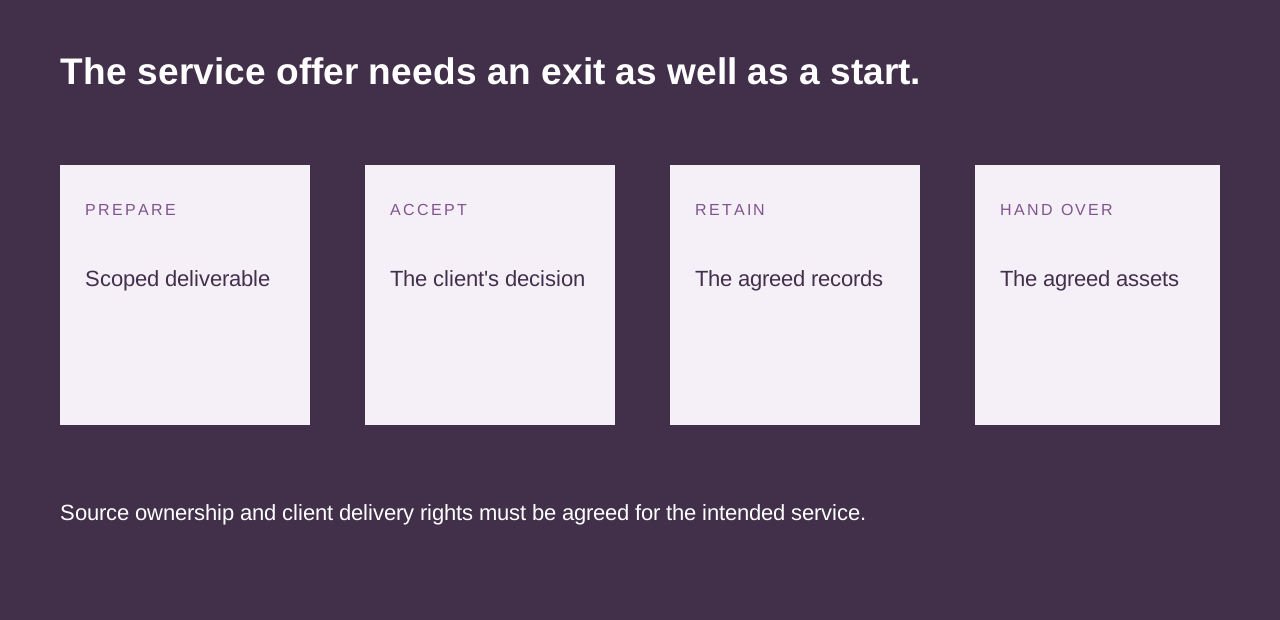
Plan the end of a client engagement before selling the first one
Ask what the client receives when the agency stops providing the service. It might be a content export, an editable presentation file, agreed campaign records or a change in account access. Inspect the current product's actual export and account controls rather than assuming a complete client-transfer feature exists.
Also decide what remains the agency's platform asset. The source application, its domain and reusable service configuration may have a different ownership status from a client's content. Agree the necessary rights in the software transaction and keep the customer agreement aligned with them. Do not promise that every client will receive their own copy of the application unless that arrangement is expressly supported.
A clear exit procedure can make a small service offer more credible. It tells the client what they are buying and gives the agency a repeatable handoff. It also helps the buyer judge whether the current application is sufficient or needs a separately scoped change.
Set a service scope that your team can deliver repeatedly
For the first offer, list the human tasks around the application. Someone may write quiz questions, edit a memo's argument or confirm an organiser's details. Someone handles feedback and prepares the final handoff. These tasks are not automatically removed by acquiring a polished product.
Choose which of those tasks you will include, which the client supplies and which would be additional work. Then request the seller demonstration that tests the application's part. A controlled client brief is more informative than a broad claim that the tool can serve every agency and campaign type.
This scope supports a purchase decision without predicting revenue. You can assess the delivered code, required accounts and operating workload, then decide whether the asset fits the service you want to provide. The current sale's represented financial information remains a separate matter to inspect through Flippa.
Ask who fixes a client deliverable after its public release
A client can notice an error after a campaign opens, a deck is sent or an event is announced. Before purchasing the application, inspect how your team would find the relevant source material and prepare a correction. The product may support a change to its own record without recalling an export, replacing an external file or notifying every recipient.
For ThatQuis, distinguish an edit to a question or outcome from the interpretation of responses already collected. For MemoSlide, distinguish the editable plan from a PowerPoint file someone has downloaded. For WebinarTo, distinguish an event record from a host's external broadcast page. These are separate handoff problems, so ask the seller to demonstrate the exact control that matters for the chosen service.
Decide what your client agreement will include for corrections and who can authorise them. A manageable service offer can use an ordinary human approval and delivery procedure where the software does not automate every step. The acquisition should give you an honest starting point for that procedure, with additional development stated separately.
The strongest purchase brief explains why the agency wants to own this application rather than merely use a hosted subscription. It should identify the control you need, the service you can provide and the maintenance work you are willing to take on. Source ownership is useful when those answers are concrete; it is not a substitute for them.
Agency application acquisition file
Contact Codeblix through the current ThatQuis, MemoSlide or WebinarTo sale. Compare other SaaS businesses for sale if your agency's deliverable needs a different foundation.
Explore the products discussed
Explore related acquisition offers