
Buy a grocery storefront for your cash-delivery operation
Acquire TenBasket around the basket, physical handover and cash your own grocer receives.
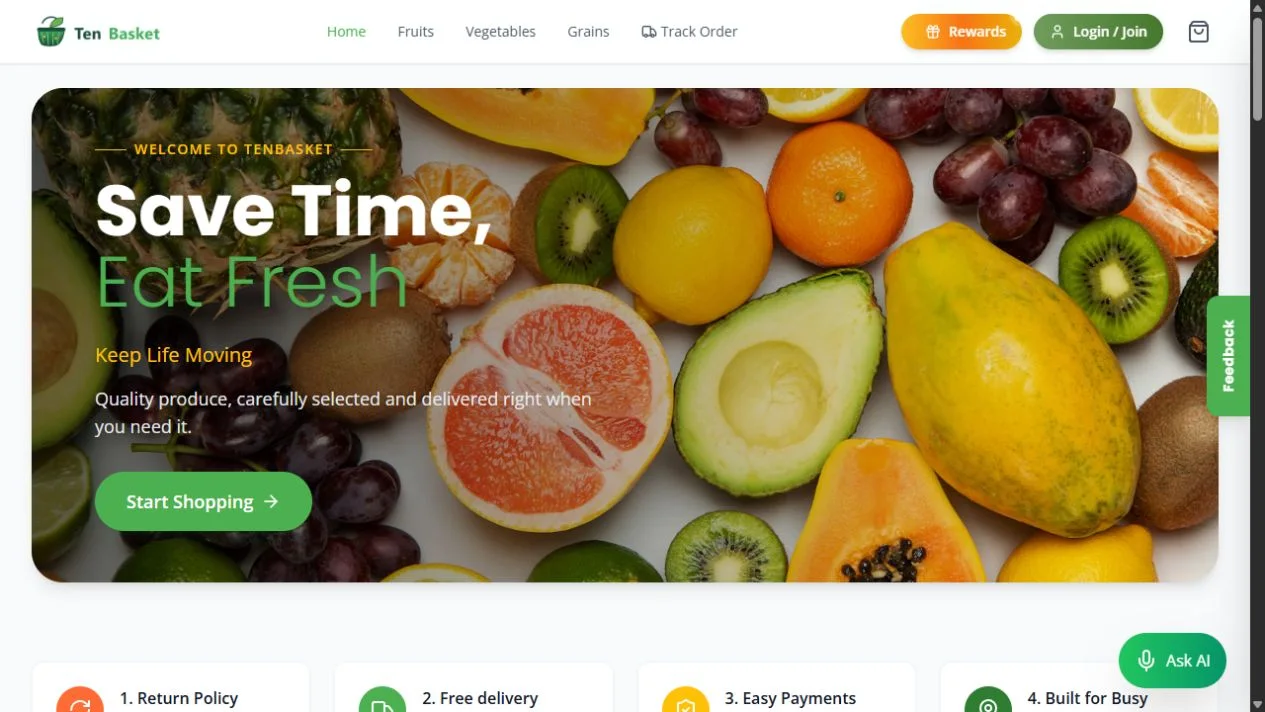
Request TenBasket for an existing COD grocer. Follow two artificial orders through checkout, delivery, received cash and the actual administration states.
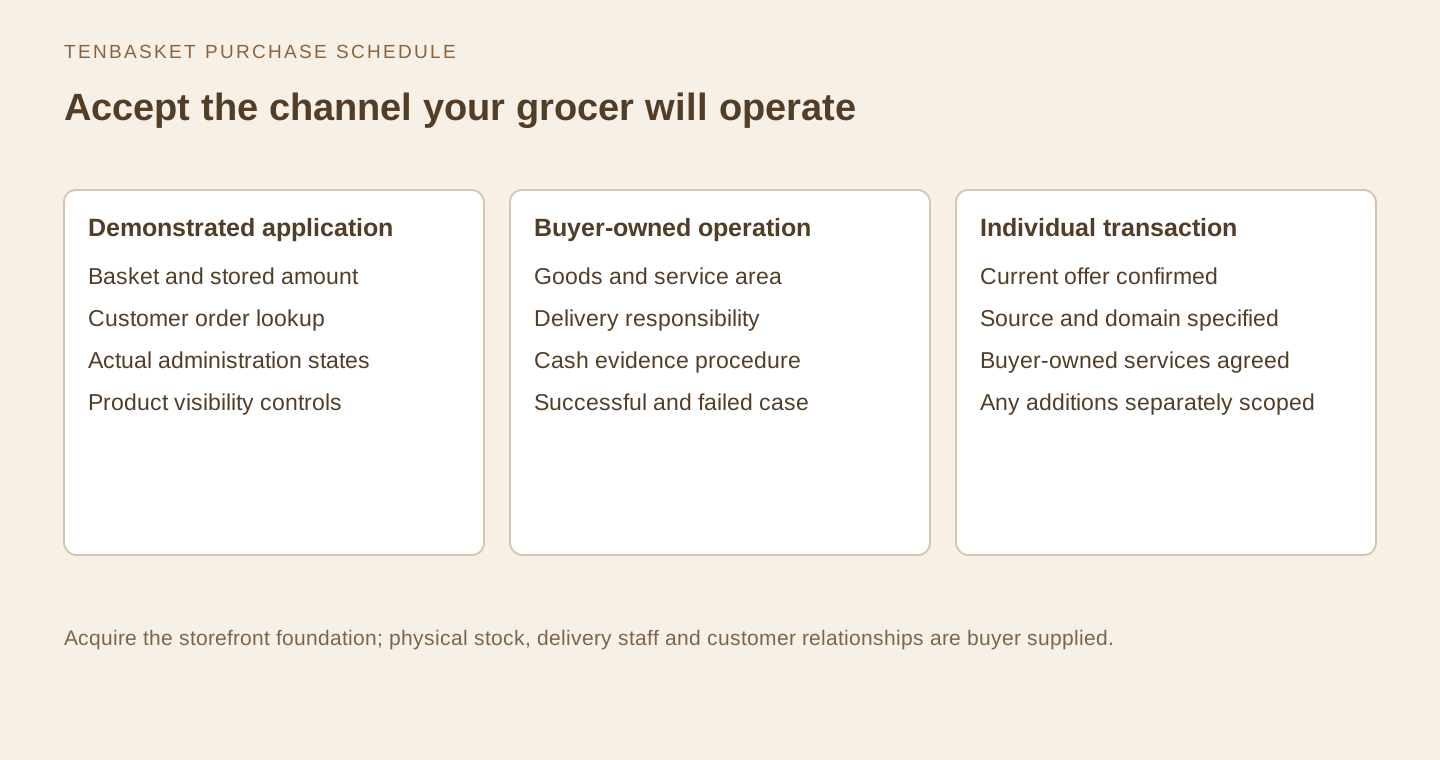
Buy TenBasket's domain and application for an existing cash-on-delivery grocery operation. Request the individual software package through the TenBasket Flippa listing. This is an acquisition of an owned online storefront and order application. The buyer supplies its own goods, delivery operation, customer relationships and responsibility for received cash.
The worked purchase follows an artificial basket from checkout to physical handover, change given and the administration record. A second order cannot be delivered. The central question is whether the grocer can keep an application status connected to its independently confirmed cash and goods procedure. TenBasket is not represented as automatic cash reconciliation, a courier dispatch system or a stock-counting warehouse application.
Request TenBasket around your existing cash-order procedure
Request the TenBasket source-and-domain acquisition offer →
Use the TenBasket asset page and broad grocery application purchase brief to inspect the individual offer and documents. Confirm current availability, price, represented finances, included source and domain, service ownership and agreed assistance through the actual transaction.
TenBasket's documented scope includes product discovery, a cart, guest and account checkout, delivery details, order tracking, an owner dashboard, Stripe checkout and a cash-on-delivery route. The source records order status and payment status separately, with an important current relationship: an administrator marking a COD order Delivered also marks its payment status paid. The buyer should accept that behaviour with a human procedure that confirms cash before that administrative action.
The buyer owns the goods and wants an owned order channel
Imagine a fictional neighbourhood grocer that already prepares baskets and receives cash when goods are handed over. It wants customers to place orders through a storefront it owns. The buyer is not acquiring grocery stock, a supplier contract or a delivery workforce from Codeblix. Those are parts of the operating business it already controls.
For the workshop, prepare two artificial customer orders. Order A contains a simple basket and is handed over successfully. Order B reaches a failed delivery attempt with no cash received. Use invented names, permitted contact details and test addresses controlled by the authorised demonstration. No example order is evidence of an actual TenBasket customer or sale.
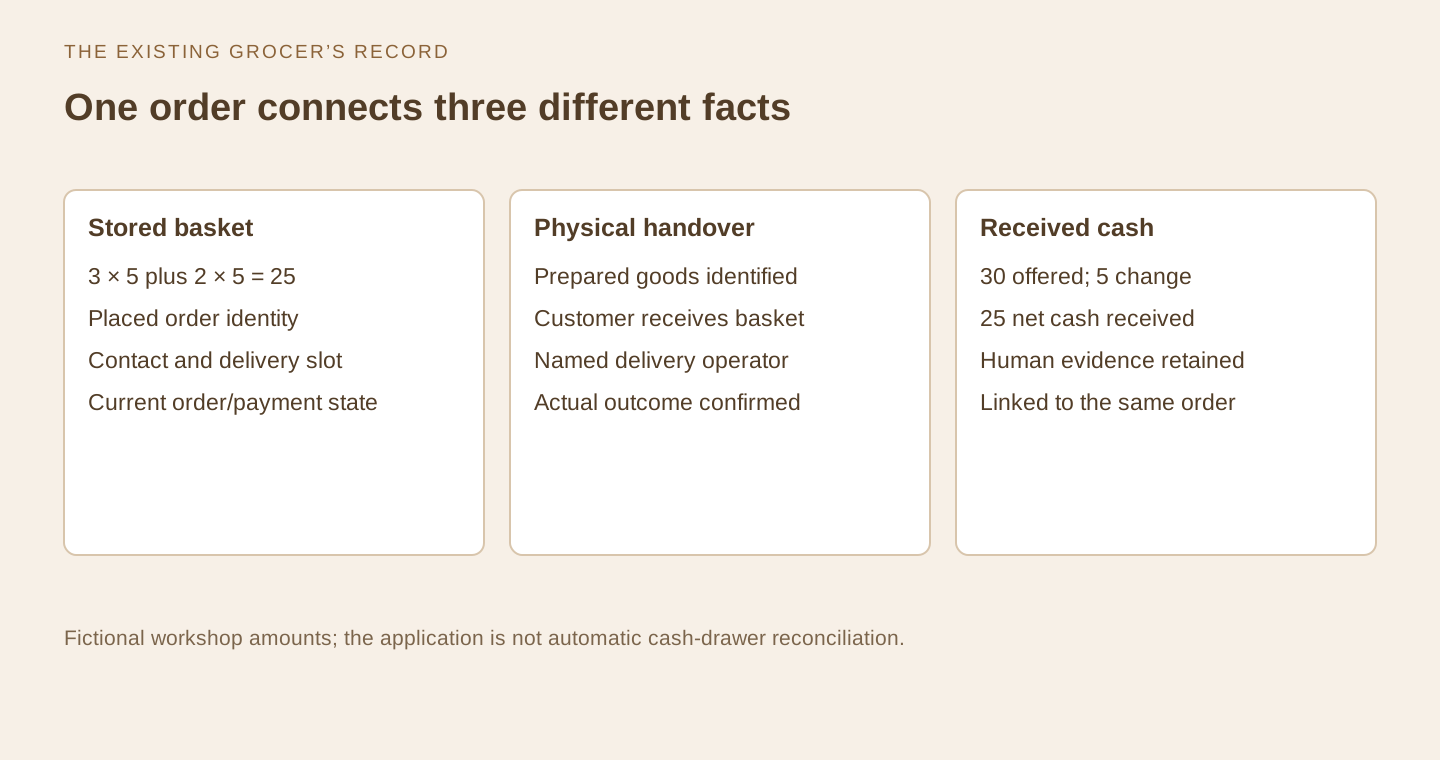
The desired purchase outcome is a clear connection between what the customer ordered, what the grocer prepared, what was handed over and what money was received. The application can provide a useful record for that connection, while the buyer keeps the physical and cash evidence it needs through its own accepted procedure.
Build the first basket through the current catalogue
Ask the seller to prepare a few artificial products and show them through the normal public storefront. The source represents product names, descriptions, prices, units, categories, images, visibility and an in-stock flag. The customer should be able to identify the intended items and quantities before placing Order A.
Use the actual checkout route to inspect the basket and contact information. The source prepares order items from current product records, checks their visibility and in-stock state and calculates the basket amount. The buyer should follow that behaviour in the demonstrated release and retain a traceable example of the resulting order.
The in-stock flag is a useful publication condition, but it is not a claim of counted inventory or automatic stock deduction. The existing grocer remains responsible for knowing what it can prepare. Any required quantitative inventory, purchasing or warehouse connection should have its own specific scope in the acquisition discussion.
Use an order-to-cash handover record
| Operating stage | Application evidence | Independent human evidence |
|---|---|---|
| Customer places the basket | Current items, amount, contact, address and delivery slot | The buyer's agreed area and fulfilment promise |
| Grocer prepares the goods | The same identifiable order | Actual prepared basket and named operator |
| Physical handover | Current order stage inspected | Confirmation that the intended goods reached the customer |
| Cash received | COD amount expected from the order | Received amount, change given and cash responsibility |
| Administrative completion | Delivered sets COD payment status to paid in current source | Authorised person confirms the preceding handover and cash facts |
| Failed attempt | Actual supported ongoing or cancelled state | No-cash outcome and the grocer's next customer action |
Keep one order identity across the schedule. The person entering a status should be able to locate the correct basket and the related human confirmation. This makes the purchase test useful for the staff who will operate the channel rather than just the person watching the checkout demonstration.
Ask Codeblix to identify the actual current screen or record for each application step. The grocer supplies the physical and cash procedure in the final column. Where the buyer needs another in-application record or permission, it can request that exact outcome as additional scope.
Accept the COD order as unpaid when it is created
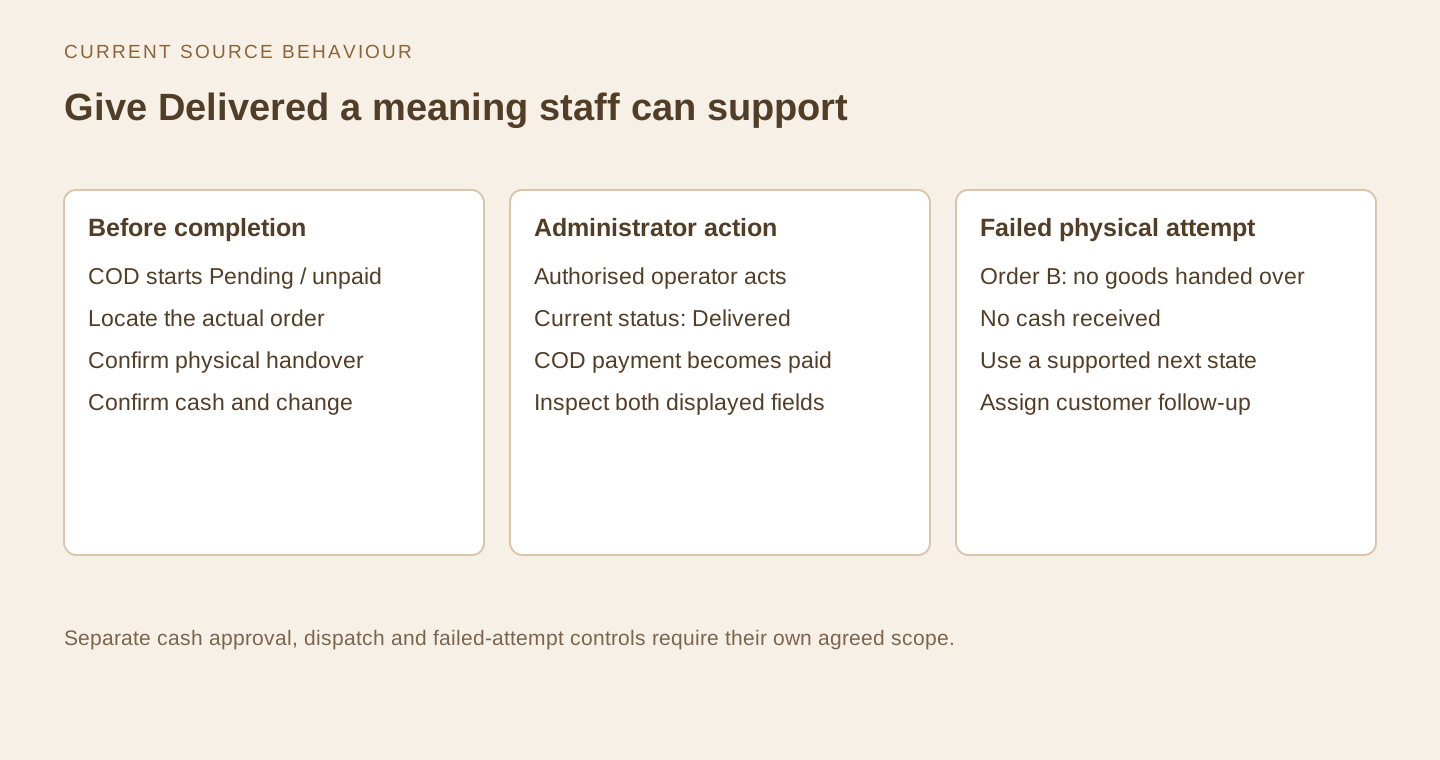
The inspected checkout source creates a COD order with a Pending order status and an unpaid payment status. Ask the seller to demonstrate Order A through the ordinary guest or account route and inspect those actual initial states in the current administration view.
This gives the buyer a clear starting point. The customer has supplied an order request and delivery information; the grocer still needs to prepare and fulfil it under its accepted procedure. The unpaid state describes the payment record before the cash handover the buyer intends to perform.
Keep the artificial order easy to locate in both the customer and administration routes. The source includes authenticated customer history and a guest lookup tied to the relevant guest session and phone information. Ask to inspect the actual path used in the workshop so the buyer knows how a customer recognises their order later.
Check the address and delivery slot against the real service promise
The current order model includes customer contact information, an address with region and building details, and a delivery day and time-slot description. Ask the seller to show those values in Order A after checkout. Compare the actual stored and displayed information with the artificial customer input.
The grocer should define the area and service it is prepared to operate. A selected slot records information; it does not by itself establish available driver capacity or route assignment. The buyer can use its existing human scheduling procedure if that fits the purchase, or specify any required capacity or dispatch feature separately.
For the worked case, name the person who confirms that Order A can be prepared and delivered as requested. Keep that answer beside the application record. This lets the buyer accept a realistic initial channel around its existing operation without implying that the software supplies the physical delivery service.
Use transparent fictional arithmetic for the cash handover
Give Order A a simple artificial basket: three packs at five currency units each and two other units at five each. The total is twenty-five. In the workshop, apply no rewards redemption or other adjustment to this controlled example. These are fictional arithmetic inputs, not actual grocery prices, commercial orders or revenue.
| Item | Calculation | Amount |
|---|---|---|
| First basket line | 3 × 5 | 15 |
| Second basket line | 2 × 5 | 10 |
| Order amount | 15 + 10 | 25 |
| Cash offered | Fictional handover amount | 30 |
| Change returned | 30 − 25 | 5 |
| Net received | 30 − 5 | 25 |
Ask the seller to show the order amount produced by the actual current checkout. Then ask the buyer's proposed operator to explain the cash calculation independently. The application record supplies the amount expected; the human handover establishes that the cash was received and the correct change returned.
The buyer should identify where it keeps that physical confirmation. It may be part of an existing permitted delivery or cash procedure. The acquisition does not need to replace every shop record to be useful, but the connection between the order and the confirmed received amount should be clear to the person authorised to complete it.
Mark Delivered only through the procedure you are willing to own
In the current source, the administrator's Delivered action on a COD order also changes payment status to paid. Ask the seller to demonstrate that transition on artificial Order A after the agreed handover evidence is available. Inspect the order and payment fields together.
The grocer's operating procedure must give that action a clear meaning. The authorised person should know that the goods reached the customer and the cash facts were confirmed before using the delivered state under this setup. A paid label reflects the application's administrative record; it is not independent cash-drawer or bank evidence.
If the buyer requires separate delivery and cash-confirmation permissions, a reconciliation approval or another status, specify the exact requirement. The existing linked behaviour can still fit an operator with a clear human procedure, while any stronger control needs its own agreed implementation and acceptance.
Make the failed physical delivery the second purchase example
For artificial Order B, the customer is unavailable at the agreed attempt and no goods are handed over. No cash is received. Ask the proposed operator to locate that order, explain the current application state and identify the person responsible for the next customer action.
The current order states include Pending, Confirmed, In Progress, Delivered and Cancelled. The buyer should demonstrate the actual supported route it will use for an ongoing attempt or a cancellation. A dedicated failed-attempt event, delivery rescheduling engine or driver record should be separately demonstrated or scoped if required.
The important operating result is that Order B remains distinguishable from successful Order A. The customer-service owner decides what the grocer offers next under its own procedure, and the authorised administrator records the appropriate current state. The buyer should accept that connection before it relies on the channel for real COD orders.
Keep cancellation and physical cash facts understandable
Use the supported cancellation route on an agreed artificial case if it is relevant to the workshop. Inspect the actual application result and the relevant customer view. The source includes an administrator-controlled status update, with related reward handling in the broader application.
For the failed Order B example, the human record says that no goods and no cash changed hands. Keep that fact alongside the application state. If another situation involves a physical return or money already received, the grocer needs its own permitted process and any relevant additional software control.
A cancellation label should be explained through the actual observed behaviour and the operator's records. The new owner should know what the current application changes and what remains a human settlement or stock decision. This makes a focused order application useful without representing it as a complete returns-accounting system.
Prepare the next available product state from the shop's knowledge
The grocer may discover during preparation that a product should no longer be offered. Ask the seller to demonstrate the current visibility and in-stock controls on an artificial item, then inspect the public catalogue and checkout behaviour. The source checks those conditions when preparing an order.
The buyer should assign who maintains that information. Its stock procedure determines whether it can fulfil a basket, while the application controls what the storefront offers. If the grocer needs counted quantities, automatic stock decrement or a warehouse connection, it should request that separately.
For the initial owned channel, a deliberate human update may be acceptable. The buyer's decision should be explicit and supported by the current demonstration. That prevents an ordinary product flag from becoming an unproved promise of complete stock management.
Connect the end-of-round cash record to individual orders
After the fictional delivery round, the operator has successful Order A and failed Order B. It should be able to identify the application amount and status for each, then point to the independent goods and cash result. The cash record should explain Order A's net received twenty-five and Order B's zero received.
This is a human reconciliation example, not a current automated cash-matching feature. Ask the buyer's proposed staff member to explain how they retain the link in the procedure they already operate. Any desired upload, reconciliation screen or supervisory approval belongs in a separately agreed scope.
The acquisition is attractive to this buyer only if that division of work is acceptable. It wants an owned customer order channel it can join to an understandable physical operation. The seller can demonstrate the application foundation while the grocer accepts the cash responsibility it continues to supply.
Give the next administrator a repeatable two-order record
Ask a second authorised administrator to read the artificial schedule. They should identify which order was handed over, which amount was received, which current state reflects the successful procedure and which order still needs a customer-service decision. Use the actual screens demonstrated by the seller.
The person should know when the Delivered action is appropriate under the accepted COD arrangement. They should also know where to find the human evidence that supports it. This is a concrete staff handover for the owned application, rather than an assumption that a status label explains every physical event.
Confirm the source, domain, documents, buyer-owned accounts and agreed assistance through the current listing. Assign the technical maintenance owner and the grocer's daily operating owner. The buyer can then make a specific purchase request for a storefront and order application around an existing cash-delivery service.
Keep the placed basket separate from tomorrow's catalogue
An existing grocer changes prices and product descriptions as its buying costs and stock change. The purchase workshop should therefore follow the order as well as the current product card. TenBasket's order preparation stores the selected product details and quantity within the order, together with the calculated amount. Ask to see those details on the artificial Order A before using another product update in the demonstration.
For example, the workshop's first pack costs five when the customer orders it. The owner may later want the public product to cost six for a future order. The buyer should inspect the original Order A and the next checkout separately. Its staff need to identify the amount that belongs to the placed order rather than calculate received cash from whatever the catalogue displays tomorrow. Use the seller's actual current screens to establish how those values are presented.
This distinction is particularly useful at the delivery counter. The person handing over Order A reads its twenty-five total and follows the agreed cash procedure. A later price decision belongs to the next order unless the business separately agrees a permitted change with that customer. The article does not represent a delivered order-amendment workflow. It gives the buyer a concrete reason to inspect stored order lines and explain which record its staff will use.
Include the same check in the ownership handover. A second staff member should be able to find the order identity, understand the displayed quantity and unit, and explain the expected cash without knowing the whole demonstration from memory. That is a practical acceptance result for an owned grocery channel.
Resolve an uncertain cash message before completing the record
Use one additional fictional interruption while Order A is still awaiting administrative completion. The delivery worker says that the basket reached the customer, but the message does not state how much cash was received or whether change was given. The supervisor has enough information to investigate the physical handover, but not enough to complete the purchase test's agreed cash confirmation.
Ask the buyer's staff to locate the order and obtain the missing fact through their existing permitted process. The useful result is a named person and a traceable answer: thirty was offered, five was returned, and twenty-five remains with the worker responsible for the collection. Only then does the authorised administrator apply the agreed Delivered action. This is a rehearsal of the buyer's human rule, not an additional application approval state.
The example explains why the twenty-five order total and a paid label cannot settle every question by themselves. The shop still needs a reliable answer about the physical cash it owns. If its business requires two people to approve that answer inside the application, it can describe that requirement precisely in the offer discussion and ask for a separately demonstrated implementation.
Contrast that interruption with Order B. There, the delivery attempt failed and the cash received is zero. Staff should not infer successful collection from a planned slot, a prepared basket or a phone message saying the driver visited. They should retain the actual outcome and select the supported order route that fits the next customer decision. The two cases let the buyer accept its own operating discipline alongside the useful software record.
Make the purchase request specific enough to demonstrate
Send the seller the two artificial order descriptions before the acquisition workshop. Explain that the buyer already supplies groceries and cash delivery, and wants to acquire an owned online ordering application. Request the current source-and-domain package, the actual account requirements and a walkthrough of the order creation and administration behaviour described here.
The buyer's acceptance note can then identify the demonstrated release, the successful and failed order identities, and the person responsible for the physical cash procedure. It can also distinguish an accepted manual link from a required additional software control. This makes the next purchase action concrete: accept the available foundation that fits the operation, negotiate a specified addition, or hold the transaction until the unresolved requirement is demonstrated.
Complete the cash-delivery storefront purchase record
- Prepare a controlled artificial successful basket and one failed physical handover.
- Ask Codeblix to demonstrate the current checkout, customer record and administration states.
- Connect the order amount to the buyer's actual cash confirmation procedure before accepting Delivered.
- Agree the software transfer and any required additional controls before using the channel for live orders.
Request the TenBasket acquisition offer on Flippa with the completed order-to-cash schedule. The buyer is acquiring a clear online record for a physical grocery and cash operation it is prepared to own.
Explore the products discussed
Explore related acquisition offers