
Buy a plant marketplace for your collector community
Acquire an owned commerce channel around individual stock, participating growers and clear fulfilment.
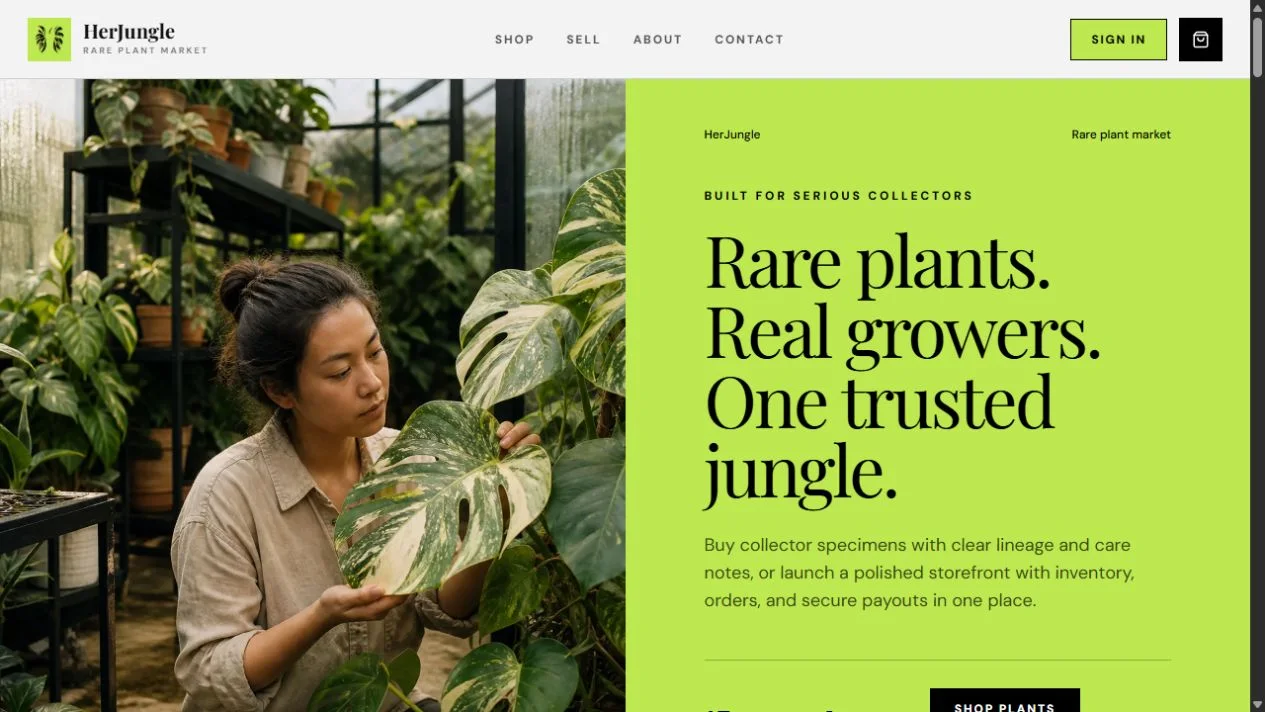
A worked acquisition case for an existing collector and grower community buying HerJungle software. Follow one listing through stock, single-grower checkout and seller order responsibility.
Buy a plant marketplace software asset when your existing collector or grower community wants an owned commerce channel. HerJungle is an available source-and-domain foundation with grower storefronts, a plant catalogue, stock records, single-grower checkout and order tools. Request the package around the seller and specimen responsibility you intend to operate.
This worked case assumes a fictional community organizer already knows participating growers. The community, growers and plants are buyer inputs, not assets included in the sale. The purchase concerns software, rather than a physical nursery, biological certification service or private community-governance portal.
Request HerJungle around one grower and one available plant
Contact Codeblix to request HerJungle's current source and domain acquisition package. Describe the existing community relationship you bring and ask for a controlled walkthrough with one fictional grower, one listing and one buyer order. That exercise should show the commerce job you want to own.
The current Flippa listing owns price, availability, represented financials and transfer terms. Use the authoritative HerJungle product page and individual plant marketplace acquisition offer for the package details. This case centres an organizer's decision to operate a community-adjacent marketplace with clear individual-stock and seller responsibilities.
For a buyer who already runs a plant community, the useful question is how members become participating sellers or buyers through the actual application. The existing community activity can remain where the organizer already runs it. The acquisition gives the buyer a separate commerce foundation to evaluate.
Turn community familiarity into a clear seller offer
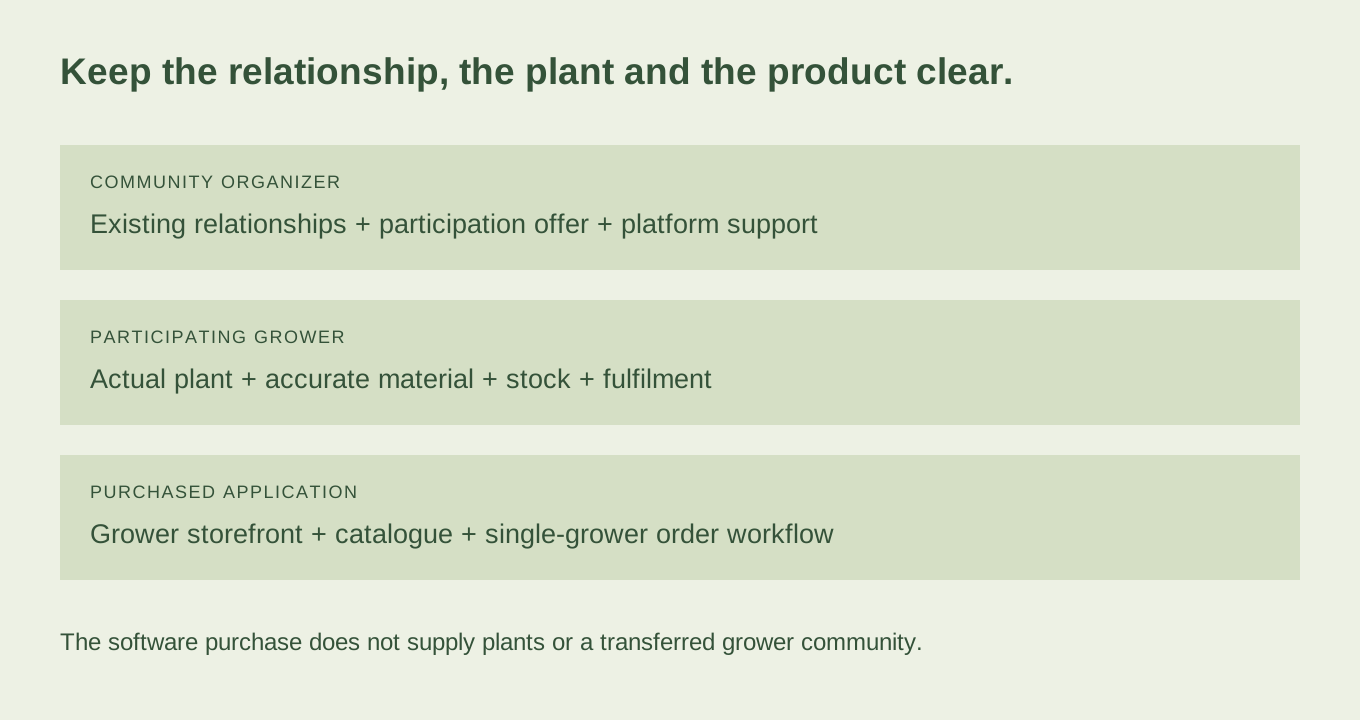
Imagine a fictional group that regularly discusses collectible plants and occasional sales. Its organizer wants an owned place for participating growers to present available plants, maintain their stock and fulfil orders. The first seller offer should explain what the platform provides and what the grower continues to do.
The organizer can bring a release conversation and knowledge of the community's expectations. The grower brings their actual plant, authorized images and description. The application provides records and workflows around that offer. This allocation is more useful than treating every familiar community member as an automatically approved seller.
Write the first seller invitation in terms of the demonstrated product: a grower storefront, plant inventory and the relevant checkout and order tools. Ask the seller to show those items. The buyer can then prepare a participation process that matches the software they are acquiring.
Use a single specimen to make the first listing concrete
For the worked exercise, choose a fictional listing for one available plant. HerJungle's source includes a name, scientific name, price, images, description, optional care information and genetic-lineage text, stock and category. The grower should supply an accurate representation of the plant being offered through those fields.
Use the listing description to explain the actual offer. A photograph should correspond to what the grower is representing, and the stock value should match the quantity they intend to sell. The buyer can inspect the application with test material while preparing a practical standard for real sellers after purchase.
Care and lineage text are supplied information, not an automatic scientific verification. Put any evidence or review the organizer chooses to require in its own operating process. The useful software purchase is a listing and order channel whose information can be understood and maintained by the responsible grower.
Give the collector enough context to recognise the offer
View the fictional listing as a collector who did not attend the grower's preparation. Can they see the relevant images, plant description, price and seller context? Can they distinguish this item from another listing with a similar name? The marketplace should help them understand what they are selecting.
The buyer can ask the seller to demonstrate the catalogue and specimen-detail presentation using that small example. HerJungle also provides grower storefronts, so follow the seller identity from the item to the relevant storefront. The organizer should be able to explain which grower is responsible for the offer.
This test grounds the acquisition in actual customer work. The organizer is not merely buying a community landing page. They are evaluating a product where a collector can inspect a grower's listing and proceed into the relevant commerce workflow.

Keep the first basket within the single-grower checkout boundary
HerJungle's checkout is organized around a single grower. For the first exercise, choose the fictional plant from that seller and follow the supported basket and checkout route. The buyer should see how the application identifies the seller and what the resulting order contains.
The source stores the seller, purchased item details, quantity, total and shipping address with the order. Those are useful records for the collector and grower relationship. Ask the seller to show the actual buyer and seller views so the organizer understands how the parties identify the same purchase.
A collector may later want plants from different growers. The buyer should understand the existing single-grower boundary when describing its service, with any desired combined-seller experience treated as a separate requirement. A focused first offer can work with the product's delivered transaction model.
Make stock one a responsibility rather than a decorative number
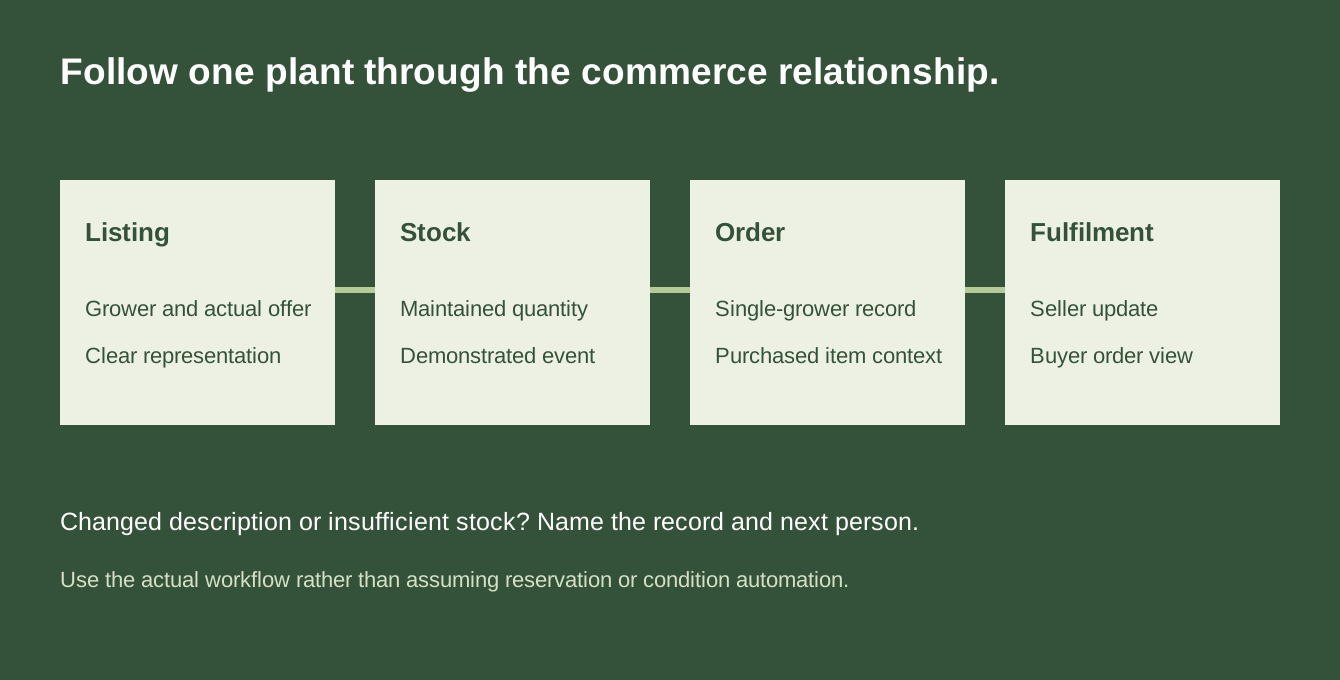
The fictional listing has a stock quantity of one. HerJungle validates whole-number stock and contains stock checks in its order flow. This is a useful starting point for a buyer whose community includes individual specimens rather than interchangeable unlimited digital products.
Ask the seller to demonstrate the supported purchase path and the stock state after the relevant order event. Keep the exact event in the notes. The buyer should distinguish browsing a listing, keeping an item in a basket and the actual order/payment processing behaviour demonstrated by the application.
Then inspect an insufficient-stock case with authorized test data. What does the buyer see, and which record exists? The organizer can use the result to prepare a clear support explanation. Concurrency, payment and stock timing should be demonstrated for the buyer's acceptance needs rather than described as guaranteed from the presence of a stock field.
Give a changed plant description a clear owner
A grower's offered plant may change while the listing is open. The grower should keep the actual description, images and stock accurate. HerJungle has seller inventory editing tools, so ask the seller to show an update to the fictional listing and inspect the public result.
The organizer can set a practical participation rule: sellers are responsible for the accuracy of what they offer and for raising a material change affecting an order. The rule should fit the real workflow and the organizer's chosen support process. It is the buyer's operating standard around the software.
If a change affects an existing order, identify the current record and the next communication. Ask what information is preserved in the delivered order and how the grower or operator handles the issue. This gives the purchase a meaningful specimen-specific exception exercise without inventing automated condition monitoring.
Map the buyer, grower and operator onto the actual records
| Participant | Contribution in the worked community case | Record or workflow to inspect |
|---|---|---|
| Community organizer. | The participation offer, release standard and platform support route. | Actual platform-owner controls and the relevant order context. |
| Participating grower. | The plant, authorized representation, current stock and fulfilment. | Grower storefront, inventory and seller order view. |
| Collector. | The selected listing, purchase details and shipping information. | Plant detail, single-grower checkout and buyer order view. |
| Payment services used by the application. | The configured payment and connected-account flows. | Buyer-owned service setup and a separately agreed readiness demonstration. |
The roles are complementary. The organizer can run a focused marketplace while the grower remains responsible for the actual plant and dispatch. The collector gets a clear purchase record. The buyer should choose the asset because this allocation fits the business they want to operate.
Follow the grower's order from pending to delivered
HerJungle's documented order states include pending, shipped and delivered. Use the fictional order to inspect the seller's supported status update and the buyer's view. The organizer should understand what each state means in its proposed operating procedure.
A useful first instruction might name when the grower updates the order and how they answer a collector who asks for context. The actual delivery arrangement is supplied by the grower and the buyer's operation, not by an inferred fulfilment network. The application record helps the parties identify the purchase and its current state.
Ask the seller to demonstrate the relevant notification and order views available in the package. Record any external service setup needed to operate them. The buyer can then prepare a simple first-order procedure with a known owner at each step.
Choose the marketplace commitment your community can support
What will your first participating grower offer through the acquired product?
Use the result to prepare the seller request. The buyer can inspect a useful application while keeping its actual grower relationships and initial listings in the operating plan it will bring to the asset.
Keep grower software plans separate from the collector's order
HerJungle includes seller software-plan billing and Stripe Connect foundations alongside checkout. A grower's platform access is one relationship; a collector's plant purchase is another. The buyer should inspect both if it intends to operate them.
For the community case, write a plain seller offer explaining the software access and storefront tools. Then write a collector offer explaining who sells the plant and who handles fulfilment. This lets participants understand their different roles without turning every payment into an undefined marketplace fee.
Buyer-owned services and live payment readiness need their own controlled acceptance. Demonstration listings, orders and reviews do not establish actual sales or a participating grower network. Evaluate the current financial representation through Flippa, while using the product exercise to understand the delivered workflow.
Use delivered-order reviews as a product feature with an evidence boundary
The source ties buyer review eligibility to the relevant delivered-order relationship. That can be useful to a collector marketplace, where a buyer wants to understand the experience of an actual purchaser. Ask the seller to demonstrate the ordinary eligible and ineligible paths with fictional records.
The organizer can then decide how to explain reviews in its public product. A review is the contributor's account of their experience, supported by the delivered-order eligibility rule. The platform should describe that rule accurately rather than turn it into a claim of scientific or biological certification.
Keep demonstration reviews labelled as demonstration content where used. The buyer's first real community release should build its own records through actual activity. The feature can be inspected before that activity exists without inventing a commercial history.
Prepare the grower's first release as a small complete offer
The buyer can begin with one fictional grower and one listing during the purchase exercise. Have the grower explain the description, stock and intended dispatch process. Have a collector read the public offer and identify the seller. Then follow the supported order route in the seller's authorized environment.
For the organizer, record the points that determine the acquisition: whether the offer is understandable, whether the relevant records connect the correct participants and whether the ordinary support question has an owner. These are practical checks on the business the buyer wants to run.
The organizer can later invite additional participants under its own arrangements. The first purchase does not need an invented large launch roster. A coherent small release provides a stronger basis for requesting the asset than a promise to turn every group member into a paying seller.
Make the second plant a different listing when the offer is different
Suppose the fictional grower has another plant with a different description or condition. The buyer should inspect how the seller represents the actual inventory through the delivered fields and images. An individual-specimen offer should remain understandable when the grower has more than one item.
Use the seller walkthrough to compare the two public listings and their stock records. The collector should be able to identify what they selected, and the grower should be able to identify what the order concerns. The organizer's release standard can require that clarity without claiming that the application independently verifies plant identity.
Also compare a listing with more than one available unit. The grower should explain whether the description represents the same offered item type or whether separate specimens need their own listings. Inspect how the selected quantity appears in the actual order. The buyer can use that exercise to choose a practical catalogue standard for its first participating growers, based on the existing listing and quantity model.
The standard should be simple enough for the grower to maintain. Accurate public material and an understandable stock value give a collector a clearer starting point for the purchase.
This case helps the buyer judge whether the existing inventory model fits its community. If the intended operation requires more specialized provenance, condition history or product attributes, identify the exact requirement during negotiation. The existing asset remains a source-backed foundation with a defined listing model.
Give a sold-out question a short support answer
A collector may return to an item that is no longer available. Use the authorized insufficient-stock exercise to understand the actual application response and which record the collector can reference. The support answer should tell the person what happened in the product and who can discuss any existing order.
The grower should also know how to keep inventory current through the supported seller controls. If a material issue arises after an order, the operator can identify the seller and order while the parties follow the actual agreed procedure. The source package should be evaluated for that concrete support route.
A clear answer is a useful part of the buyer's first marketplace offer. It demonstrates that the organizer has thought through one ordinary problem rather than simply inviting sellers and hoping the application will decide every exception.
Make the grower storefront recognisable to the people you invite
The fictional organizer can begin with a grower who already participates in its community. Ask the seller to demonstrate the grower's storefront and the listing reached from it. The public identity should be understandable to a collector: which grower is presenting the plant and which inventory belongs to that seller?
The community relationship can help the organizer prepare the first invitation, while the application supplies the storefront and purchase route. The grower should review the public description and the plant offer before an actual release. This gives the buyer a practical way to connect familiar people with a new commerce product.
Keep that invitation specific. The organizer can introduce the grower's actual storefront or item through its existing community communication. It can use an ordinary link and a clear explanation of the independent purchase route. Any additional community integration can be scoped separately once the first marketplace offer is understood.
Give a collector a complete answer before asking them to purchase
Use a fictional collector who wants to know whether the photograph represents the offered plant, how many are available and who handles dispatch. The grower should be able to answer using an accurate listing and its own fulfilment arrangement. The seller walkthrough should show which parts of that answer appear through the delivered product.
Then ask the collector to identify the item and seller again from the order view. The buyer can see whether the records preserve the context needed for a useful later conversation. The shipping address and purchased item details help the parties identify the transaction, while any essential additional information can be discussed during the acquisition.
The exercise is deliberately small. A marketplace can be evaluated through one complete offer without predicting how quickly a community will adopt it. The organizer's purchase condition is an understandable commerce workflow for the participants it intends to invite.
Define the first release meeting around a finished order exercise
For the buyer's final evaluation, have the organizer, fictional grower and fictional collector explain the same test order from their own views. The organizer names the support route; the grower identifies the inventory and fulfilment step; the collector identifies what they selected and where they can inspect the order. Use seller-authorized test data throughout.
Write the open questions beside that exercise rather than expand the launch into an undefined platform. If a particular provenance field, notification or support action is essential, request the relevant evidence or scope. If the current product provides a workable first offer, the buyer can make a focused acquisition request with the remaining human work understood.
This gives the community organizer a concrete reason to own the asset: it wants a commerce channel with records and responsibilities that fit its participating growers. The existing community can keep its own discussions and relationships, while the purchased application supplies the distinct seller and buyer transaction foundation.
Buy the commerce foundation your community is prepared to operate
Attach the single-grower, single-plant exercise to your request for the HerJungle package. Ask the seller to demonstrate the relevant inventory, checkout and order views, then identify the source, domain, documents and any essential agreed work in the transaction scope.
The buyer can proceed with a focused marketplace because it wants to own the commerce channel around its own relationships. The grower supplies the real plant and fulfilment. The collector receives an understandable offer and order. That is a concrete acquisition purpose, with the broad product owner remaining the place for the full software specification.
- Define the grower offer your existing community would use.
- Prepare authorized fictional material for one individual-stock listing.
- Follow a single-grower purchase into the buyer and seller records.
- Inspect a stock or changed-description exception.
- Name the operator and grower responsibilities around fulfilment.
- Request the individual source-and-domain package against that worked case.
Request HerJungle's current acquisition offer on Flippa. Explore the available online business collection if another delivered customer job is closer to the marketplace your community wants to operate.
Explore the products discussed
Explore related acquisition offers